
Environmental protection starts from very simple, everyday actions
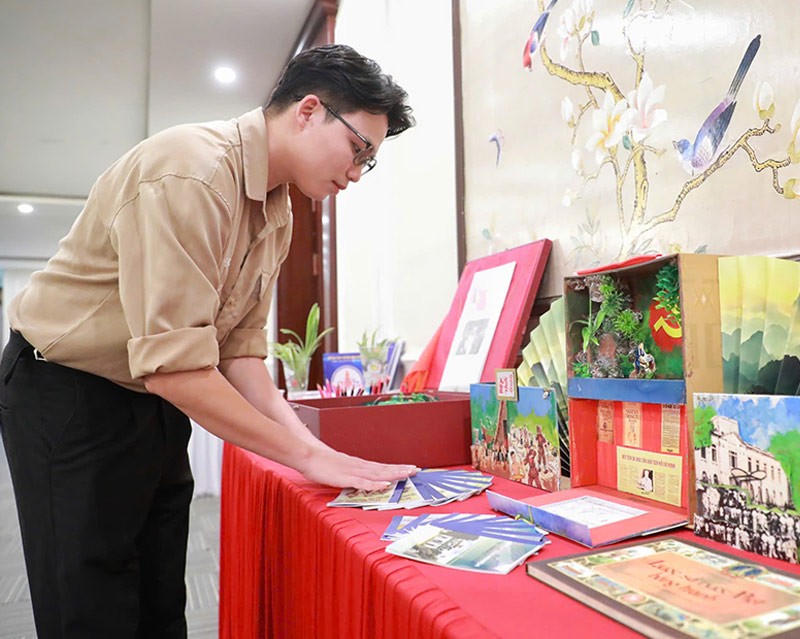
A year later, at the 2025 Workers' Forum for the Environment, another display corner continued to make many people stop. Those are models and school supplies made of waste brought to the forum by young teacher Nguyen Huu Quyet, a teacher in Hanoi. Learning models, visual aids, and historical diagrams are made from materials that seem to have completed their life cycle. In the eyes of many people, it is garbage. But in the minds of those who make them, it is still a resource if people know how to give them a second chance.
Jackets from milk cartons or school supplies made from waste are not simply recycled products; the greatest value lies in the change in people's perception of the environment.
For many years, we have been accustomed to the mindset of "use it and discard it". A box of milk after being drunk becomes trash. A plastic bottle after use also has no value. A broken item means having to buy a new item. These habits have contributed to creating a large amount of waste that cities are facing every day.
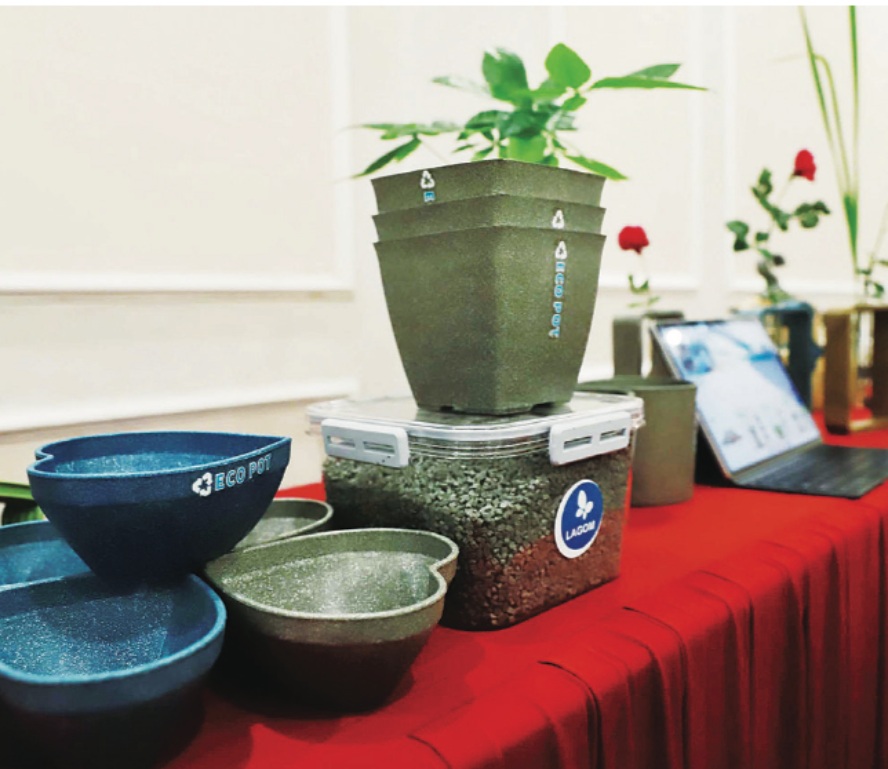
Instead of becoming waste after one use, materials can continue to be returned to the production and consumption cycle through recycling activities. As the life cycle is extended, the economic, social and environmental value they bring also increases significantly. That is the nature of the circular economy - a development model being promoted by Vietnam to effectively use resources and reduce pressure on the environment. It is also a reminder that: Environmental protection starts from very simple, everyday actions.
The "core" of green transformation
Idead in 2019, in the context of environmental issues becoming increasingly global challenges and Vietnam facing the requirement to innovate the growth model towards greener and more sustainable, the "Workers for the Environment" Forum co-organized by Lao Dong Newspaper has chosen a different approach: Taking workers as the center of environmental protection.
After many years of organization, the forum is not only a place to exchange initiatives or experiences in environmental protection, but also becomes a space for workers to speak out about the working environment, about green production and about responsibility to the community. The forum also contributes to affirming the role of workers in monitoring the implementation of environmental protection laws at enterprises; promoting energy-saving initiatives, efficient use of resources; encouraging cleaner production and sustainable consumption.
From the forum, many small stories have been told. There are waste sorting models at source deployed right at the workplace. There are activities of recycling and reusing discarded materials that are maintained regularly, no longer of a movement nature.
According to Assoc. Prof. Dr. Nguyen Dinh Tho - Deputy Director of the Institute of Strategy, Policy on Agriculture and Environment (Ministry of Agriculture and Environment) - workers play a very important role in the field of environment. According to him, the nature of emissions and environmental pollution appears in the process of industrialization, modernization and urbanization. Workers are the main force in the transition from agriculture to industry and services. The role of workers in environmental protection, climate change response and biodiversity reduction has been affirmed.
“Here, workers play a role in two ways. First, they participate in the production of goods and services, and in this process, we will implement energy transition, transition to green technology, cleaner technology, and workers play a role in this process. Second, workers benefit and they have the right to labor and produce in a clean environment. Therefore, the formation of ecological industrial parks, green industrial parks, and green factories creates opportunities for workers to work in better environmental conditions” - Deputy Director of the Institute of Strategy, Policy on Agriculture and Environment emphasized.
For many years, the press has reflected on polluted rivers, overloaded landfills, or days when the sky is covered in fine dust. But the press is not only responsible for warning. The press is also responsible for discovering solutions, effective models, and people who are silently creating change.
Looking at the journey of the "Workers for the Environment" Forum, an increasingly clear message can be seen: Environmental protection is not only a responsibility, but also the rights of workers. A safer working environment, a greener factory, a cleaner industrial park or a livable city all begin with the small but persistent actions of each person.
Because after all, no green transformation is successful without the participation of people. And workers are a large force, close to production activities and social life.


