
Metro passenger volume tends to increase
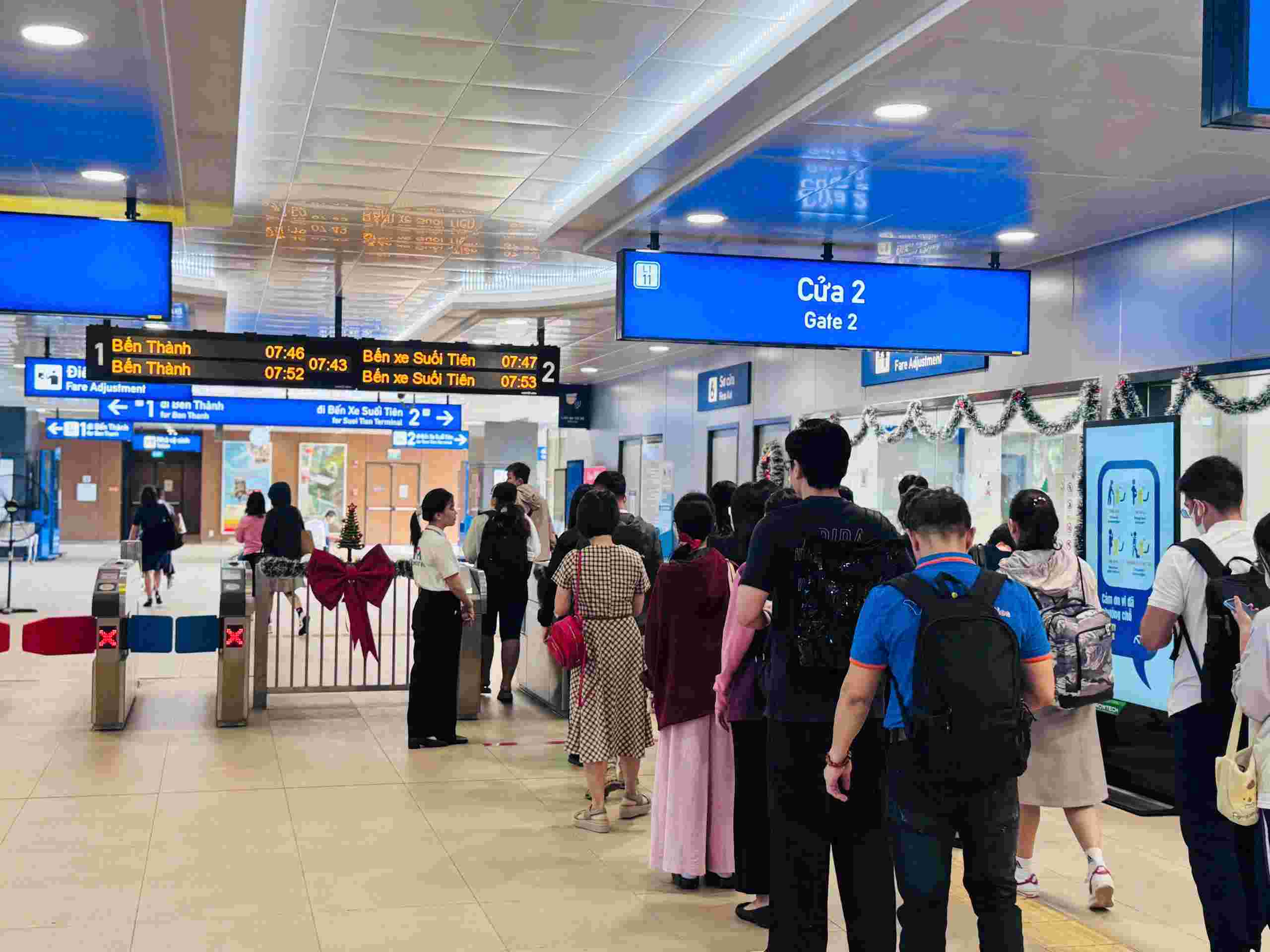
On March 9, Nguyen Thi Lan Anh (20 years old), a student at the University of Social Sciences and Humanities, Ho Chi Minh City, drove a motorbike from the University Village to the National University metro station to park her motorbike, then took Metro Line 1 (Ben Thanh - Suoi Tien) to the school's main campus on Dinh Tien Hoang street.
Ms. Lan Anh said that before, she often rode a motorbike from the University Village to the main campus, the distance was about 18 km, taking about 45 minutes. On traffic jam days, the travel time can last longer than an hour. However, when gasoline prices continuously increased in recent days, the female student decided to switch to taking the metro.
I take the metro to Ba Son station and then walk for about 3 minutes to school. Taking the train is cool, no worries about traffic jams, and it's on time. If you buy tickets using a banking application or e-wallet, there are also discounts, so it's quite convenient and economical" - Ms. Lan Anh shared.
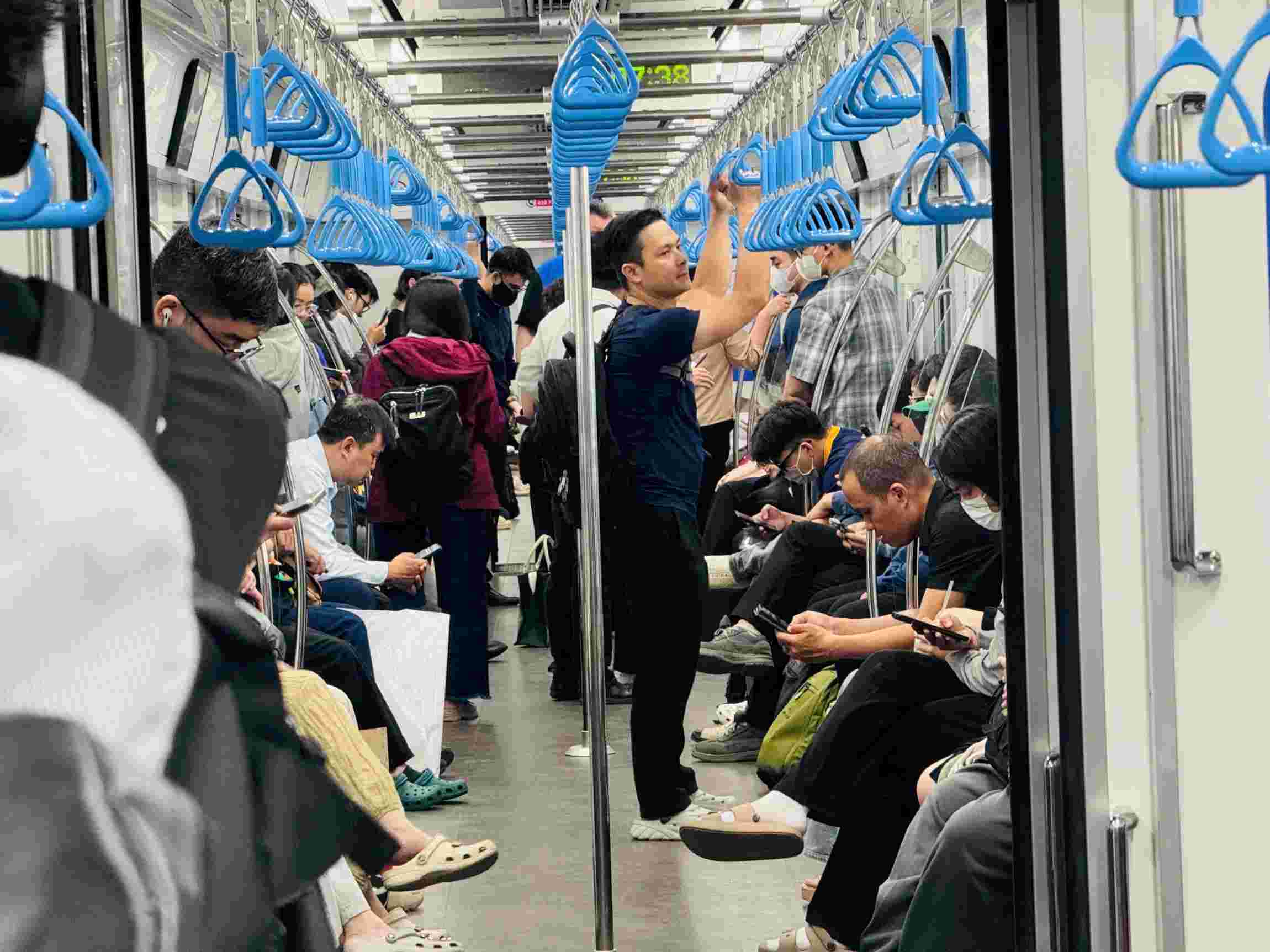
According to Mr. Le Minh Triet - Director of Urban Railway Company Limited No. 1 (HURC1), previously Metro Line No. 1 served an average of about 52,000 passengers per day. However, in recent days, the number of passengers has increased to nearly 60,000 passengers/day.
Mr. Triet said that in the context of high gasoline prices, many people choose the metro to reduce travel costs. Currently, Metro Line 1 is also implementing many preferential programs to encourage passengers to use public transport. Passengers using Vikki cards scanning directly at ticket gates at stations are 100% free of ticket prices. Customers using VPBank cards are given e-vouchers including: 20,000 VND when having at least 2 transactions at HCMC Metro; 50,000 VND with at least 3 transactions; and 100,000 VND when having at least 5 transactions.
Customers using Sacombank Mastercard MultiPass or MetroPass cards are also refunded 100% of the transaction value when scanning directly at the ticket gate.
In addition, many e-wallets also deploy incentives. ZaloPay reduces 50% (maximum 10,000 VND) when entering ZLPMETRO code to pay for metro tickets by QR or at ticket kiosks. MoMo reduces 2 0,00 VND for new customers when entering promotion codes on weekends. ShopeePay reduces 99% (maximum 2 0,00 VND) for new customers and reduces 50% (maximum 10,000 VND, maximum 40 times/month) for customers who have previously paid for metro tickets...
Not only the metro, many people also choose buses to go to work and school on days when gasoline prices increase.
Ms. Nguyen Hoang Mai (35 years old), an office worker working in Saigon ward, said that from March 9, she switched from riding a motorbike to taking a bus. On the morning of March 9, she walked from her house to the bus stop near Thu Duc wholesale agricultural market (Tam Binh ward) to catch route 19 to Le Duan street, with a distance of about 13km.
Calculating both ways, it only costs about 12,000 VND for a ticket. If riding a motorbike, the gasoline cost is about 50,000 VND for two days, and you have to endure sun and dust. Taking the bus is more economical, cool and less tiring," Ms. Mai said.
According to the Ho Chi Minh City Public Transport Management Center, in recent days the number of passengers on bus routes has also tended to increase. Currently, the unit is implementing many preferential programs to attract people to use buses.
Passengers paying for tickets with e-wallets can get a 100% discount or free ticket price. For example, VNPT Money completely free tickets, ShopeePay reduced by 99% to about 70 VND.
In addition, the program "Friday without cash - Going to the 0-dong bus" is being implemented every Friday. Accordingly, passengers who pay for bus tickets with e-wallets participating in the program will be 100% free of fare, up to 4 trips/person/day. Incentives apply to platforms such as VNPT Money, Viettel Money, ShopeePay and ZaloPay.
Representatives of the Ho Chi Minh City Public Transport Management Center said: "In the context of high gasoline prices, taking the bus is a much more economical option, and passengers also enjoy many attractive incentive programs.
In addition, Ho Chi Minh City currently has 66 routes using environmentally friendly energy, including 50 electric bus routes and 16 CNG gas routes, with a total of 1,082 vehicles, accounting for about 48% of the entire network. Gradually replacing vehicles with electric buses not only contributes to reducing environmental pollution but also improves service quality, thereby attracting more and more passengers to choose buses as a means of transportation.
Public passenger transport still has stable fares
Hanoi maintains stable public passenger transport operations. Buses, metro and taxis have not increased fares, ready to serve people's travel needs.
Talking to a reporter from Lao Dong Newspaper, Mr. Thai Ho Phuong - Director of Hanoi Public Transport Management Center - said that from the beginning of the year, the unit has developed a plan to serve people with the spirit of "always ready - always serving".
Statistics show that Hanoi currently has 1,225 subsidized buses. Of which, there are 1,364 diesel buses and 561 clean-energy buses (including electric buses and CNG buses). It is expected that from April 1, Hanoi City will put into operation 15 more electric bus routes with about 260 vehicles. At that time, the total number of clean-energy buses will reach about 821 vehicles (including 682 electric buses and 139 CNG buses), accounting for about 43.3% of the total number of vehicles.
Representatives of the Hanoi Transport Association also said that the association is recommending transport businesses to share difficulties with people, and at the same time coordinate with management agencies to stabilize transport operations. According to Hanoi Bus Station Management Joint Stock Company, major bus stations such as My Dinh, Giap Bat and Gia Lam have not recorded any cases of bus companies announcing fare increases. According to regulations, when wanting to adjust fares, transport businesses must send price declaration documents for the bus station to summarize and submit to the Hanoi Department of Construction for consideration.
Mr. Do Van Bang - Director of Sao Viet Car Company - said that fuel costs currently account for about 35 - 40% of the total operating costs of the enterprise. However, in the immediate future, the enterprise will still maintain the ticket price. "If gasoline and oil prices continue to increase for a long time, the enterprise will consider adjustment plans," Mr. Bang said.
A reporter's survey also shows that technology taxi fares currently show no signs of increasing. Mr. Le An - CEO of Hoan Kiem taxi company said that each time fares are adjusted, businesses must carry out many procedures such as price declaration, resetting meters, checking equipment and listing new price lists.
Therefore, businesses cannot adjust prices according to each fluctuation of gasoline prices but must monitor for a certain period of time. In the immediate future, taxi companies will still maintain fares and try to reduce costs to stabilize operations," Mr. An said.


