
In just a short time, many karst sinkholes (sinkholes) have continuously appeared in localities in Cao Bang province.
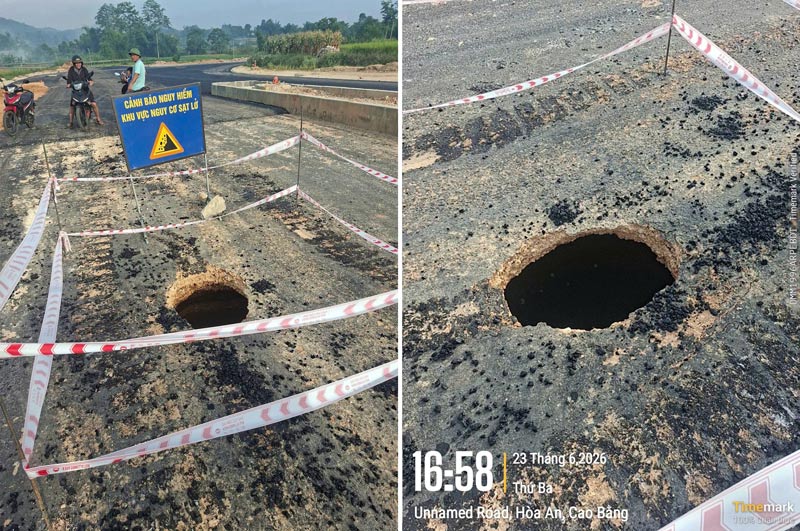
Most recently, a sudden subsidence pit was revealed right on the Hoa An bypass road under construction.
On June 23, information from the contractor of the Hoa An bypass project said that in the afternoon of June 22, during the road surface paving process, workers discovered a subsidence hole appearing on the route.
Immediately after discovering the incident, the construction unit proceeded to put up barriers and warning signs to ensure safety. According to the contractor representative, the next handling steps will have to wait for the evaluation results from specialized agencies and related units.
Leaders of Hoa An commune - the project investor - said that the locality is consulting opinions from the design consulting unit and geological experts to determine the cause and choose a suitable handling plan.
This is not the first case of a sinkhole appearing in Cao Bang recently.
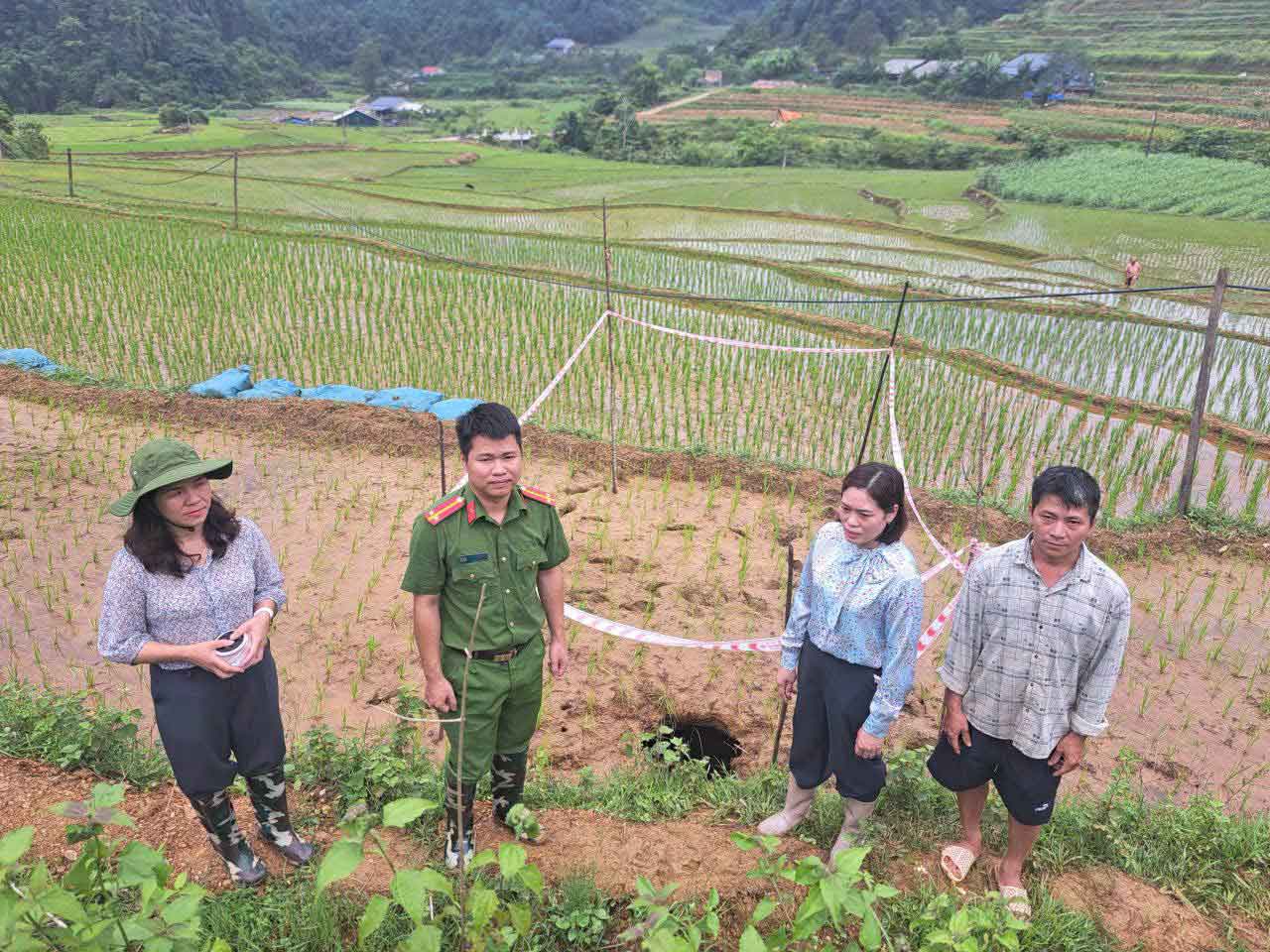
Previously, on June 17, people in Tong Nga hamlet, Nguyen Binh commune discovered an unusual subsidence hole in the middle of the cultivated field area and reported it to the local authorities.
Through surveys by functional forces, the sinkhole has a mouth diameter of about 60cm and a depth of more than 3m. Due to being located in an agricultural production area, this phenomenon poses a risk of further expansion, affecting people's labor activities.
Immediately after that, the dangerous area was zoned, warning signs were placed and ropes were stretched to prevent people and livestock from approaching.
Local authorities also advised people to monitor signs of cracks and abnormal subsidence to promptly inform functional agencies.
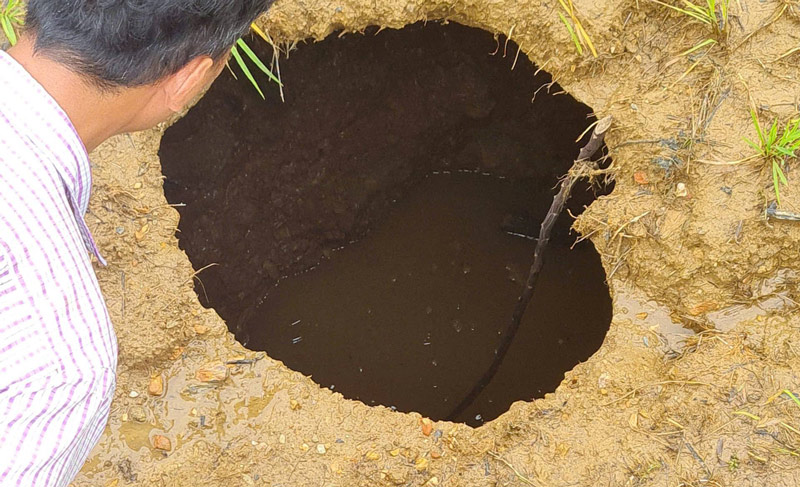
Earlier, in early June 2026, a large subsidence hole appeared in the middle of the field in Ban Hoong hamlet, Truong Ha commune, attracting the attention of people and experts.
Initial survey results from the Northeast Geological Federation, Vietnam Geological Survey, show that this area is located in a typical karst valley, where many geological fault systems intersect.
The sinkhole is more than 3m wide, about 2.5m deep, developing in the North-South direction, coinciding with one of the main fault directions of the area.
According to experts, the subsidence phenomenon may be related to the natural karstification process combined with the fluctuation of groundwater flow.
In addition, prolonged heavy rain and water drainage activities serving agricultural production may increase water seepage, causing soil and rocks to move down to hollow cavities underground.
Experts believe that it is necessary to continue researching and collecting data to accurately determine the cause of the formation of subsidence holes.

In the immediate future, localities need to maintain the zoning of dangerous areas, monitor geological developments and implement warning measures to ensure safety for people.
The continuous appearance of karst subsidence holes in a short period of time shows the complexity of the limestone terrain in Cao Bang.
In the context of extreme weather, prolonged heavy rain, the risk of arising abnormal geological phenomena may increase, posing requirements for monitoring, warning and timely response from functional agencies.


