
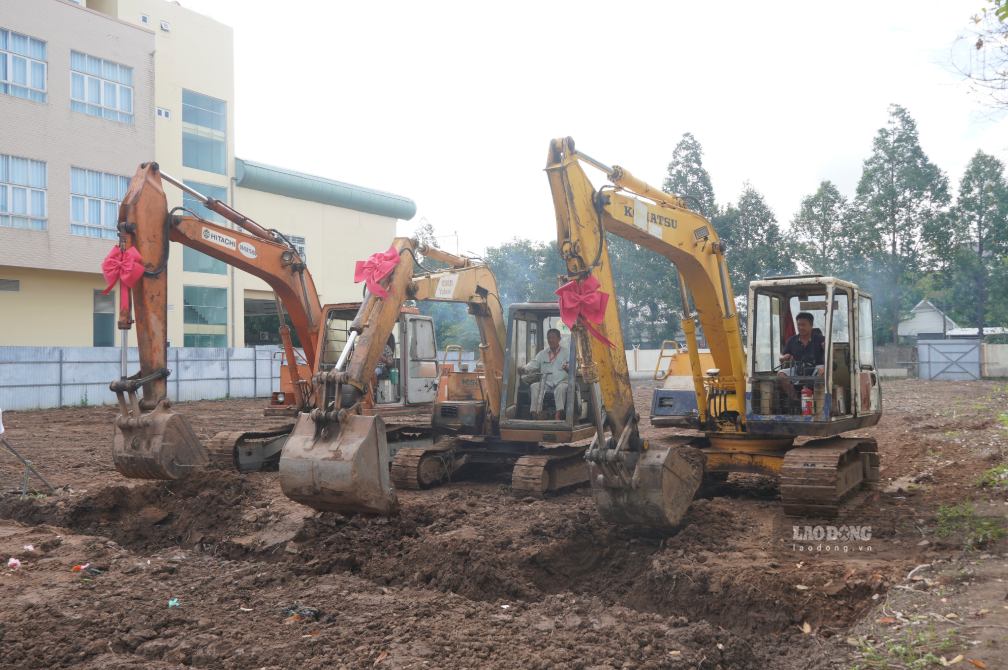
On the morning of September 18, Nam Can Tho University organized the groundbreaking ceremony for the construction of Nam Can Tho University International Hospital - phase 2.
The Nam Can Tho University International Hospital project - phase 2 is designed with 20 above-ground floors, 2 basements, total floor area of about 59,511 m2. After the project is completed and put into use, the total scale of the Hospital will be increased from 300 to about 1,000 beds.

Nam Can Tho University International Hospital - phase 2 has a total investment value of construction and equipment estimated at about 1,500 billion VND. The expected time for completion and putting the project into operation is 24 months from the date of commencement.
The project is oriented to develop according to the model of the Academic Medical Center, combining medical examination and treatment, medical human resource training and research - technology transfer.
Nam Can Tho University International Hospital is an important component in the ecosystem of Nam Can Tho University, closely linking education - training, scientific research, medical examination and treatment, innovation, digital transformation and community service. Previously, phase 1 Hospital was invested with about 860 billion VND, with a scale of 11 floors and 300 beds, officially inaugurated and went into operation from May 31, 2022.

During its operation, by November 2025, the Hospital was granted international accreditation by the AACI organization of the United States, with excellent results reaching 92.16% of the total score. This is the first hospital in the Mekong Delta region to achieve international accreditation AACI, creating an important foundation for the next stage of development.
Vision to 2045, Nam Can Tho University International Hospital strives to become a reputable Academic Medical Center, smart hospital and training - research - high-tech treatment center in the country and Southeast Asia. The hospital is oriented to gradually apply precision medicine, personalized medicine, gene technology, cell technology, robotic surgery, artificial intelligence and remote healthcare.


