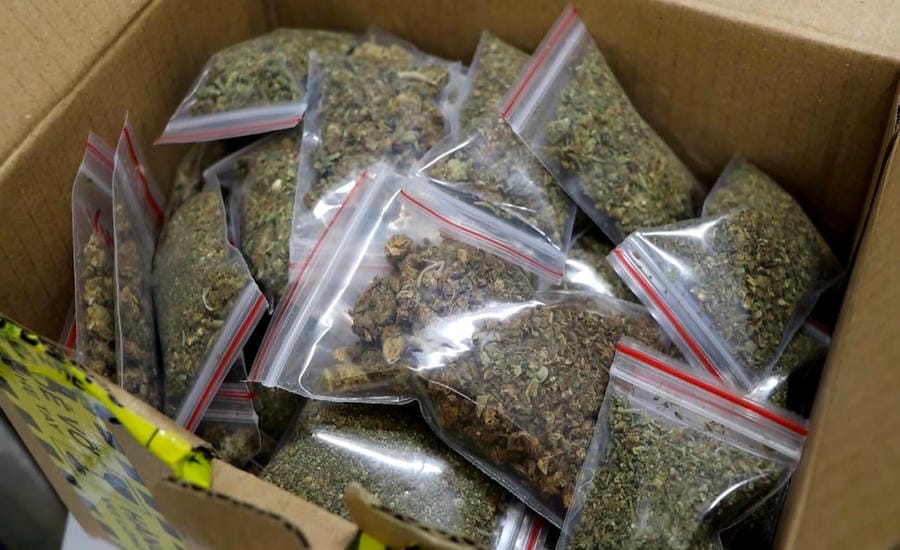
Drugs no longer have the old face
On June 25, Quang Ninh Provincial Police said that they had prosecuted and arrested 26 subjects in a particularly large-scale online cannabis trading and transportation ring.
According to the investigation, the subjects traded drugs through social networks, transported them from southern provinces to Hanoi and then distributed them to many localities. The drugs were disguised in packages, parcels, and transported by air to evade functional agencies. This line bought, sold and consumed about 600kg of marijuana; the police force seized 146kg of drugs, 7.5 billion VND and many exhibits.
Previously, on May 20, 2026, Lang Son Provincial Police caught red-handed a subject receiving a package containing more than 210g of marijuana through express delivery service. The subject confessed to participating in secret groups on social networks to buy drugs, transact online and then receive goods in the form of parcels.
According to Senior Lieutenant Colonel, Dr. Dao Trung Hieu - a criminology expert, the above cases show that drug criminals are strongly changing their operating methods, making full use of technology and cyberspace.
Today, drugs have changed a lot in form, use methods and target audiences. Besides traditional drugs, there are also a series of synthetic drugs, drugs disguised as food, drinks, e-cigarettes, electronic essential oils, fun drinks, candies, paper stamps or stress-reducing powder, making it difficult for many young people to recognize" - he analyzed.
According to him, no matter what form it is disguised under, the nature of the drug remains unchanged. The danger lies in the fact that users do not need to contact the seller directly. With just a few taps on the phone, drug ordering, payment and receipt can take place quickly and discreetly like a normal shopping transaction.
Don't trade your future for just one curiosity.
According to Senior Lieutenant Colonel Dao Trung Hieu, one of the most dangerous misconceptions today is the thought of "only trying once", or believing that you are brave enough to control drugs. He said that in the process of researching and contacting many drug addicts, almost no one actively wants to become an addict.
Most of them start with familiar sayings such as: I only try once, I know the stopping point, I can control it. But drugs do not work according to human will" - he said.
According to criminology experts, when drugs act on the brain, they change the mechanism of controlling behavior, emotions and the reward system of the body. The user's ability to control themselves will gradually be weakened.
Drugs do not defeat those who lack bravery first, but defeat the belief that they are brave enough not to be defeated" - Mr. Hieu emphasized. Therefore, according to him, the most effective preventive measure is not to try and stop at the right time, but to not give drugs the opportunity to enter life from the beginning.
Sending a message to teenagers, Senior Lieutenant Colonel Dao Trung Hieu said that drugs do not distinguish rich or poor, good at studying or bad at studying, success or failure. Once crossing that line, anyone can become a victim.
Young people today have many opportunities to learn, be creative and assert themselves. Don't trade your whole future just to satisfy a minute of curiosity or try to know once" - he said.
The Drug Crime Investigation Police Department (Ministry of Public Security) said: Drug prevention and control in the school and family environment cannot only rely on functional forces, but needs the joint efforts of the whole society. Parents need to strengthen conversations, educate life skills, safe network use skills for their children; at the same time, schools promote propaganda and integrate drug prevention and control content into educational activities.
When detecting signs of suspicion related to drugs, people need to promptly report to functional agencies to coordinate handling and prevent unfortunate consequences.
Drugs, no matter how sophisticatedly "coated", still carry the nature of destroying people. The vigilance and concern of families and schools is the first shield to protect the young generation from the danger of drugs in the digital age.