Land-penetrating radar opens up hope to find martyrs' graves in Hue Citadel

ĐẠT LUÂN |

HUE - From witnesses' accounts, military forces are using ground-penetrating radar to identify locations suspected of having mass graves of martyrs in Hue Citadel.

Using radar to search for martyrs' graves

In the afternoon and evening of June 25, many areas in Hue Citadel were cordoned off by military, police and militia forces, erected barricades, and restricted vehicles to serve the survey and search for collective graves of martyrs according to witnesses.

The first search site was deployed on Xuan 68 street, Phu Xuan ward. Here, the technical team of the National Steering Committee used ground-penetrating radar to survey the positions that had been zoned. The equipment was moved along pre-determined routes to collect underground stratigraphy data.
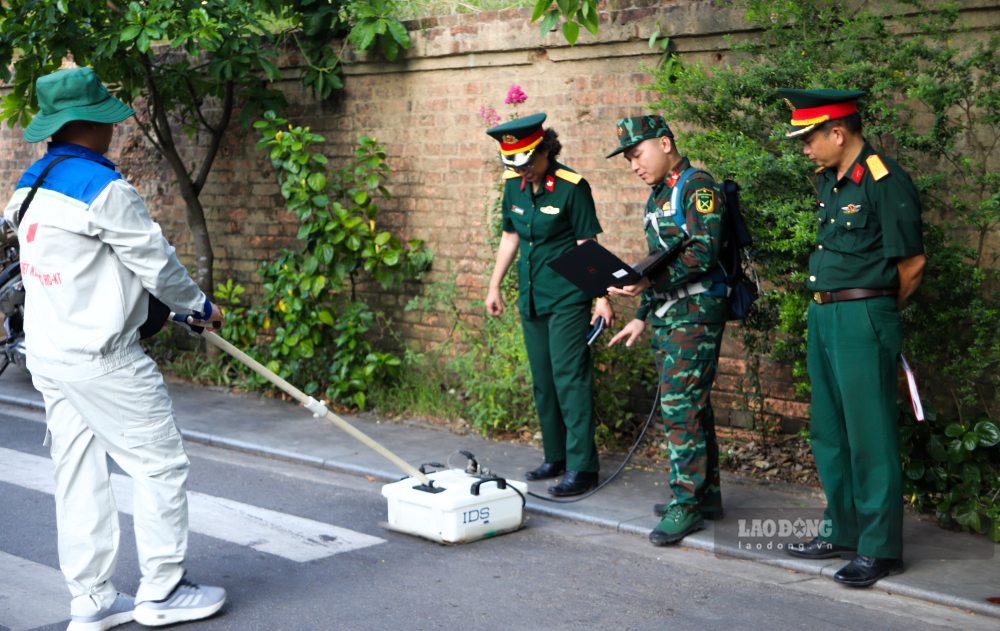
Các lực lượng tổ chức dò tìm mộ tập thể của liệt sĩ trên đường Xuân 68. Ảnh: Hồng Quân
Forces organize the search for collective graves of martyrs on Xuan 68 street. Photo: Hong Quan

By early evening, the survey continued to be deployed in the Chanh Tay gate area. This is a location that witnesses believe may have a mass grave of martyrs from the General Offensive and Uprising of Spring Mau Than 1968.

Present at the scene, Mr. Le Van Luot (70 years old, residing in Phu Xuan ward) monitored the survey process of functional forces. He is a witness who provided information about locations suspected of having mass graves of martyrs in Hue Citadel.

According to Mr. Luot's account, at the end of January 1968, when he was only 12 years old, he and his father passed through Chanh Tay gate and saw a large bomb pit. Here, about 15 bodies of fallen soldiers were collected and buried at a depth of nearly 3m by the Republic of Vietnam engineering force.
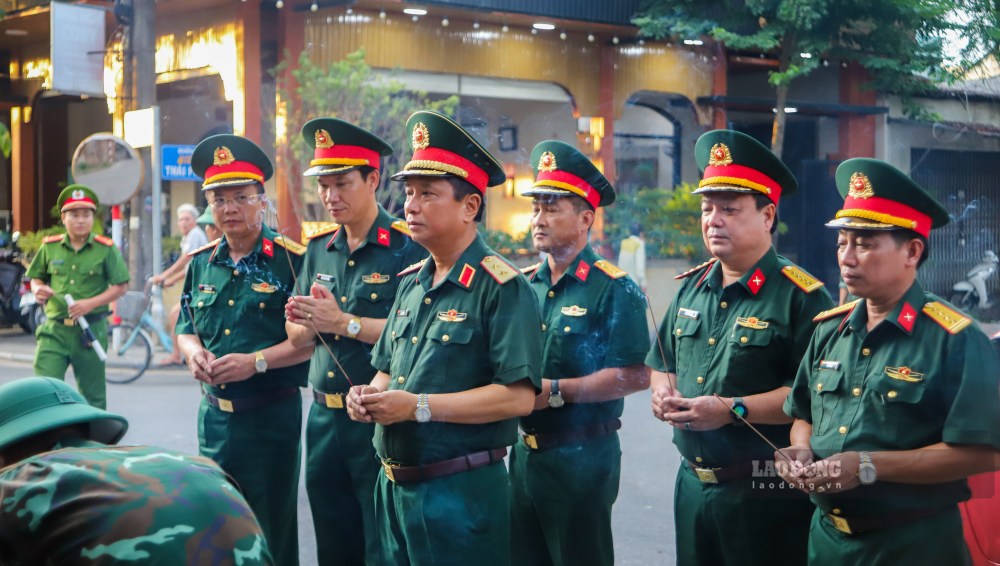

Trung tướng Hà Thọ Bình, Tư lệnh Quân khu 4 và các đại biểu thực hiện các nghi thức trước khi triển khai thiết bị radar khảo sát. Ảnh: Nguyễn Luân
Lieutenant General Ha Tho Binh, Commander of Military Region 4 and delegates perform rituals before deploying survey radar equipment. Photo: Nguyen Luan
Những nén hương với hi vọng có thể tìm kiếm được mộ tập thể của liệt sĩ. Ảnh: Nguyễn Luân
Incense sticks with the hope of finding the collective grave of the martyr. Photo: Nguyen Luan

In addition to this position, for many years he has also recorded the stories of elderly people about other locations suspected of having mass graves of martyrs and transferred information to functional agencies. According to him, the Cua Hau area also has many signs that need to be further verified.

According to the plan, after the first two survey points, ground-penetrating radar will continue to be used in many other areas in Hue Citadel with a total area of about 1,350m2.

Difficulties due to stratigraphy

Senior Lieutenant Colonel Pham Thi Thanh Van - Deputy Director of the Central Sub-Institute, Institute of Design, General Department of Logistics - Technology said that the equipment used in the survey is a dual-frequency radar, capable of detecting changes in stratigraphy without affecting the current status of the ground.

The device will transmit electromagnetic waves into the stratigraphy below the surface and we will collect feedback waves, which are stored on computers. And through feedback waves, we will assess stratigraphy and stratigraphy disturbances or foreign objects underground without affecting the status quo, without affecting the lives of residents in the city." - Senior Lieutenant Colonel Pham Thi Thanh Van shared.
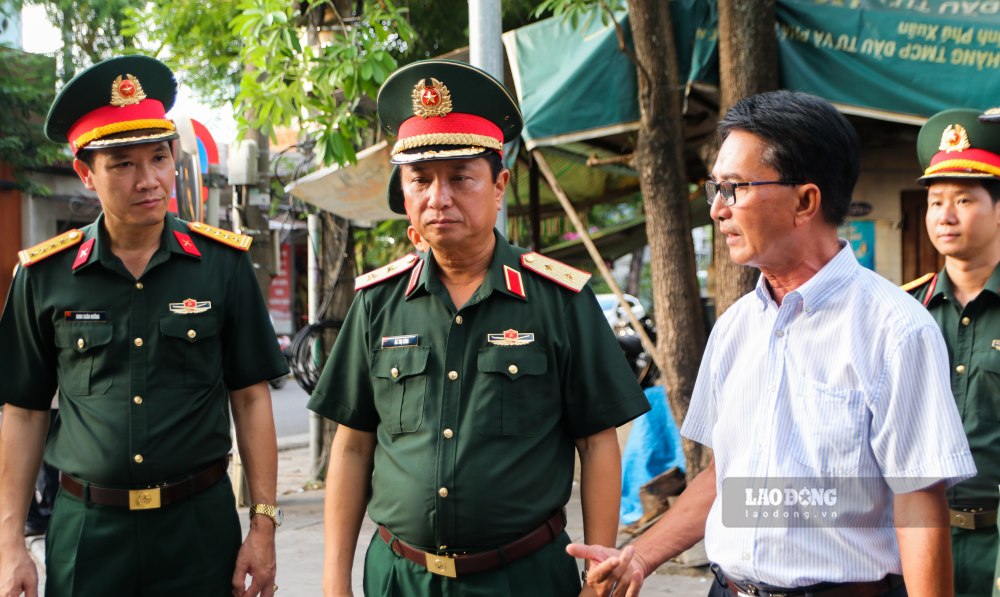
Tư lệnh Quân khu 4 (giữa) và các đại biểu trò chuyện cùng nhân chứng Lê Văn Lượt. Ảnh: Nguyễn Luân
Commander of Military Region 4 (middle) and delegates talk with witness Le Van Luot. Photo: Nguyen Luan

According to Lieutenant Colonel Van, after completing radar scanning in the field, data slices will be sent for analysis to assess stratigraphic characteristics, the level of electromagnetic wave response and identify areas with signs of disturbances or underground foreign objects before reporting to the Steering Committee.

Regarding the survey conditions, Senior Lieutenant Colonel Van said that the ground in the urban area is quite favorable for the operation of equipment. However, the stratigraph under the roads in Hue Citadel has many layers of structure, making it difficult for radar signals to transmit down to deep layers of soil.

We will try to carefully analyze the results obtained at the scene to have the best results to report to the Steering Committee" - Senior Lieutenant Colonel Van said.
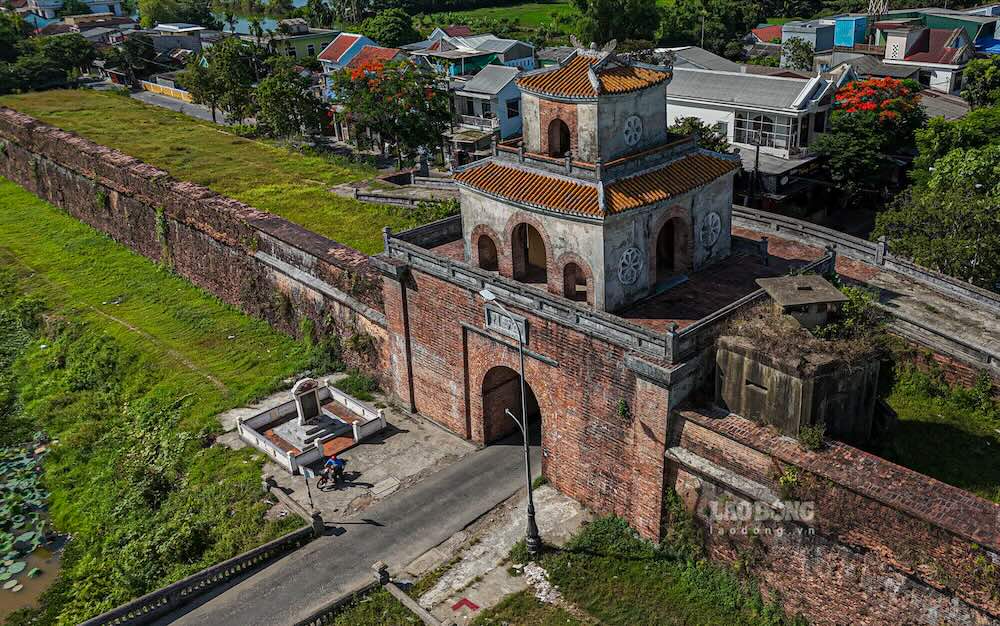
Cửa Chánh Tây - khu vực nghi có mộ tập thể của liệt sĩ. Ảnh: Nguyễn Luân
Chanh Tay Gate - area suspected of having a mass grave of a martyr. Photo: Nguyen Luan

Directly monitoring the survey work, Lieutenant General Ha Tho Binh - Commander of Military Region 4 requested specialized units to continue to thoroughly review, combine radar data with information from witnesses, veterans and historical sources to improve accuracy, and soon identify locations where martyrs are likely to be buried to serve excavation and repatriation work.

ĐẠT LUÂN
RELATED NEWS

Using radar to penetrate the ground to search for mass grave of martyrs in Ho Chi Minh City

|

Functional forces and experts applying ground-penetrating radar technology to survey mass graves of martyrs in Ho Chi Minh City.

Radar scanning of locations suspected to be mass graves of martyrs at Le Thi Rieng Park

|

Ho Chi Minh City - Ho Chi Minh City Command coordinates with experts to use radar technology to survey the suspected location of the mass grave of martyrs at Le Thi Rieng Park.

Using modern radar technology to scan and find martyrs' remains in Quang Ngai

|

Quang Ngai - Advanced and modern radar equipment system used for widespread scanning, serving the search for martyrs' remains.

Musician Giang Son wins lawsuit over copyright dispute for "Night Dream" with BH Media

|

At noon on June 26, musician Giang Son said that the Hanoi People's Court concluded that BH Media company had committed copyright infringement against the work "Noon Dream".

Land-penetrating radar opens up hope to find martyrs' graves in Hue Citadel

|

HUE - From witnesses' accounts, military forces are using ground-penetrating radar to identify locations suspected of having mass graves of martyrs in Hue Citadel.

Hanoi doubles fines for traffic violations

|

Hanoi - From July 2026, violations of roads and sidewalks may be fined up to 12 million VND.

Bach Mai Hospital, Ninh Binh facility, welcomes the first patients

|

Ninh Binh - On the morning of June 26, Bach Mai Hospital facility in Ninh Binh officially went into operation and welcomed the first patients.

List of collectives and individuals expected to be honored in the 2026 Glory of Vietnam Program

|

On the afternoon of June 25, 2026, the Selection Council for the 2026 Glory of Vietnam Program met to consider nominees from Central Committees, Ministries, sectors and Provincial and City Labor Federations, Central Industry Trade Unions and equivalents. Below are the expected selection of collectives and individuals to be considered and honored in the 2026 Glory of Vietnam Program.

Using radar to penetrate the ground to search for mass grave of martyrs in Ho Chi Minh City

Bảo Tú |

Functional forces and experts applying ground-penetrating radar technology to survey mass graves of martyrs in Ho Chi Minh City.

Radar scanning of locations suspected to be mass graves of martyrs at Le Thi Rieng Park

Anh Tú |

Ho Chi Minh City - Ho Chi Minh City Command coordinates with experts to use radar technology to survey the suspected location of the mass grave of martyrs at Le Thi Rieng Park.

Using modern radar technology to scan and find martyrs' remains in Quang Ngai

THANH TUẤN |

Quang Ngai - Advanced and modern radar equipment system used for widespread scanning, serving the search for martyrs' remains.
