
On September 20, many traffic diversion signs for the construction of Tao Dan station (ST2), belonging to Metro Line No. 2 (Ben Thanh - Tham Luong), were installed on Nguyen Thi Minh Khai street, the section from Cao Thang to Huyen Tran Cong Chua and Cach Mang Thang Tam street, the section from Nguyen Du to Nguyen Thi Minh Khai.
However, the traffic diversion plan has not been officially applied, so the traffic signs are still covered.
According to the plan agreed upon by the Ho Chi Minh City Department of Construction, Tao Dan station construction is expected to last more than 3 years. During this time, the contractor will successively barricade the construction area, build bypasses for vehicles to run, and adjust traffic on many surrounding routes.
Cach Mang Thang Tam street, the section from Nguyen Du to Nguyen Thi Minh Khai, about 350m long, will organize one-way traffic in the direction of Nguyen Du - Nguyen Thi Minh Khai.
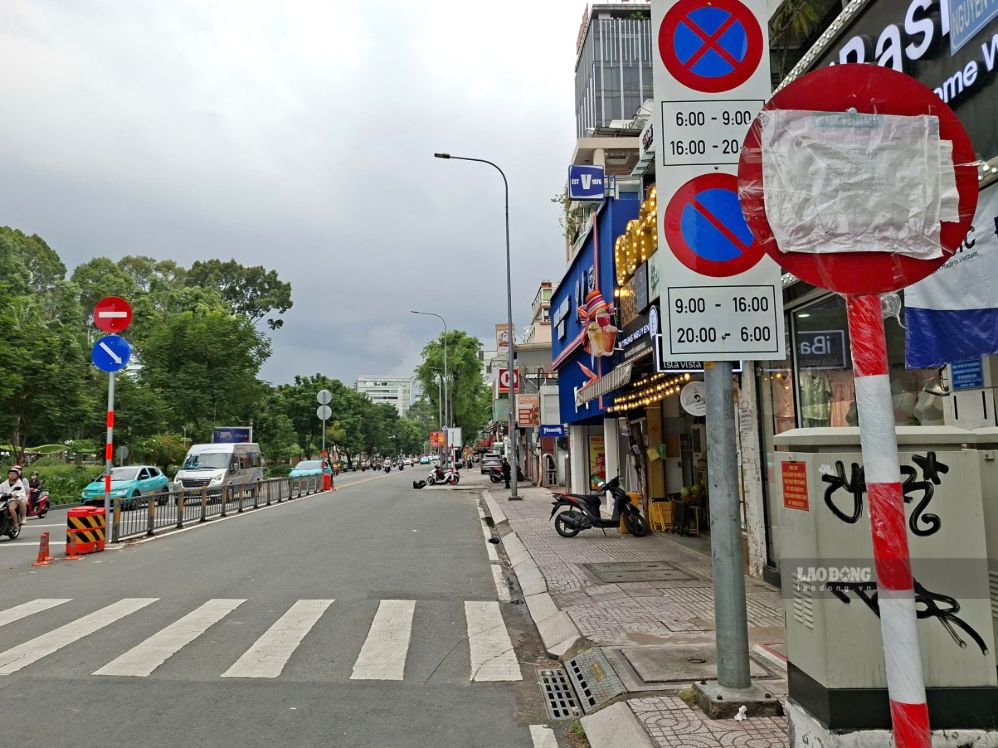
Nguyen Thi Minh Khai street, the section from Cao Thang to Huyen Tran Cong Chua, about 1.5km long, is also organized for one-way traffic.
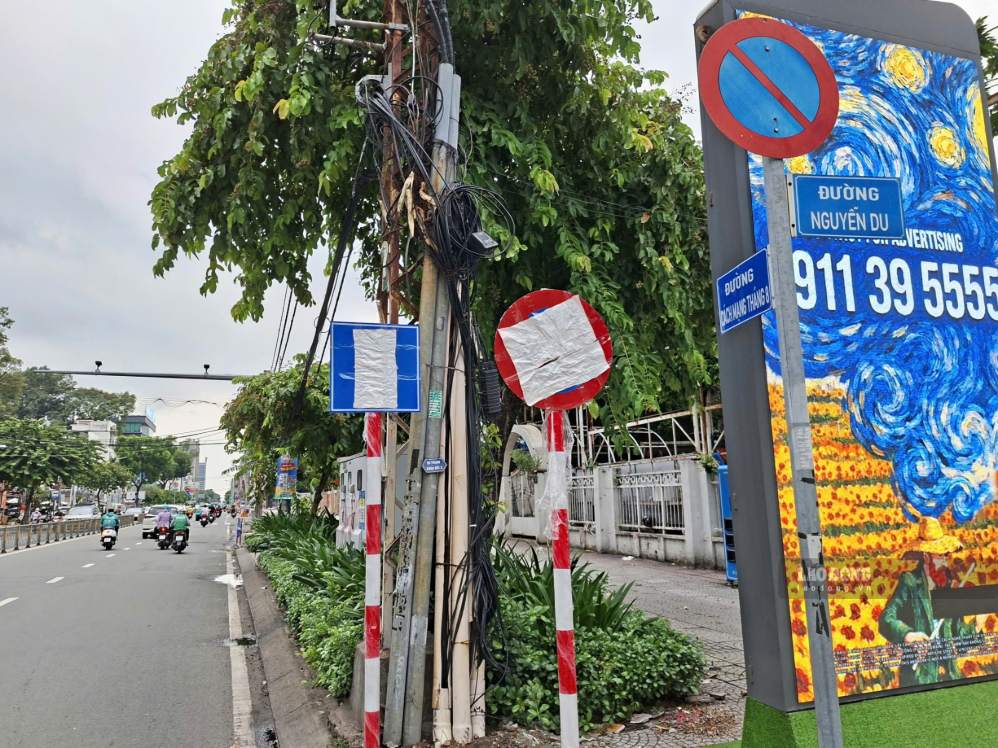
Not only Tao Dan station, the Bay Hien station area (ST7) on Cach Mang Thang Tam and Truong Chinh streets will also be barricaded, occupying a part of the road surface. Traffic on nearby routes will be adjusted, in which some sections will be converted into one-way streets.
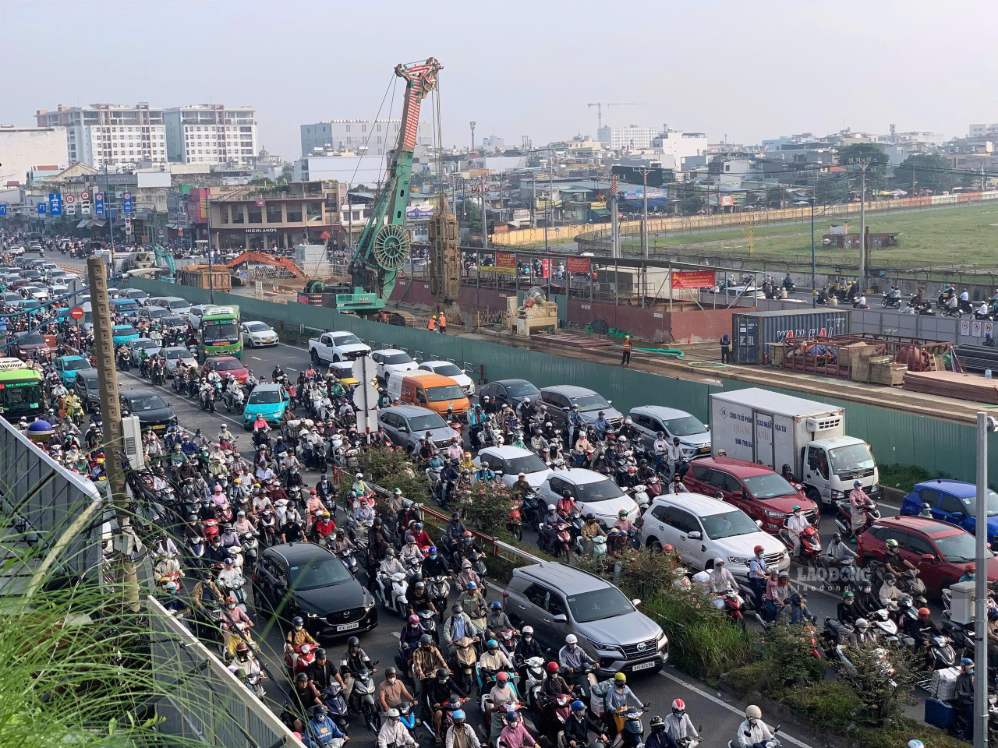
Previously, from September 16, a part of the roadway of Truong Chinh, Tan Ky Tan Quy and Huynh Van Gam streets was barricaded to construct ST9 station (Ba Queo).
Real-world records show that the narrowing of the road surface in this area causes motorbikes and cars to extend and move slowly on Truong Chinh street, especially in the area intersecting with Cong Hoa street.
Restricting cars on Tan Ky Tan Quy street also causes part of the traffic flow to concentrate on the Cong Hoa and Truong Chinh axes, increasing traffic pressure.
According to Mr. Vo Khanh Hung - Deputy Director of Ho Chi Minh City Department of Construction, the traffic diversion plan is built on the basis of the current infrastructure status, vehicle traffic flow and the requirement to ensure safety during construction.
In the initial period of implementation, functional agencies will closely monitor traffic developments in each area, especially routes used as alternative routes.
Data from the surveillance camera system, vehicle traffic and the actual situation at intersections will be used to evaluate the effectiveness of the traffic diversion plan. If local congestion arises or new conflict points appear, functional sectors will coordinate to research and adjust.
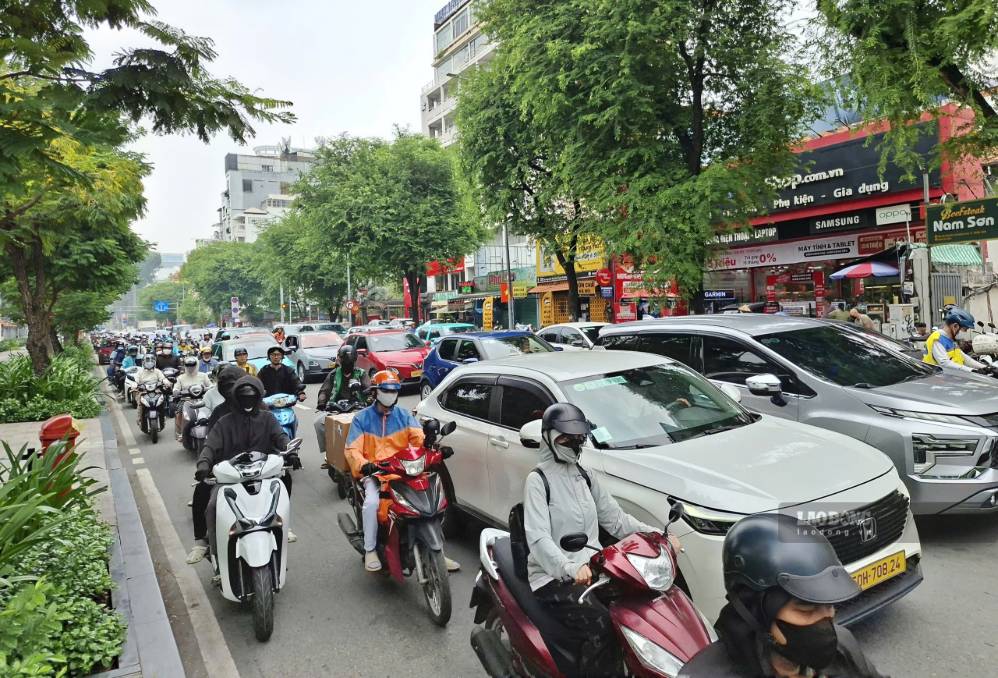
Mr. Vu Van Vinh - Director of Project Management Board 2 (under the Ho Chi Minh City Urban Railway Management Board) said that Metro Line 2 is currently under construction at 5 underground station locations.
According to Mr. Vinh, in these areas, the traffic organization plan is built on the principle of maintaining traffic through the construction site area. Because the road surface for vehicles is narrowed, vehicles are directed to nearby routes to reduce pressure in front of the station area and limit the risk of congestion when traffic volume increases.
In the coming time, Project Management Board 2 will continue to coordinate with the Traffic Police Department of Ho Chi Minh City Police (PC08), traffic police teams and ward police to organize traffic regulation.
Cameras are also installed at intersections to monitor traffic conditions, thereby promptly regulating remotely when congestion arises.


