
Faced with prolonged heavy rain in the Northern region and Quang Ninh, the Ministry of Construction has just issued a document requesting relevant agencies and units to urgently deploy response plans to ensure traffic safety, infrastructure safety and minimize damage caused by natural disasters.
According to the bulletin of the National Center for Hydro-Meteorological Forecasting, from July 16 to the end of July 18, the mountainous and midland areas of the Northern region and Quang Ninh will have moderate rain, heavy rain and thunderstorms with common rainfall from 80-150mm, in some places over 300mm; there is a risk of heavy rain, over 100mm in 3 hours.
From July 19, the mountainous and midland areas of the Northern region will continue to have rain, moderate rain and thunderstorms with rainfall from 20-40mm, with heavy to very heavy rain in some places.
Notably, from the night of July 16 to July 21, rivers in the Northern region are likely to experience a flood with an amplitude of 2-5m. The peak flood water level on small rivers may reach alarm level 2 to alarm level 3; Thao River, Lo River and upstream of the Thai Binh river system are forecast to reach alarm level 1 to alarm level 2, with some places above alarm level 2.
Faced with the above situation, the Ministry of Construction requests heads of agencies and units to promptly direct, inspect, urge and effectively implement disaster prevention and control and rescue work according to their assigned functions and tasks; not to be passive or surprised.
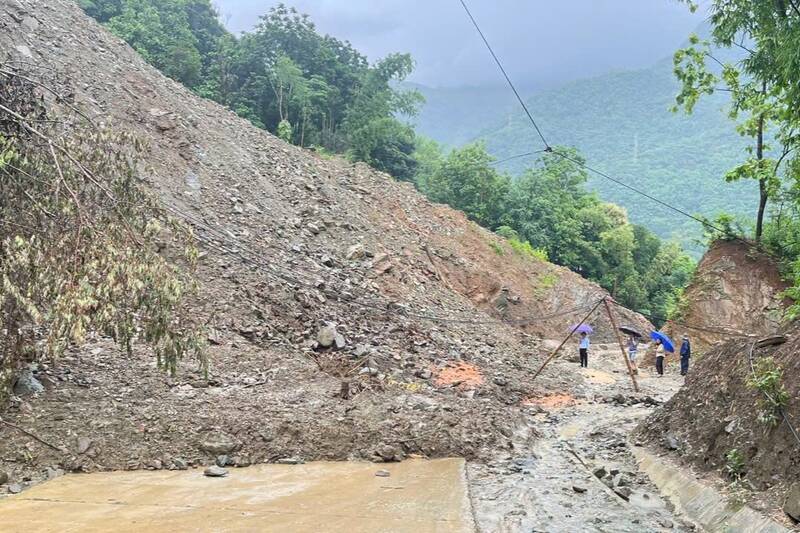
For the Vietnam Road Administration, the Ministry of Construction requests to direct units to inspect, review, and deploy plans to ensure traffic on national highways; promptly overcome landslide and cut-off locations to ensure traffic, especially on key national highways and main traffic axes.
Road Management Areas are assigned to coordinate with the Department of Construction and local functional forces to organize duty and traffic diversion; arrange forces to guard, plant buoys, barriers, and signs at deep flooded locations, underground spillways, roads broken or landslides; absolutely do not allow people and vehicles to enter dangerous areas.
For the railway sector, the Ministry of Construction requests the Vietnam Railways Authority and Vietnam Railways Corporation to strengthen patrols and checkpoints at key locations such as bridges, tunnels, weak roads, areas frequently flooded, flash floods, rockfalls, landslides and areas downstream of dikes, dams, and reservoirs.
Railway units must also prepare sufficient vehicles, materials, equipment and personnel to overcome the consequences of rain and floods in the fastest time; and at the same time develop plans to stop trains, extend trains, increase trains and transfer passengers when flooding and landslides occur and affect train operation safety.
In the field of maritime and inland waterways, the Vietnam Maritime and Inland Waterway Administration is required to closely monitor the developments of rain and floods to promptly recover and maintain the buoy and signal system when necessary and quickly deploy it back after the water recedes; and at the same time organize permanent anti-collision at key bridges on the national inland waterway route.
For the aviation sector, the Civil Aviation Authority of Vietnam and Vietnam Air Traffic Management Corporation must strengthen the inspection of airports, terminals, communication systems, and flight operations to promptly detect and handle incidents. Airlines are required to closely monitor weather developments to adjust flight schedules, routes and destination airports accordingly, ensuring absolute safety of flight operations in bad weather conditions.
The Ministry of Construction also assigned the Economic - Construction Investment Management Department to direct project management boards, investors, contractors and related units to ensure construction safety, prevent landslides during the rainy and flood season; prepare sufficient conditions to promptly handle construction incidents and coordinate to ensure smooth traffic on routes that are both under construction and operation.
For the Departments of Construction of provinces and cities in areas affected by rain and floods, the Ministry of Construction requests close coordination with local authorities, Road Management Zones and road, rail, and waterway management units to proactively overcome incidents; organize traffic diversion, and at the same time coordinate with the railway industry in transport operation, loading and transferring passengers and goods when necessary.
The Ministry of Construction requests relevant agencies and units to organize 24/24 hour duty and implement the reporting regime to the Steering Committee for Natural Disaster Prevention and Control and Search and Rescue of the Ministry of Construction according to regulations.


