
At the end of May 2026, Ngoc Tri 1 residential group (Long Bien ward) mobilized people to renovate the cultural house and plant trees in the cultural house grounds (intersection of alley 279 Thach Ban street, Long Bien ward).
During the process of digging holes to plant trees, people accidentally discovered the steps up and down of an ancient well.
Officials and people of Ngoc Tri 1 residential group have shielded, temporarily surrounded, temporarily stopped deploying renovation work and reported to Long Bien Ward People's Committee to ask for opinions on handling archaeological research.
Immediately upon receiving the information, on May 21, Long Bien Ward People's Committee promptly directed the management and protection of the current status of the area, ensuring compliance with the provisions of law on cultural management, construction and project safety. At the same time, reporting to the Hanoi Department of Culture and Sports on the discovery of architectural traces during the renovation of the cultural house grounds.
On June 4, Long Bien Ward People's Committee coordinated with the Department of Culture and Sports to organize a survey to assess the relic and record the location of the architectural discovery within the cultural house campus, which is one of the ancient wells of Ngoc Tri village that was filled in around the early 2000s.
After that, the Hanoi Museum coordinated with the University of Social Sciences and Humanities (Vietnam National University, Hanoi) and Long Bien Ward People's Committee to complete procedures to carry out urgent archaeological excavation work. The implementation time is from July 17 to August 4.
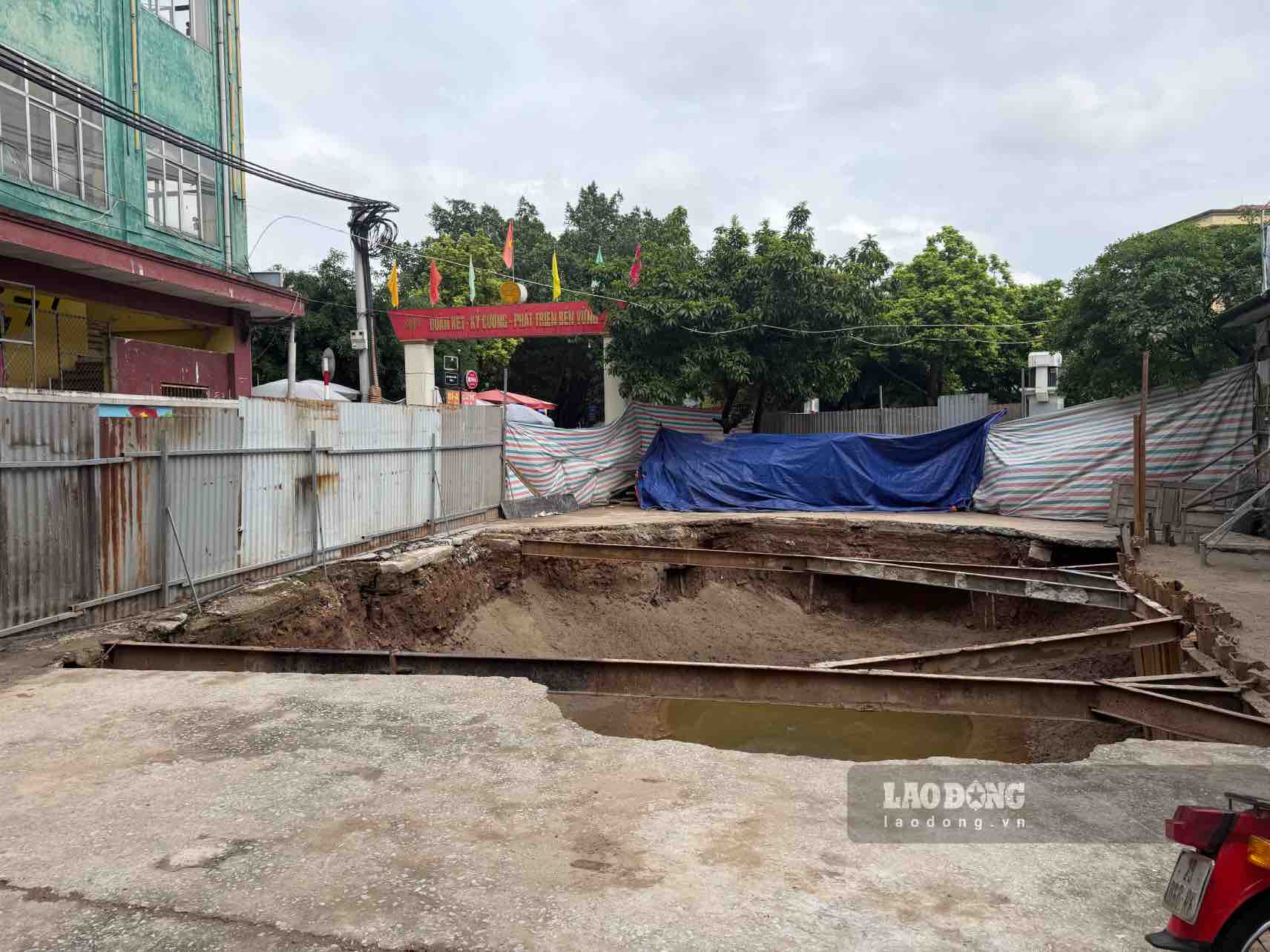
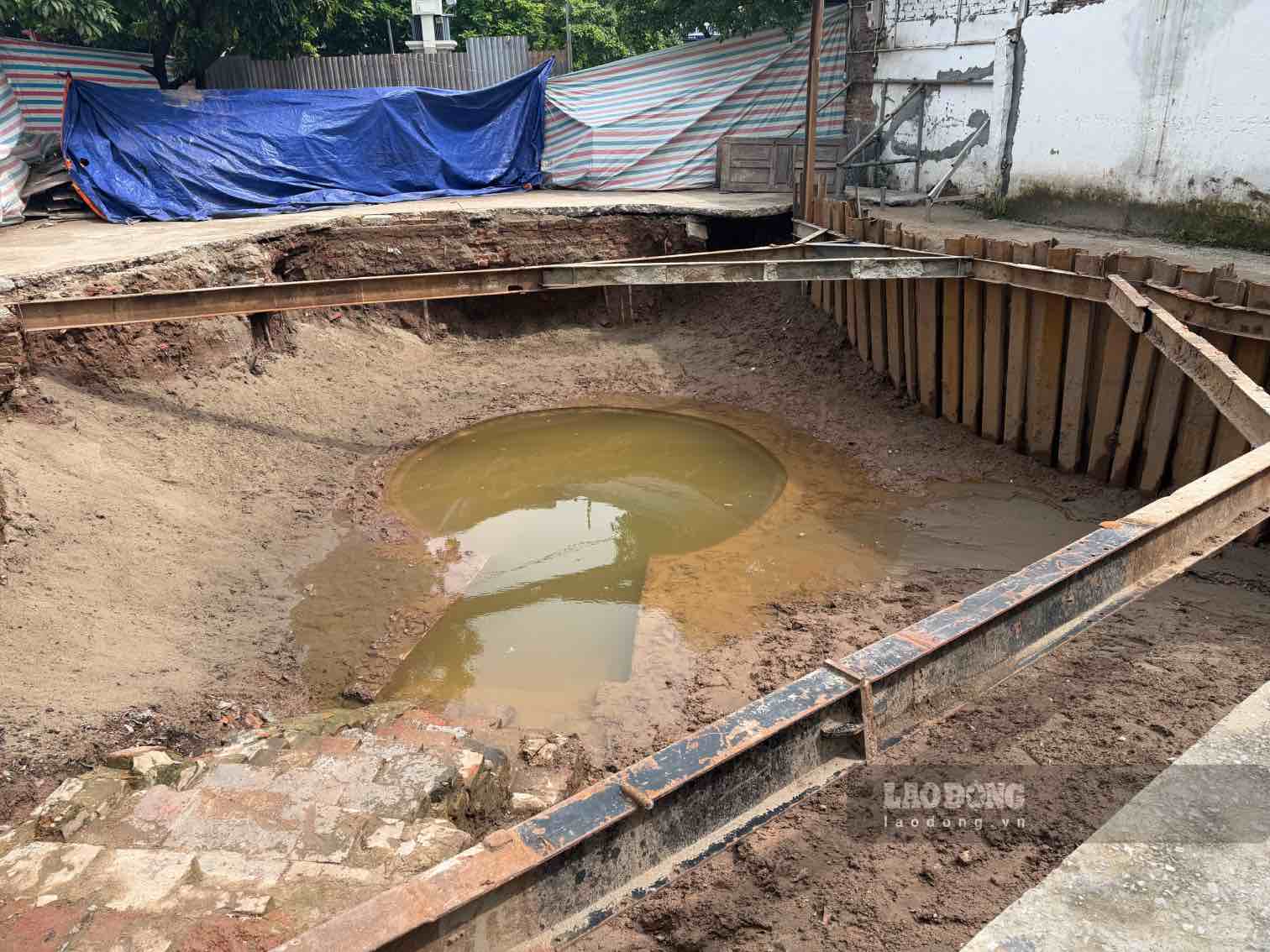
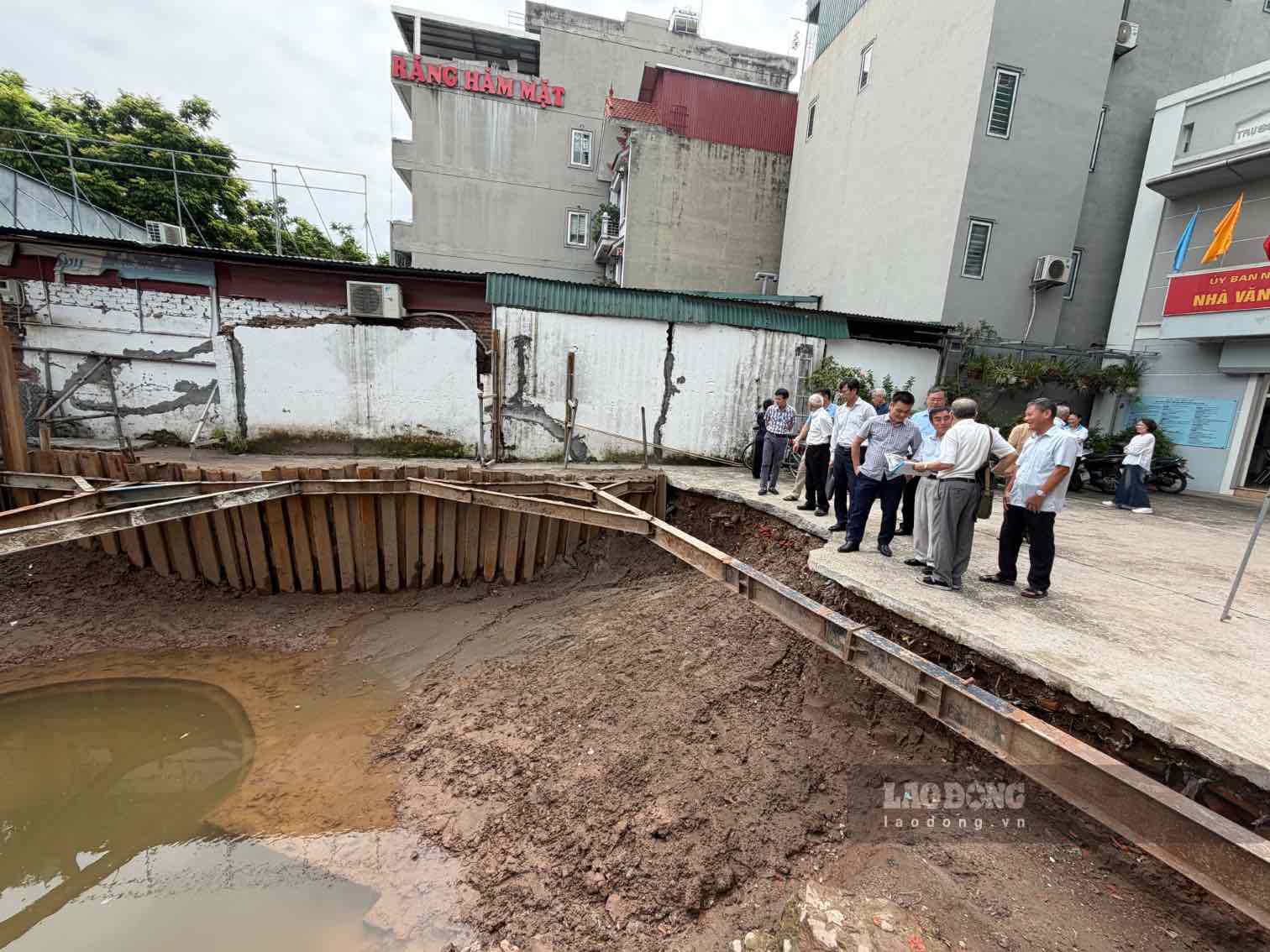
On August 6, information at the conference reporting preliminary results of urgent archaeological excavation in the campus of Ngoc Tri 1 residential group Cultural House, Dr. Nguyen Huu Manh - Head of the Museum of History and Culture cum Deputy Head of the Faculty of History and Culture, University of Social Sciences and Humanities said that through studying the stratigraph of excavated pits, it can be recorded that the scope of ancient wells is circular, distributed in an area of about 200m2.
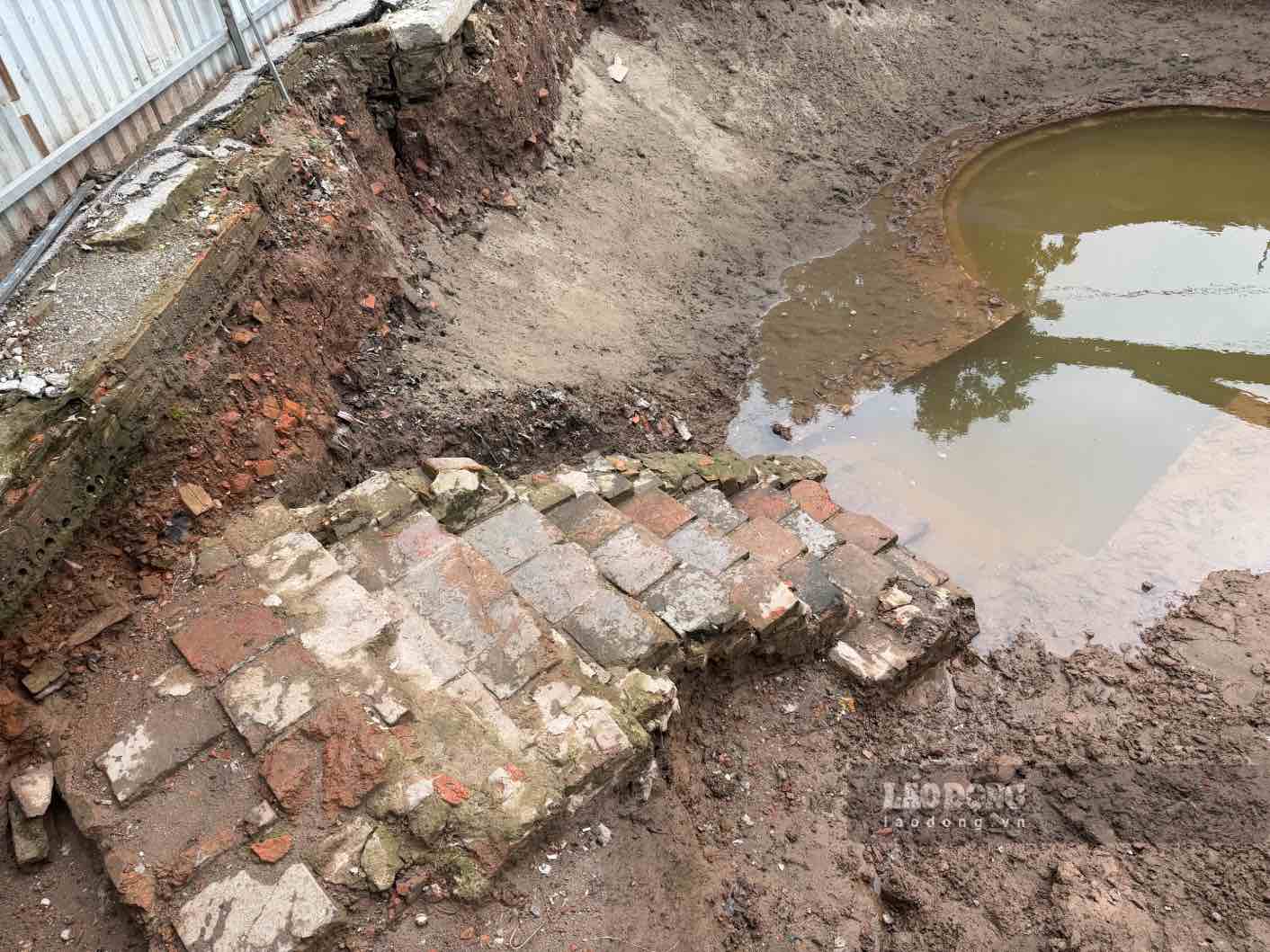
In the excavation area, a Bat Trang brick-built well leading down to the ancient well has been revealed.
Regarding building materials, the bridge and well are mainly built of Bat Trang brick, orange-red to dark red; square brick with dimensions of about 30 × 30cm, 7 - 10cm thick, creating the main structure of the steps.
Damaged bricks and broken bricks are used as outer bricks or bricks for the column body. On both sides of the column walls, the presence of broken tile fragments used as reinforcement materials in the lime mortar layer is also recorded.
Regarding the conservation status, basically the well bridge is still quite intact, but in detail, some places are degraded, even some bricks are broken and disappeared from their original positions.
The steps that are deeper are protected by a layer of soil, so they are quite well preserved, and the morphology and construction techniques are clearly identified. Some sides of the steps show signs of slight abrasion in the central area, which may reflect the frequent movement during the time the project is still in use.
Based on the characteristics of layering techniques, tier structures, architectural organization methods and building materials, especially the appearance of Bat Trang bricks common in the ancient Long Bien land... it can be determined that the well bridge was built in the 19th century" - Dr. Nguyen Huu Manh assessed.
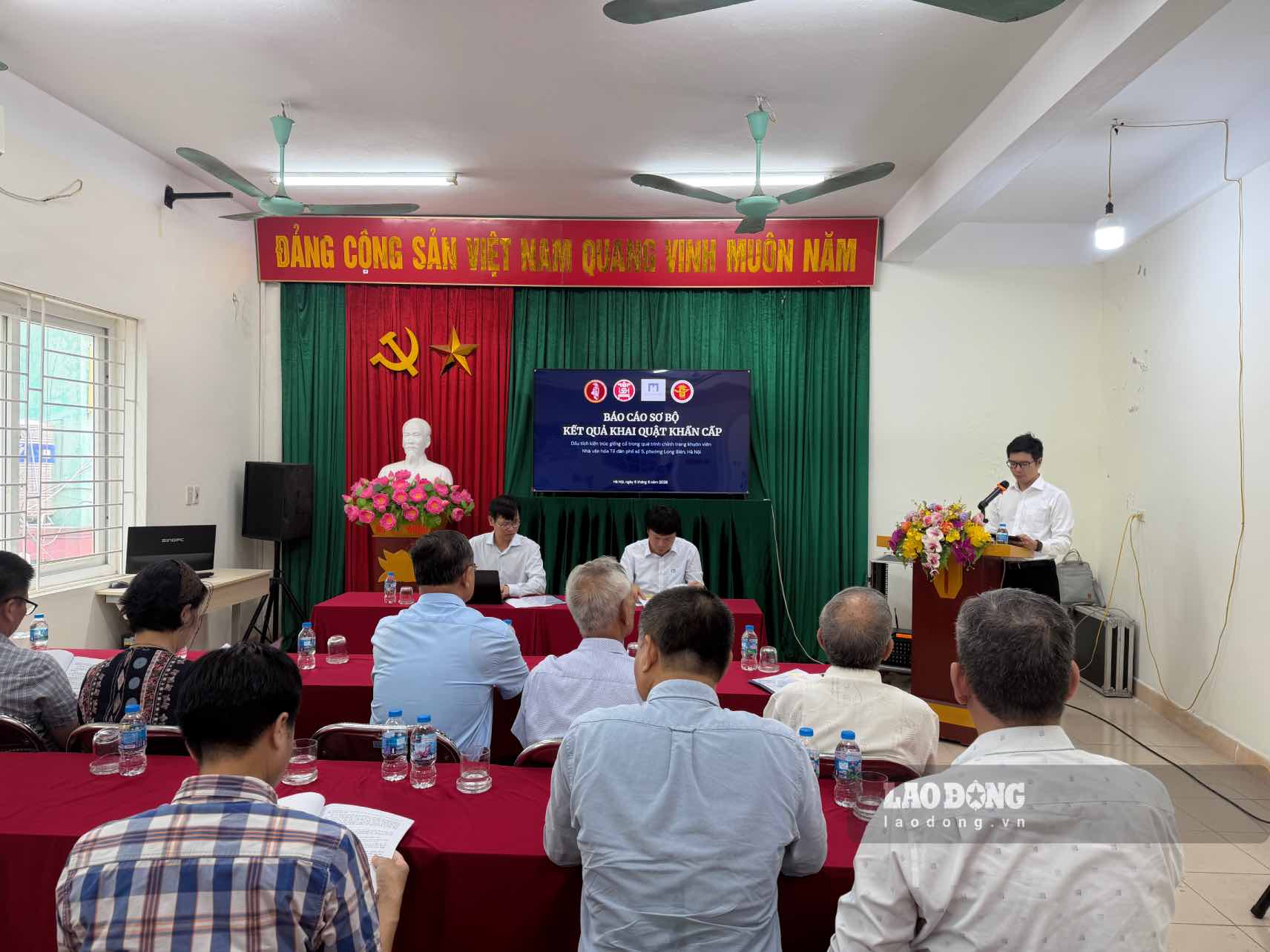
According to Dr. Nguyen Huu Manh, due to the new excavation approaching a part of the structure, complex groundwater and ground conditions, incomplete artifact records and specialized analysis, the excavation team proposed a on-site preservation plan according to Article 17 of Decree No. 308/2025/ND-CP. The architectural traces (boats and wells) are proposed to be preserved in their original state on the spot.


