
Editorial note: Revolutionary journalists in the Southwest battlefield in the past, with just pens and paper, bravely ventured into "death coordinates" to bring back hot news.
In that arduous working context, they lived and fought to their last breath. Some people forever left their bodies behind; some left the war with silent, nameless wounds, voluntarily choosing the disadvantaged part to give up benefits to their comrades...
To celebrate the 101st anniversary of the Vietnamese Revolutionary Press Day on June 21, 2026, Lao Dong Newspaper would like to send readers a series of notes about a generation of heroic writers in the Mekong Delta.
Like an immortal flower
Approaching the dossiers of journalist soldiers in the Southwest region, we could not help but feel heartbroken when we learned that in the old Tien Giang land alone, in the anti-American resistance war, 41 journalists sacrificed; in the old Kien Giang land, the number was nearly 30 people. Their sacrifices all have one thing in common: they are all worthy of immortality.
Like journalist Duc Thanh Thang (Nguyen Van Duc, 1917 - 1958), a son of Giong Rieng land who passed the Baccalaureate in the early 1940s. Rejecting the mandarin career, he determined to follow the revolution and was transferred to Rach Gia province to do propaganda work.
Arrested by the enemy on a business trip to Go Quao, experiencing countless prisons from Rach Gia to Phu Loi with brutal torture, but the enemy was helpless because he had chosen death to protect the organization's secrets before being secretly eliminated by the enemy.
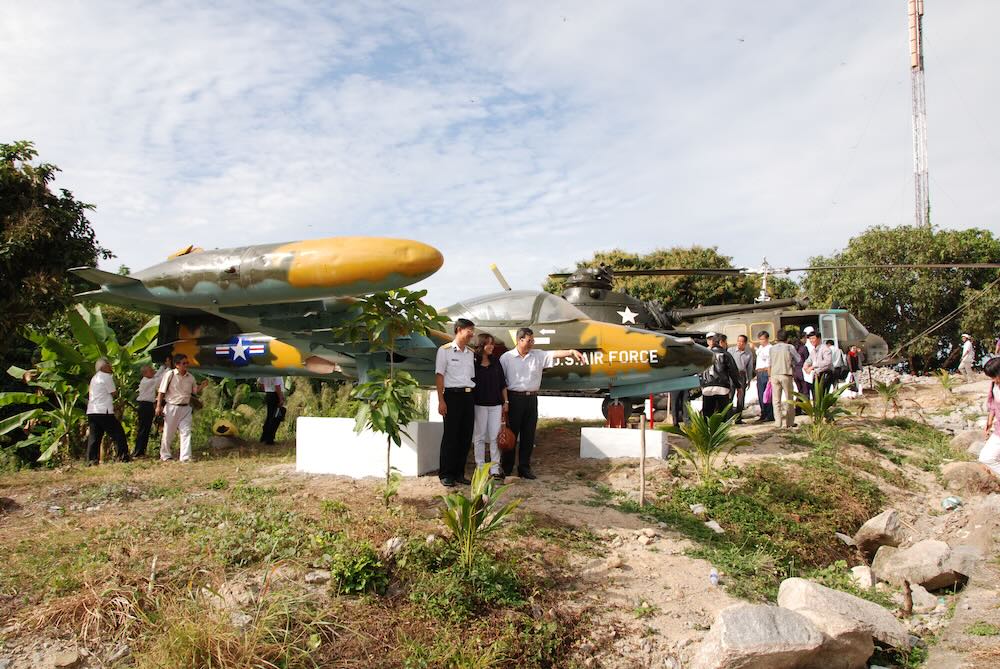
Perhaps the most heartfelt are those who fell because of their burning love for the profession. In 1965, reporter Vu Suong (Nguyen Van Dung) of Ap Bac newspaper (My Tho) volunteered to return to the Go Cong region that was being heavily pacified by the enemy.
With a well-known declaration: "You must go to the battlefield to have the quality to write", he followed the troops to attack Vam Lang fort and then was shot and broke his leg. Surrounded by enemy fire, he resolutely did not surrender, fighting to his last breath. The enemy then dragged his body to intimidate in order to intimidate the people's spirit - but further highlighted the integrity of the writer.
Keeping the information blood vessels between bombs and bullets
During the days wandering in the Mekong Delta, we heard journalist Truong Thanh Nha (former reporter of Chien Thang newspaper, predecessor of Kien Giang newspaper) sadly tell about his comrade Nguyen Van Cong (Bay Truyen, 1944 - 1971).
With the determination to bring the Nham Ty Spring 1972 issue to soldiers right on the occasion of the traditional Tet holiday, Mr. Bay Truyen alone carried the newspaper across U Minh cajuput forest to reach the Post Office Station. However, on the way, he was ambushed by the enemy and fell right at the sacred New Year's Eve moment, when he had not yet had time to get married" - Mr. Nha said.
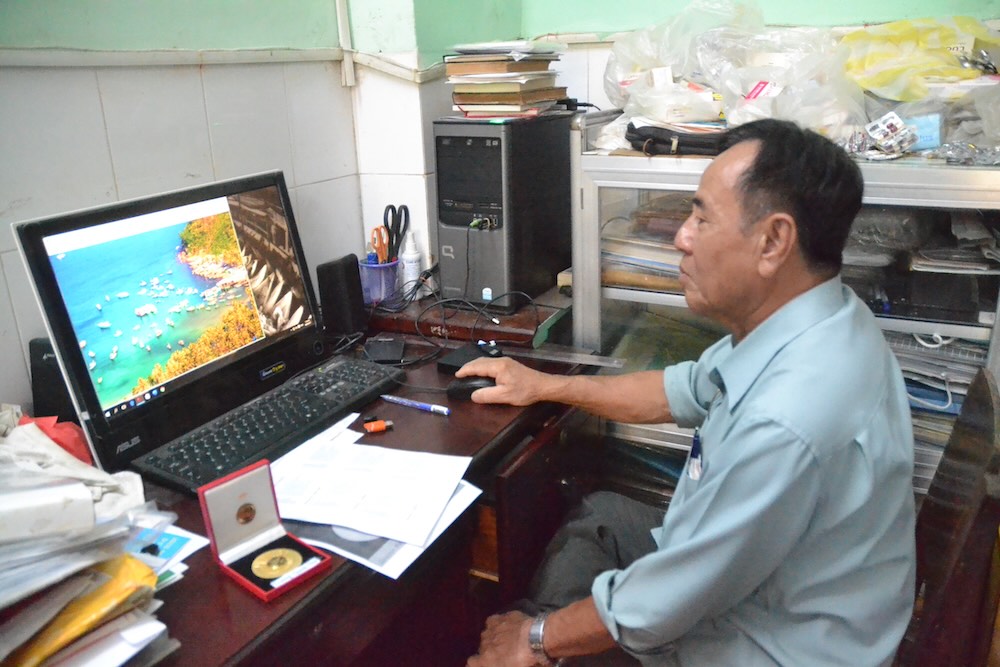
He also recalled the memory of 1969 in U Minh forest, when B52 bombs rained down and took the lives of 4 reporters of Chien Thang newspaper. After that, the temporary tomb area continued to be plowed up and devastated by bombs. "On peace day, when comrades returned, the traces had been leveled. We were forced to gather a pile of common land in that area, write down the names of the soldiers on a piece of paper and then draw lots to return the identities to each person," Mr. Nha choked up.
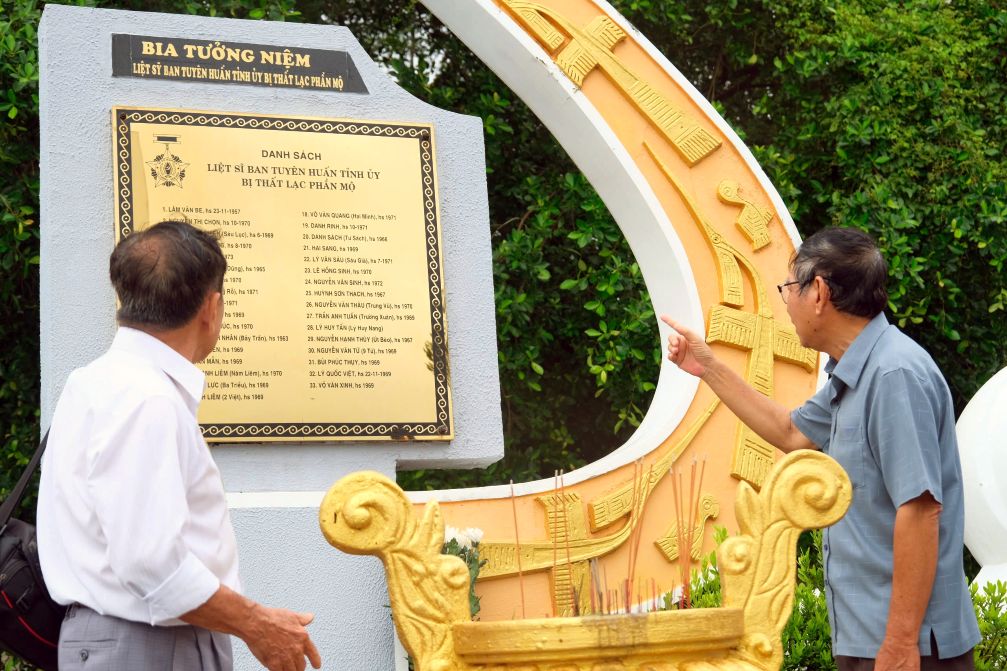
At the Vinh Thuan District Martyrs' Cemetery (old Kien Giang province), Mr. Vo Thanh Xuan - former Head of the Propaganda Department of Vinh Thuan District Party Committee - sadly shared about 33 officials of the Rach Gia Provincial Party Committee's Propaganda and Training sector who sacrificed but lost their graves.
After many unsuccessful search efforts, the locality has built a memorial stele like a wind tomb, reminding future generations of those who once held the bloodline of information right in the rain of bombs and bullets so that people have more faith to stick to the land, follow the Party to fight to the day of national reunification.
When the pen turns into a bayonet
Mr. Nguyen Dac Hien (Muoi Long) - former reporter of Co Giai Phong newspaper, predecessor of Dong Thap newspaper -'s voice trembled when recalling December 4, 1967.
Encountering the enemy's surprise sweep, the reporters and painters of the editorial office proactively gave the secret bunker and bomb shelter to the provincial military staff, while he escaped into the water hyacinth ditch. The enemy cruelly used firecrackers to shoot continuously along the ditch bank and then fired continuously.
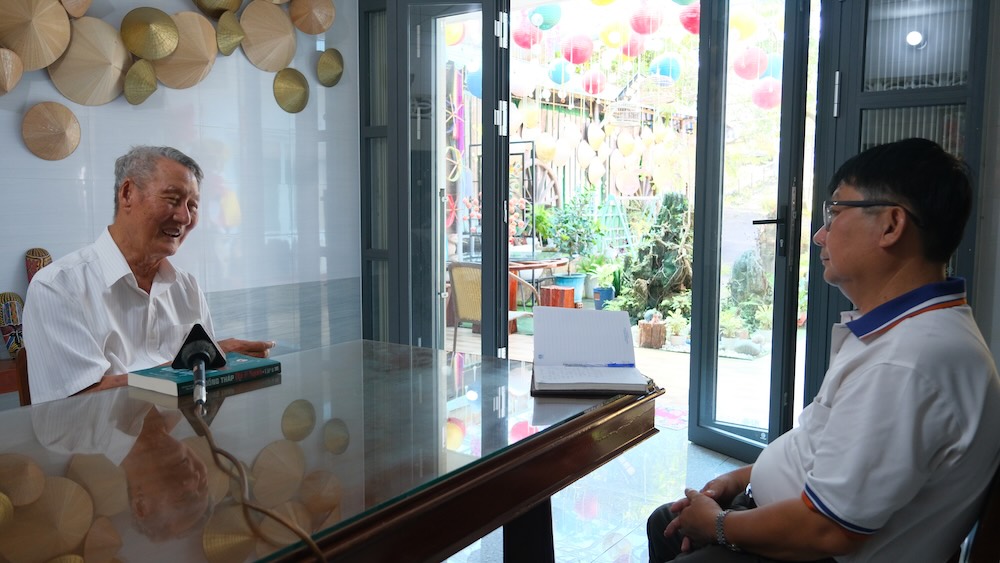
When the enemy withdrew, the survivors returned and only saw the bodies of 2 journalists and 4 painters deformed by fire, full of stray bullets. Not assigned combat duties, but the journalists of the Southwest still bravely faced the enemy to their last breath.
“At the time of sacrifice, journalist Ho Chau (Tran Trong Nghia, 1925 - 1964) was still holding a grenade in a ready-to-fight posture. Perhaps the enemy's firepower was too strong that he was no longer strong enough to detonate the detonator, but he was determined not to surrender” - journalist Truong Thanh Nha recalled.
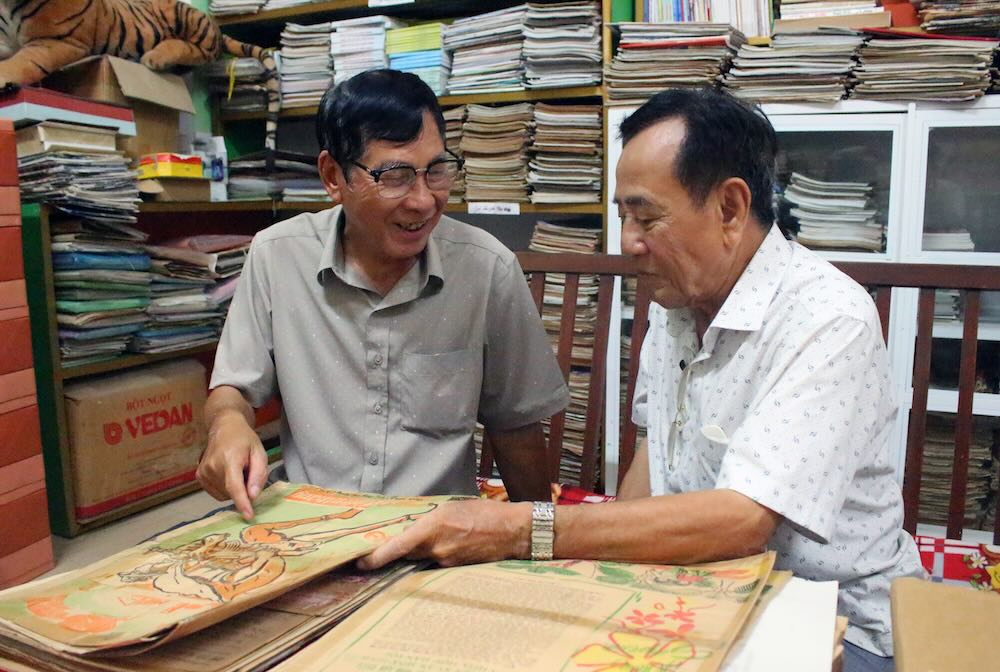
The raid that year into Vinh Hoa commune (Vinh Thuan), where the Rach Gia Provincial Press and Information Sub-committee was stationed, took the life of journalist Ho Chau under the water coconut cluster. His funeral in wartime was without incense, without mourning bands, only a few comrades quietly saw him off with their lips tightly closed to hold back sobs. He passed away, leaving no photo for his children and grandchildren to admire and worship.
Mr. Ho Dung - son of journalist Ho Chau - proudly shared: "The day my father passed away, my mother was alone with 5 young children, life was difficult and seemed impossible to overcome. But through the stories of the uncles and aunts, we always see my father as a role model. Now my brothers and I have all grown up, some are police officers, some are provincial management officials".


