At that time, we did not know who that "Mr." was, nor could we fully understand many other folk songs. My house in Trieu Viet Vuong, at the end of Doan Tran Nghiep street, had run out of Western houses and multi-story houses. The old villa had many families who were resistance cadres, conservative civil servants, and a few poor urban residents.
I am grateful to the old nanny in the same house number (old times called it that) who raised me from my father, and now raises my children... Those children are fussy, crying day and night, so the nanny luckily knows how to lull them... Therefore, the animals in those folk rhymes are more imprinted in me than the illustrations in the simple textbooks of that day.
Hanoi streets in the early 1960s were still quiet and gentle... Dear people, cars are very rare. We have not seen a real buffalo, no pets in the house, and there is no story of dogs running loose on the sidewalk... Perhaps in the Western era, raising dogs was not easy either. No need for dogs to guard the house, never heard of thieves breaking into the house, not making dogs do cleaning work for children like in the countryside.
Hanoi at that time had many birds. My eldest brother, outside of school hours, only liked to carry a rubber gun to shoot birds. Every day he brought back a few birds. He said several times, in every Western school there are a few sentences hanging on the wall, and one of the teachings he remembers since childhood: Love animals.
Humans are also just creatures, the only difference is that even creatures with culture who grow up and are educated cannot live without animals. Moreover, the world of animals nurtures the human soul, helping us reduce loneliness. Among all species, "dog love" - dogs and horses are more attached to humans. Horses are most human-like in their ability to sweat, maintain stable temperatures, and adapt well to environments. But as people say "straight like a horse's intestines", they are a bit inferior in the way they "please" their owners with dogs...
Since I was a child, I have liked dogs and horses. Especially horses because they help me nurture the desire and passion for faraway lands of the country, of the world. Once, I bought candy kéo from a Mr. Ba Tau on the sidewalk near my house, was drawn bamboo cards and I was rewarded with a thin comic book, telling the story of the Chinese battle (perhaps they were printed in Hong Kong before 1949). I always wished to have money to have the opportunity to meet that candy seller again, maybe the opportunity would come again. The book full of generals, cavalry with bow and arrows, swords and knives followed me throughout the years of evacuation for the First time...
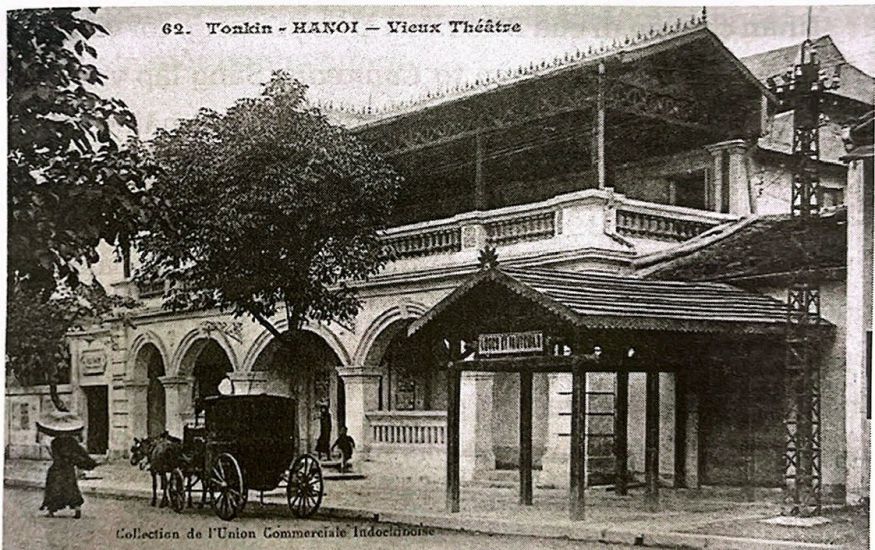
The house is near Duoi market, so many times I have seen horse-drawn carriages carrying goods from the suburbs. Every horse-drawn carriager is thin and hardworking but not old and haggard like a low, slow horse that is pitifully slow. Completely different from the horses of my dreams. Oh horses, can they carry away human pain, or take people to places with joy and happiness, or at least a place of hope, even if it may not be great...
In my house, there is a rustic, simple, quiet neighbor like a mute person. The husband is an official of a certain hospital, with a forbidden personality like a "dog biting a ghost", with a cold face. That patriarchal, bland man is very difficult to approach neighbors. The wife is still very young, quite beautiful, doing odd jobs at a small public-private cooperative in mechanical engineering. They don't have children yet.
Then one day she passed away. The townswoman was talkative, whispering to neighbors... It turned out that she left her husband to go back to her hometown to follow the horse-drawn carriage driver who was hired in the province. Many people whispered to each other, that there was such a foolish person. We didn't know that she chose to wander around living in a horse-drawn carriage because she wanted to be in a different sky, loved and more free.
Then later, when playing with painter Hoang Hong Cam, I heard Cam tell about the time when his father - painter Hoang Lap Ngon, before the Revolution, took his wife and children on a car named "Me Ly rolling house", rolling from Hanoi to the South. Cam was born and grew up without a "rolling house" but in a small dark attic and never heard horses knock on hooves on the road of life... And then once, my young hearts fluttered when I saw a car owner fiercely hitting a horse. Heavy goods, weak strength, it no longer has the ability to be as agile as a buffalo or cow.
We children were scared and stood watching...
Later I read about the story of a horse pulling a cart being brutally beaten like that, which made the genius thinker and philosopher F. Nietzsche - who always upheld superhuman will, with a famous call: "Humans are what need to be overcome", run to the horse, hugged and kissed it and sobbed, then fainted, fell to the ground, and lived another 12 years in mental disorder, sometimes insane and tragic.
I don't know the day he says goodbye to life – is he more at peace on the hearse pulled by horses? The horses passing off people seem more melancholic. I have seen several times in Hanoi in the early 1960s hearses pulled by horses. Cars were still rare and not everyone could rent a car. Horses walked slowly and sometimes even the cart driver would walk down, with a group of people – empty – walking behind the car. The journey was not short at all...
* * *
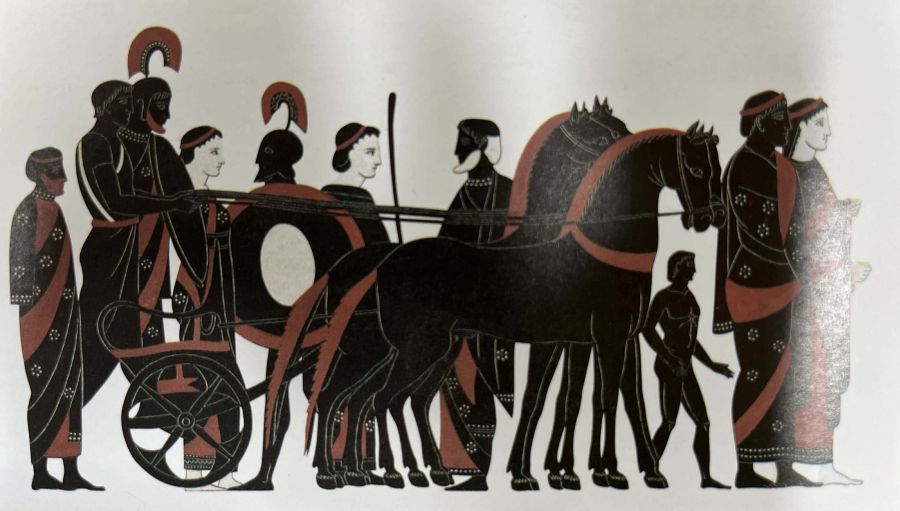
Horses are domesticated animals with very special and most important values in human life. Horses have contributed to changing the history, national geography, and ethnic groups of the whole world. Not only for transportation and communication, they have an irreplaceable position in war.
From the Americas, crossing the Bering Strait, horses came to Asia. Thanks to it, horsemen conquered land, engaged in cultural trade and promoted trade. Without horses, Gengis Khan (Xingji Han) would certainly not have existed, and there would not have been such a powerful Ottoman empire...
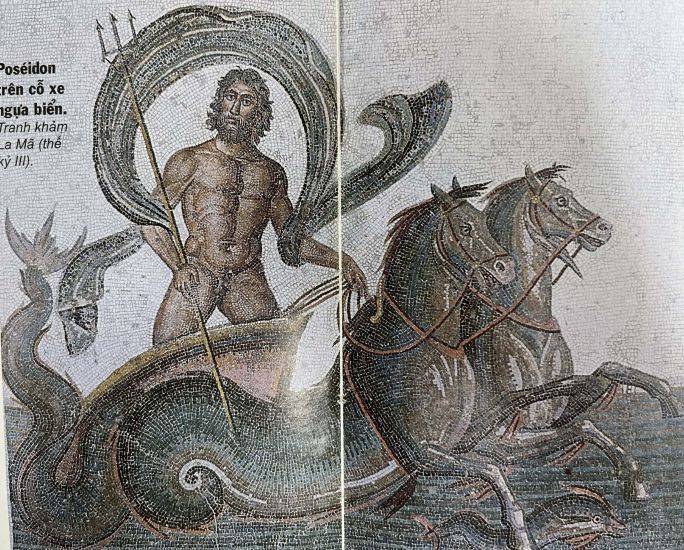
Horses, like some animals, are used in quite a few cultural and ideological structures of mankind. The Greek myth of ancient Greek civilization will still exist for a long time in world thought, language and literary art. And it is with the strange creative thinking of humans that horses have become a legendary symbol.
Although the race of horses in Vietnam is small and scarce, it always reminds me, like many people. How can I forget the marriage proposal: "Elephant with nine tusks, chicken with nine horses, horse with nine red hooves" that made the story of Son Tinh - Thuy Tinh, bringing Son Tinh - Tan Vien Son Thanh to become the number one in the Four Immortals of Vietnamese Belief; and even more forget the miraculous iron horse of the hero of Giong village - Phu Dong Thien Vuong... You will have to remember the proverbs, folk rhymes, and folk songs of Vietnam that have led everyone from childhood to the end of life.
The gentle King Tran Thai Tong had the poem "Tien su Bac Truong Thien khanh" with deep poetic feelings, flexible diplomacy, hospitality but not being subdued, and also with a subtle reminder: "... Horse head, autumn wind stirs the sacred sword/ The roof of the moonlight illuminates the library...". After the battle to defeat the Yuan-Mongol invaders, King Tran Nhan Tong performed a ceremony at Tran Thanh Tong's tomb and saw the footsteps of the stone horses full of mud because the invaders intended to destroy the tomb, he exclaimed: "The country has twice been shaken by stone horses/ The country's mountains and rivers have for thousands of years firmly held the shore of gold"...
The country is constantly at war, the sound of horses' feet with many rhythms and different intensities has passed, stretching throughout history and of course literature... Tales of poetry are perhaps the deepest mark of Vietnamese classical literature. In my humble opinion, Tales of poetry is the clearest difference from Chinese literature (as called by Chinese people).
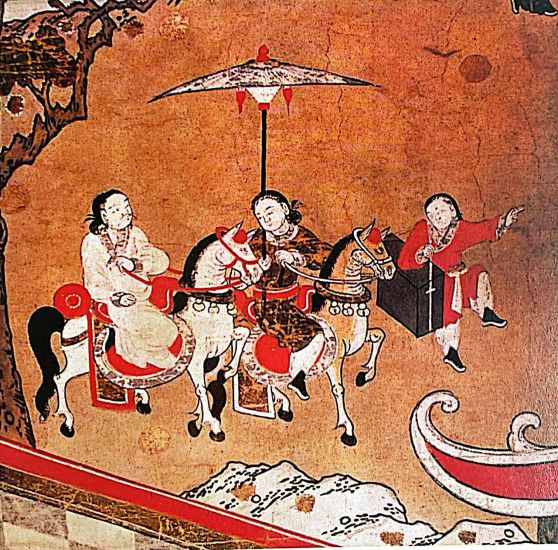
A series of anonymous poems or poems by authors still stand tall in Vietnamese literature. "Chinh phu ngam" (underground concubine) (Dang Tran Con/Doan Thi Diem translation) is one of the symbols. "Horse does not give up, galloping", the most imprinted in the country's poetry novels. "Your man's red shirt is like trying to mix/ Your horse's white color is like snow printed" does the wife know: "Your man rides a horse for a long journey covered in clouds/ I stroll twice, old moss printed"...
The pain in the concubine is very different from Kieu (Kiều's Story - Nguyen Du) because for 15 years of wandering, she sold herself to save her father "two times in a witch's den, two times in a witch's den" until she met someone who had made an engagement, she felt heartbroken and bitter and lamented: "Lovers, I am ugly to you/ Loving each other is equal to ten times betraying each other". How could Kieu forget the first moment when she met literary figure Kim Trong: "Snow prints the crisp horse's color/ Grass mixes the color of the clothes to dye the sky's skin"?
The horse has followed Kieu's rising and falling steps. The poems when Kieu had to temporarily say goodbye to Thuc Sinh are definitely among the best in "The Tale of Kieu", a masterpiece at the forefront of Vietnamese classical literature: "One gets on a horse, the other divides the flesh/ The maple forest has been stained with mandarin colors/... One returns to the five-season shadow/ One goes thousands of miles alone far away/ Who will make the moon in pairs? / Half a pillow, half a long journey...".
* * *
The Year of the Horse is coming very soon, perhaps like many people, I have a vague feeling that many animals are leaving us, including animals close to and attached to humans.
Our beloved horses will almost completely stop carrying people to fight, will no longer be labeled as violent like the two bronze statues "Horse kicking Hung No" and "Horse kicking Flying Swallow" of the Eastern Han Dynasty, and will no longer have the painful faces of animals including horses through P.Picasso's painting Guernica (1937)... but will forever lack the scene of convoys of horses carrying goods through the plains to make the world more open and better. And will also permanently lose the feeling of beauty through paintings by P.A. Renoir, C. Pissaro... with horse carts leisurely tapping on the paved roads of the bustling European cities of the past.
Russia will forever have no other "foreign woman", if painter N.Kramskoi is still alive now, he will no longer see any open-top horse-drawn carriages... My H'Mong friends have bought Minsk carriages, young horses for sale, old horses for a long time in the Thang Co pan. Those other situations are completely different from the sighs of Mrs. Huyen Thanh Quan in the early years of the 19th century: "Old road, horse-drawn carriage, soul of grass/ Old foundation, castle, silhouette of the Pacific Ocean".
I don't know why I keep remembering the panicked, tearful face of a 10-year-old girl when she saw her grandmother carrying a pile of votive paper and a pair of horses to burn after being the receptionist in a large house on the outskirts: "Grandma, don't burn it. I want to play with it...". I am a guest, I only dare to watch silently and can't comfort myself when my grandmother - my former classmate, scolds her, snatches the horse and throws it into the fire. The horse of my childhood...
... Just from the animal alone is a whole world that cannot be fully understood, no matter how much we desire and love. Because by perceiving and understanding the animal, we can emphasize the nuances of humans. When asked: "What if we live in a world without animals?". Boris Cyrulnik - a French thermologist - clarified: "It will be difficult for us to distinguish the category of humans.
Praying that day will never come when humanity exists...