
On August 10, excavation and sampling of martyrs' remains for DNA testing continued to be carried out at Binh Thuan Martyrs' Cemetery, Hong Son commune, Lam Dong province.
During the excavation process, in addition to taking remains samples, functional forces also discovered many artifacts in the graves.
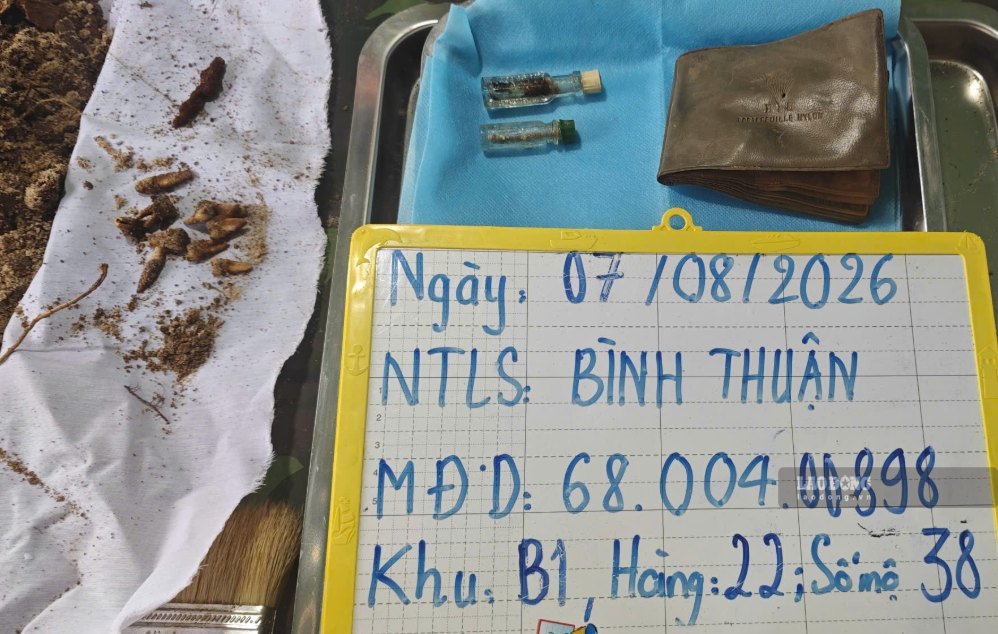
A health official participating in taking samples said that on August 7, when excavating tomb No. 38, area B1, row 22, functional forces discovered a wallet and 2 bottles of medicated oil.
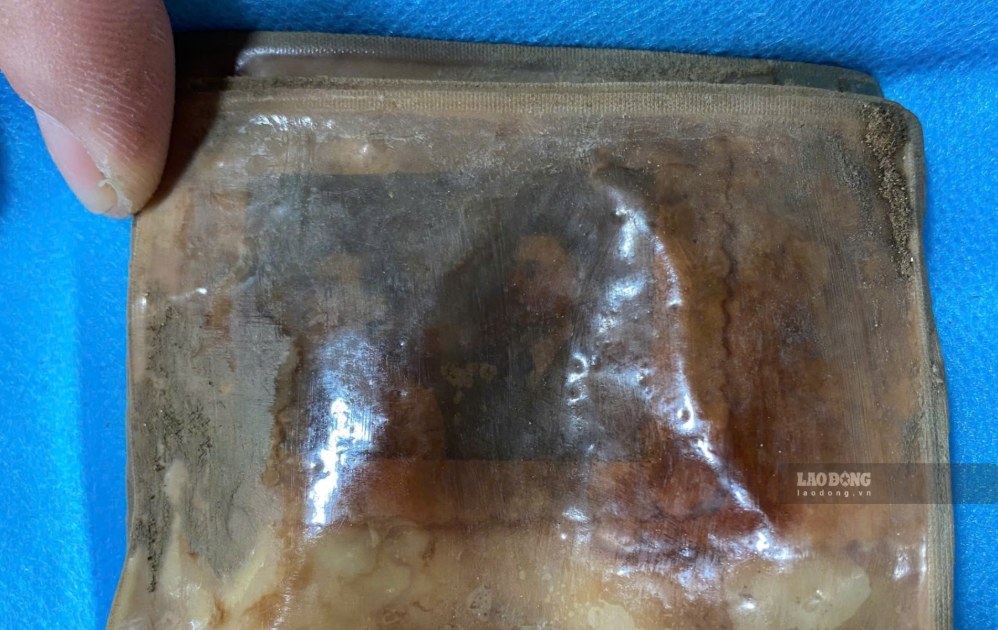
Inside the wallet, there are still photos. Due to the impact of time and burial conditions, the photos have been tarnished, making it difficult to identify images and information on them. However, the task force determined that these may be images related to martyrs buried at the grave.
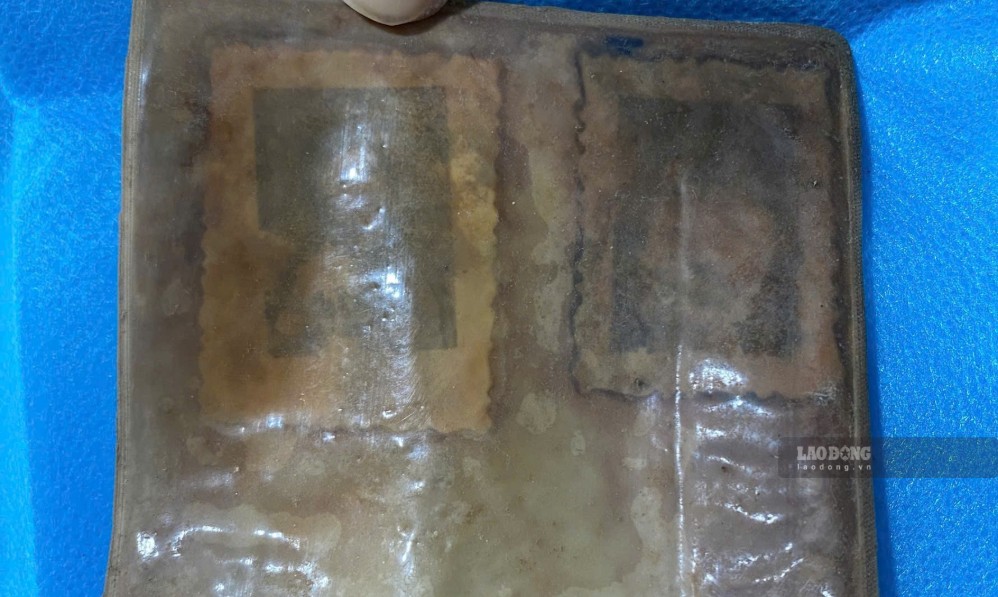
These items are considered important clues in the process of searching for information about martyrs, especially when combining comparing records, family information and DNA test results.
At the cemetery, forces are assigned to each professional group, coordinating from excavation, sampling, preservation to handover. Officials of the Forensic Center under the Provincial Department of Health and military medical forces directly perform the sampling of remains. After completion, the graves are restored to their original state, ensuring solemnity.
Currently, forces are accelerating the sampling progress at Binh Thuan Martyrs' Cemetery, expected to complete earlier than planned by the Provincial Steering Committee 515.
Previously, Vice Chairman of Lam Dong Provincial People's Committee Dinh Van Tuan came to inspect and encourage the task force. He requested that the sampling process must be carried out strictly, scientifically, in accordance with procedures; strictly manage information, biological samples and related dossiers, and at the same time ensure accuracy, safety and solemnity.
Binh Thuan Martyrs' Cemetery currently has nearly 9,000 graves, the largest in the province. Of which, more than 3,400 graves need to be sampled for remains to serve identity identification.
After collecting samples according to the procedure, the remains samples are sent to DNA testing centers to carry out analysis steps.
According to Mr. Tran Trung Thanh, Director of the DNA Examination Center under the Institute of Biology (Vietnam Academy of Science and Technology), most martyrs' remains samples have heavily decomposed DNA, leaving only very short sections due to rudimentary burial conditions.
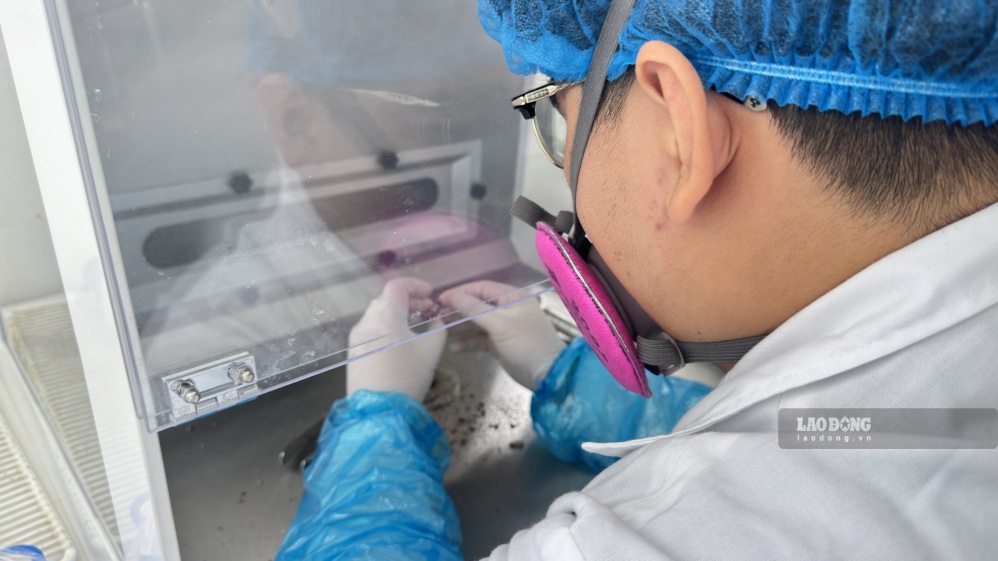
Previously, identification was mainly based on mitochondrial genome DNA analysis. Currently, the unit has applied new generation gene sequencing technology on the human genome, helping to increase the ability to recover genetic data from low-quality remains.
The combination of new appraisal technology and the sacred sense of responsibility from scientists, forensic doctors and functional forces opens up more opportunities to identify the names of unknown martyrs.
For each family that has waited for decades, a photo, a wallet, or any remaining item can be an important piece to find the name of a loved one who has sacrificed.


