
Changes in particularly difficult areas
Dak Lak is a province with a large area, a wide area, with many remote and isolated communes, ethnic minority areas. About 5 years ago, many localities still had a high poverty rate, lacking infrastructure, difficult transportation, and limited access to education and healthcare.
In recent years, Dak Lak province has synchronously implemented the Party and State's guidelines and policies on sustainable poverty reduction, building new rural areas, prioritizing resources for remote and isolated communes.
Ms. H'Tin's family (Dong Bac hamlet, Lien Son commune, Lak district) is a typical example. In 2024, her family was supported with breeding cows from the National Target Program.
Ms. H'Tin said that previously her family was among the most difficult in the area, having to work as hired laborers, living in a dilapidated house. Thanks to the support of the government and efforts to rise up, by 2025, her family had escaped poverty thanks to an effective breeding cow model.
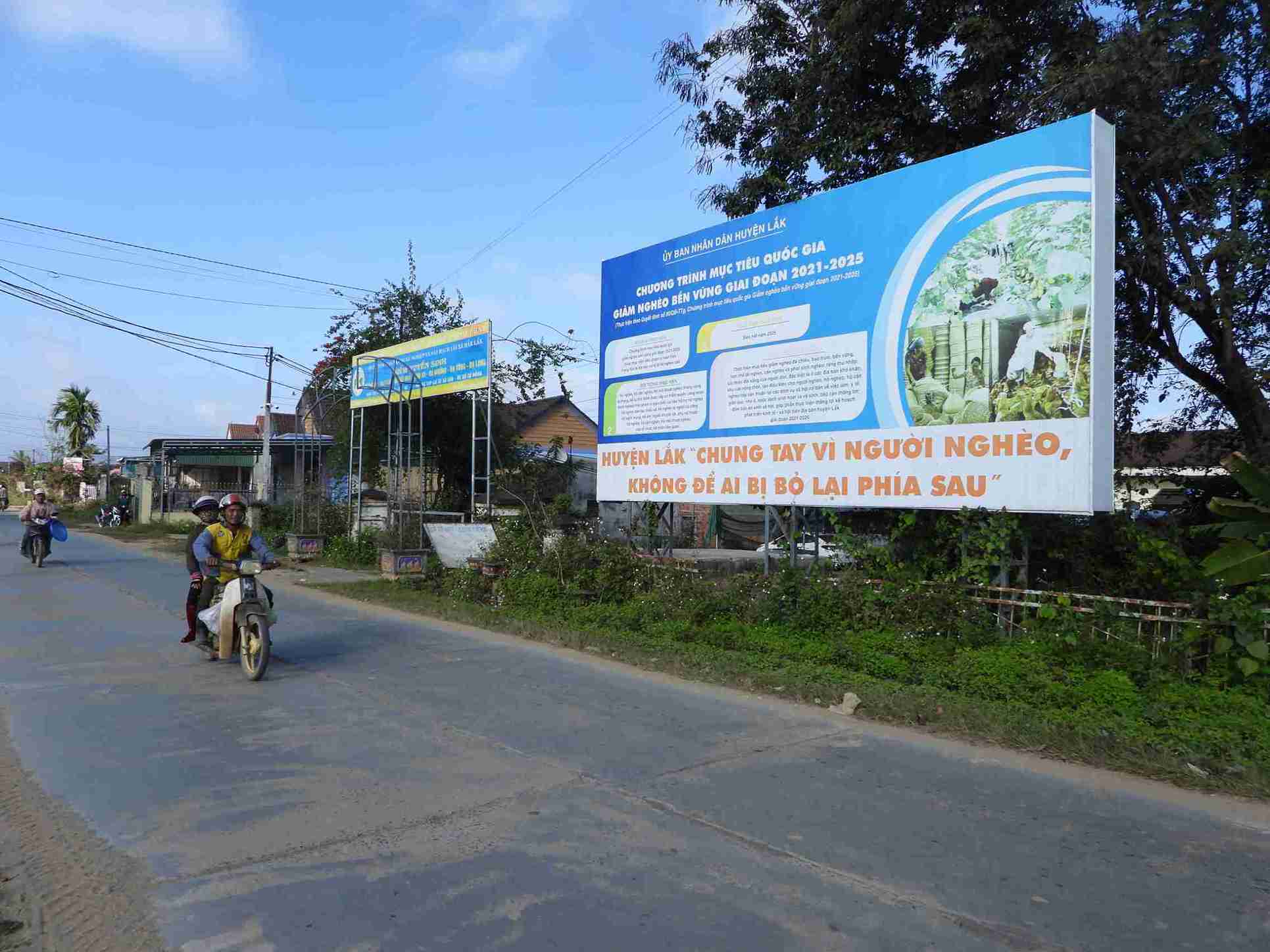
Along with infrastructure investment, the province focuses on supporting livelihoods and converting crop and livestock structures to suit the conditions of each region. Many effective production models have been implemented, contributing to improving people's incomes.
In Krong No commune, the locality has 13 particularly difficult hamlets, of which 5 people have prestige as good farmers. This is the core force, creating confidence for people to boldly invest in production development.
Mr. M'Bri Ronang (Krong No commune) said that his family used to be a poor household with precarious lives. Thanks to the mobilization of reputable people and local authorities, he boldly converted 2 hectares of rice to coffee cultivation, helping his income increase significantly. In 2024, his family escaped poverty, had conditions to repair their house, creating a spreading effect in the community.
According to Dak Lak Provincial People's Committee, in the period 2021–2025, the average poverty reduction rate in ethnic minority and mountainous areas reached 4.2%/year. The whole province has 82 villages and hamlets that have escaped from particularly difficult areas and 52 communes in region I that meet new rural standards.
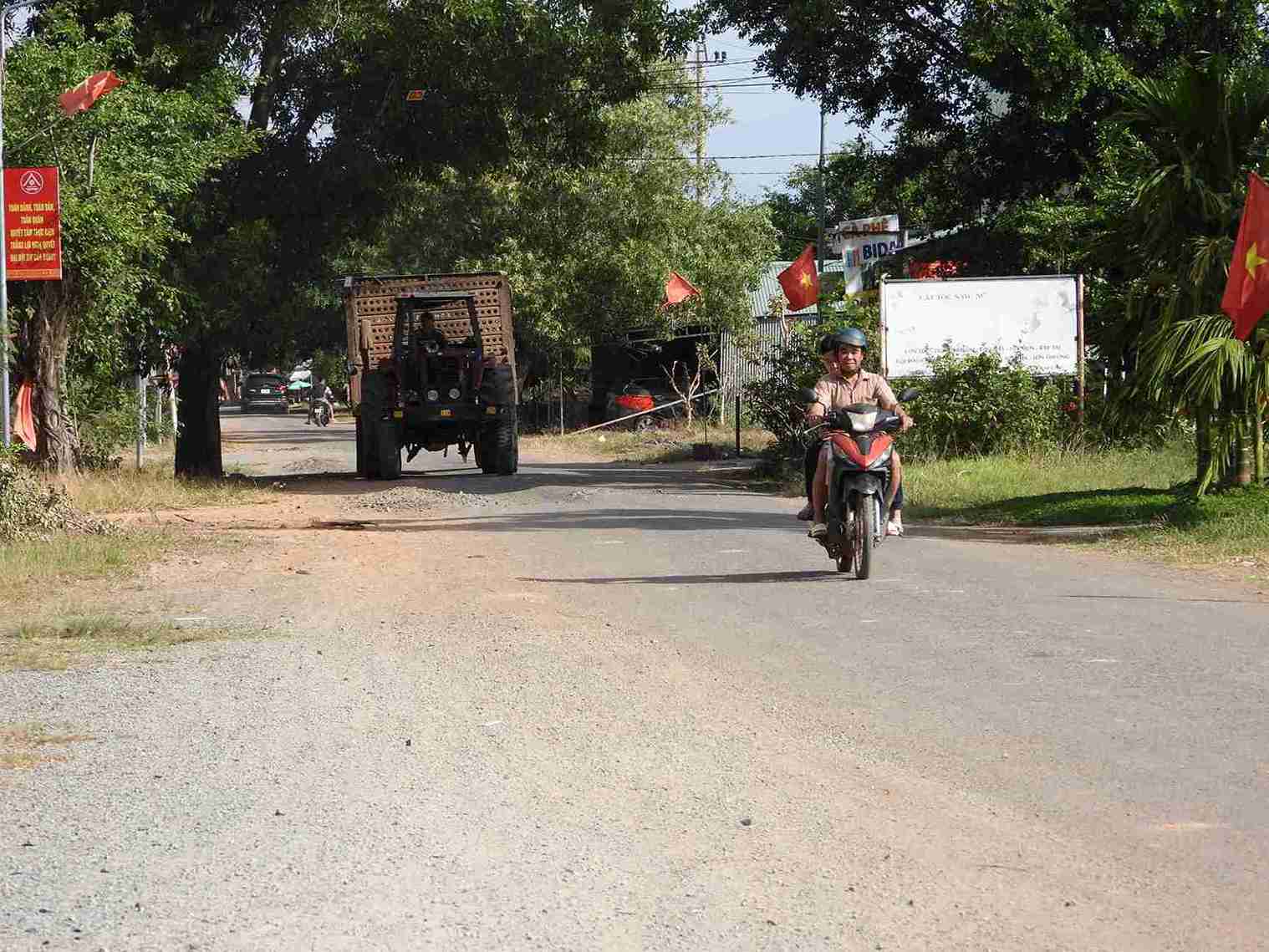
Excited to enter a new stage
In the atmosphere of the whole country entering the 2026–2030 development phase, remote communes and ethnic minority areas of Dak Lak province are carrying new beliefs and mindsets. All are proactively competing to develop the economy, reduce poverty sustainably, and at the same time preserve and promote traditional cultural values.
Mr. Truong Cong Thai, Vice Chairman of Dak Lak Provincial People's Committee, said that in the medium-term period 2026-2030, the socio-economic development process and poverty reduction work of the province still face many challenges. However, with a methodically built roadmap, the Provincial People's Committee is determined to concretize and complete the targets set out by the Provincial Party Committee Resolution.
Along with that, the province will continue to prioritize resources from national target policies and programs for particularly difficult areas.
This is considered an important foundation for remote areas to rise up to develop socio-economy, while preserving and promoting the traditional cultural identity of ethnic minorities.
In the period 2026 - 2030, Dak Lak province strives to reduce the average poverty rate by 2% or more per year; the poverty rate among ethnic minorities decreases by an average of 3% or more per year.
In addition, the locality strives to have 68/88 communes meeting new rural standards by 2030. Of which, 16 communes meet advanced new rural standards and 8 communes meet model new rural standards.


