
On the afternoon of July 21, information from the Military Command of Khanh Hoa province said that from July 15 to 21, the unit coordinated with local Party committees, authorities, agencies, units and family members to organize the search and repatriation of martyr Mai Van Dieu's remains in residential group 12, Bao An ward.
The activity is part of the "500-day and night campaign to promote the search, repatriation and identification of martyrs' remains", showing the determination of the forces in bringing heroic martyrs back to their comrades and homeland.
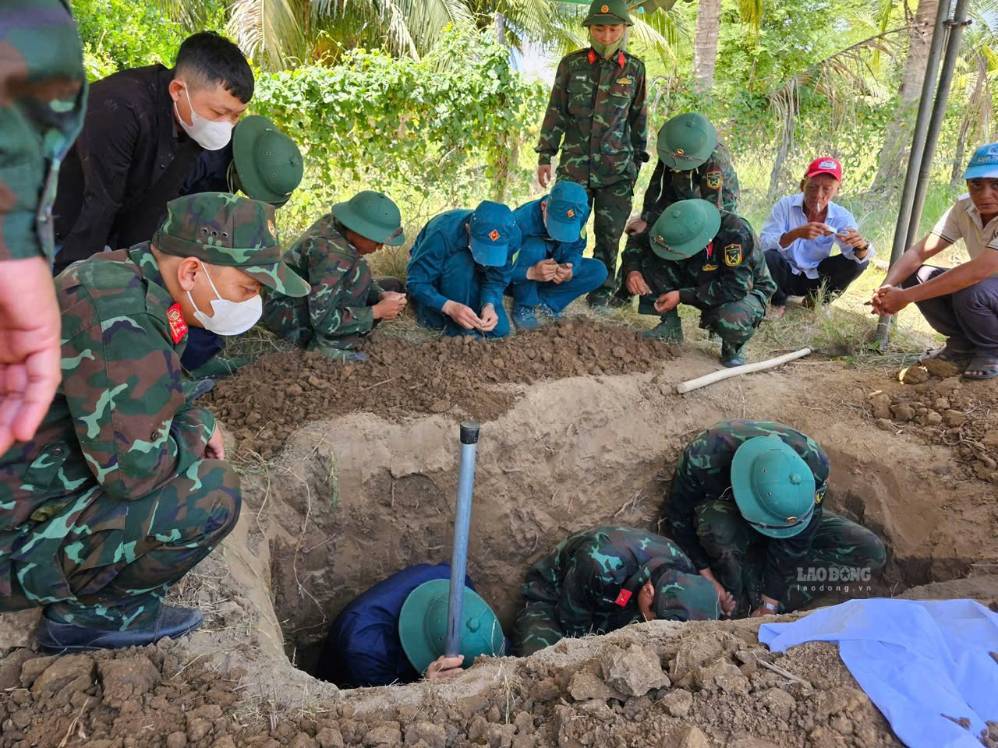
Martyr Mai Van Dieu was born in 1911, from Bao An, Phan Rang, Ninh Thuan (now Bao An ward, Khanh Hoa province), formerly the hamlet chairman. He sacrificed himself in 1946.
After the process of collecting information, field surveys, verification, and close coordination between forces, the work of searching for and exhuming martyrs' remains was deployed in accordance with procedures, ensuring solemnity, safety and thoughtfulness.
After completing the repatriation work, the Military Command of Khanh Hoa province coordinated to organize a ceremony to pay respects, commemorate and bury the remains of martyr Mai Van Dieu at Ninh Thuan Martyrs' Cemetery, in a solemn and emotional atmosphere.
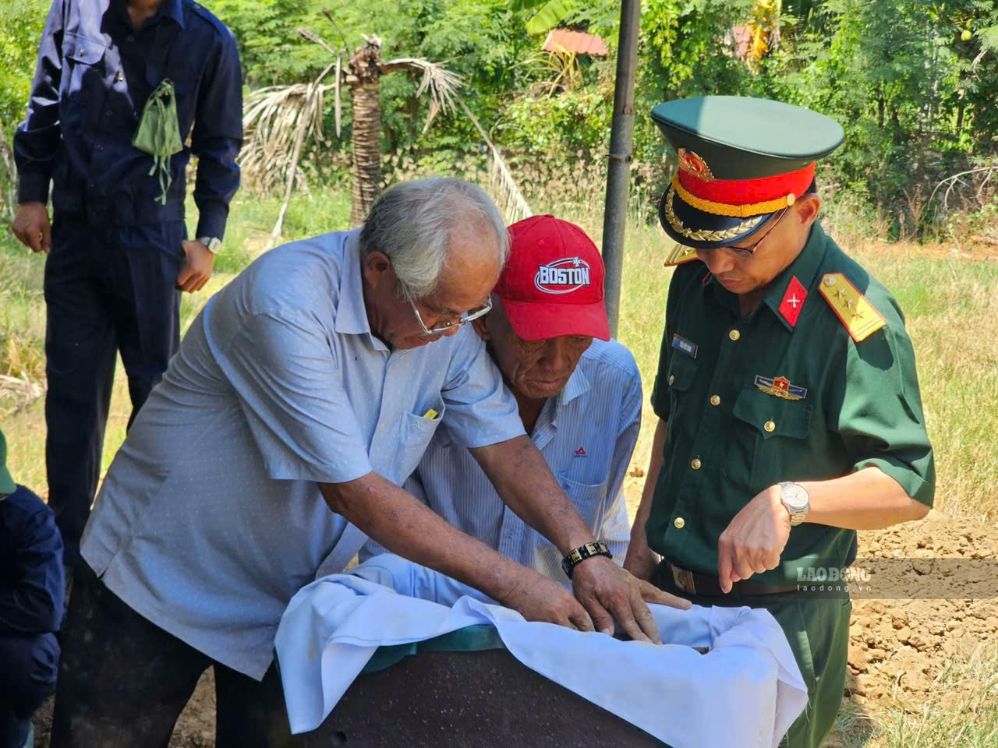
According to the Khanh Hoa Provincial Military Command, since the deployment of the "Operation 500 Days and Nights", the unit has received 114 sources of information provided by organizations and individuals inside and outside the province.
Through verification, 19 pieces of information were accurately assessed about the location of martyrs' graves, thereby gathering 4 sets of martyrs' remains and putting them in martyrs' cemeteries for burial in accordance with regulations.
In parallel with the search work, the Military Command of Khanh Hoa province has established a specialized team to take samples to serve the identification of martyrs' remains. The whole province currently has 2,183 graves at 7 martyrs' cemeteries that need to take biological samples.
As of July 17, functional forces have deployed sampling at 5 out of 7 martyrs' cemeteries with unidentified graves; 501/2/183 graves have been excavated for sampling, reaching 22.95% of the plan. Among these, 277 samples meet the standards for testing.
According to the Military Command of Khanh Hoa province, the search, repatriation and identification of martyrs' remains are still facing many difficulties.
Over the years, the terrain and artifacts in areas where wars had taken place have changed significantly, making it difficult to determine the initial burial location.
In addition, the number of witnesses is decreasing, many people are old, have reduced memory or have moved places of residence, affecting the process of comparing and verifying information.
Although there are still many obstacles, each martyr's remains found is an additional child of the homeland returning to comrades, to motherland.
This is also a motivation for the forces to continue their journey to search for and repatriate the martyrs who remained on the battlefields of the past, contributing to easing the pain of war and meeting the expectations of the relatives of the martyrs' families.


