
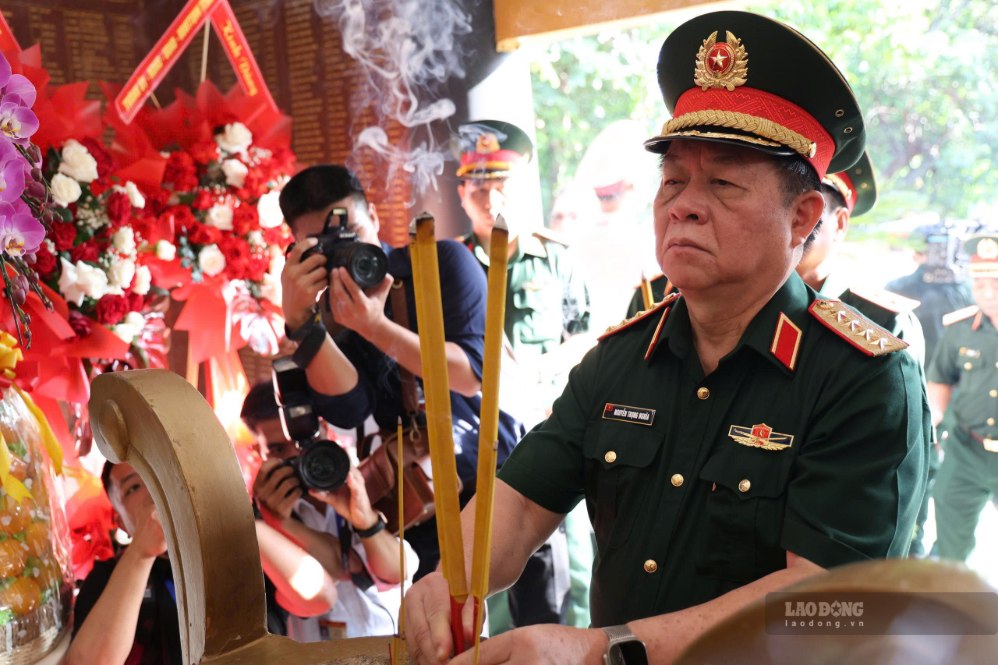
On the morning of July 11, a central working delegation led by General Nguyen Trong Nghia - Member of the Politburo, Secretary of the Party Central Committee, Member of the Standing Committee of the Central Military Commission, Head of the General Department of Politics of the Vietnam People's Army - led the delegation to offer flowers, incense and inspect the search and repatriation of martyrs' remains at Le Thi Rieng Park (HCMC).
Reporting to the working delegation, Major General Nguyen Thanh Trung - Political Commissar of the Ho Chi Minh City Command, Standing Deputy Head of Steering Committee 515 of Ho Chi Minh City - said that so far functional forces have found 29 sets of martyrs' remains, of which 13 sets of remains contain artifacts.
From the collected artifacts, functional forces initially identified a remains of martyr Huynh Van Quen, belonging to unit 962. Through the process of decoding historical documents, verification showed that this was a soldier of Company 2, Battalion 1 Long An, participating in the battle of Chu Y Bridge in phase 1 of the General Offensive and Uprising of Tet Mau Than 1968.
The Ho Chi Minh City Command has arrived in Vam Co commune, Tay Ninh province to verify information about the relatives of martyr Huynh Van Quen, and at the same time coordinated with the Provincial Department of Home Affairs to take the family for DNA testing samples. DNA samples from the martyr's remains have also been sent for testing and it is expected that the comparison results will be available in about 3 weeks.
In addition, the Ho Chi Minh City Command has advised the Steering Committee 515 of Military Region 7 to deploy DNA sampling of relatives of martyrs of Battalion 1 Long An, especially those who sacrificed in the period 1965-1968, in order to create a database to serve the work of verification and identifying the remains found.
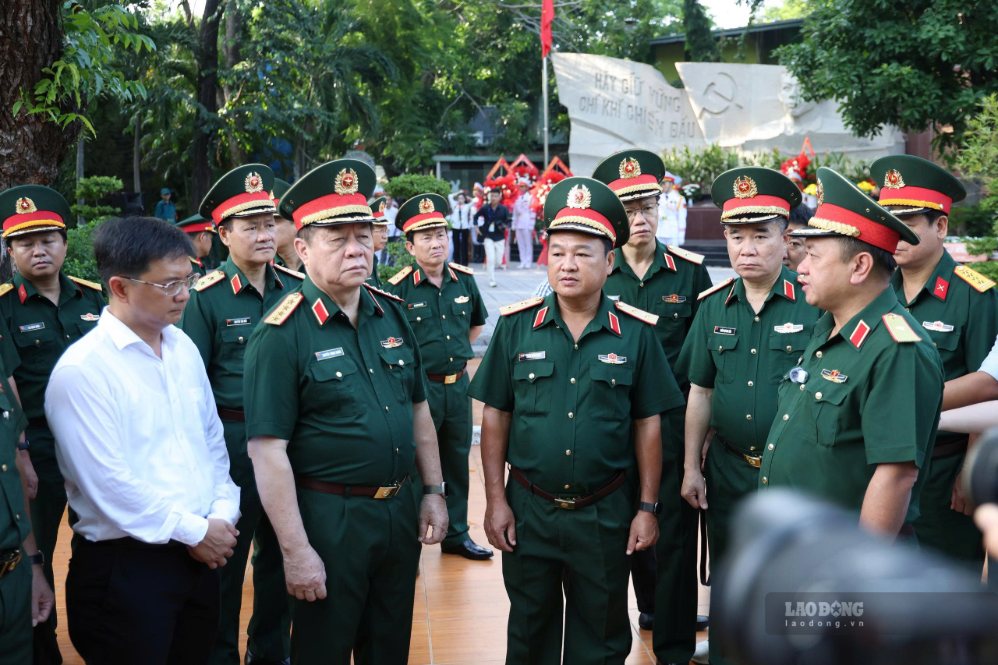
According to Major General Nguyen Thanh Trung, the excavation process has been carried out through two layers of soil. In the first layer, most of the artifacts belong to the liberation army, especially belonging to key units participating in combat in the first Tet Mau Than 1968.
Meanwhile, in the second layer, many other artifacts continued to be discovered. Through historical research, functional forces initially determined that these could be the remains of Saigon Special Forces soldiers who participated in battles against the US Embassy and the General Staff of the former Saigon government.
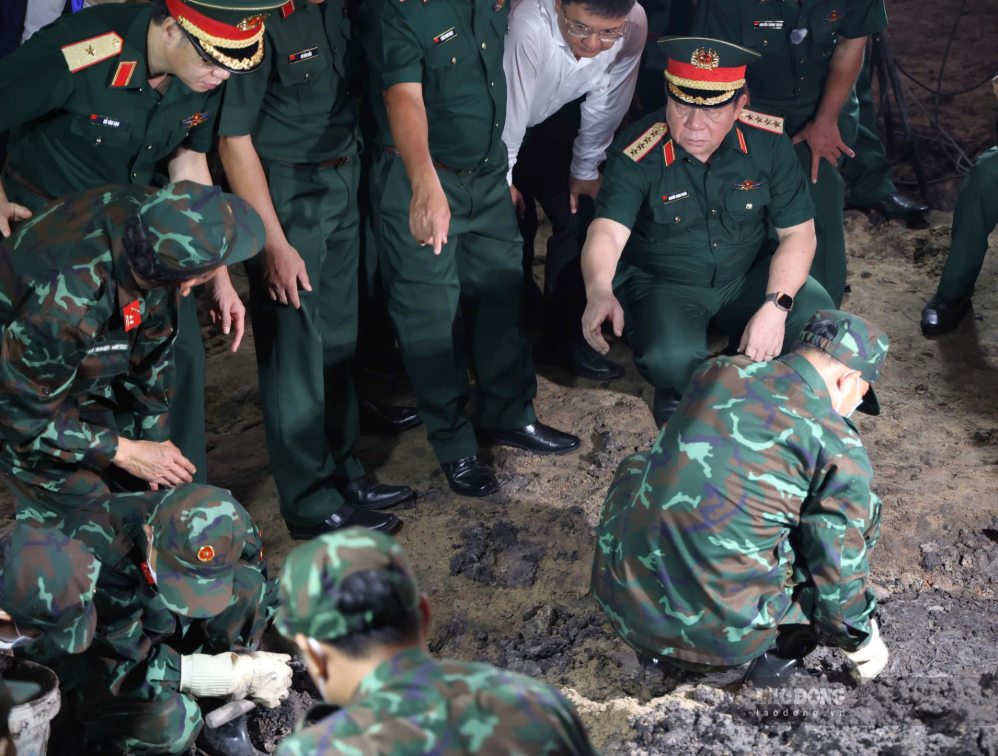
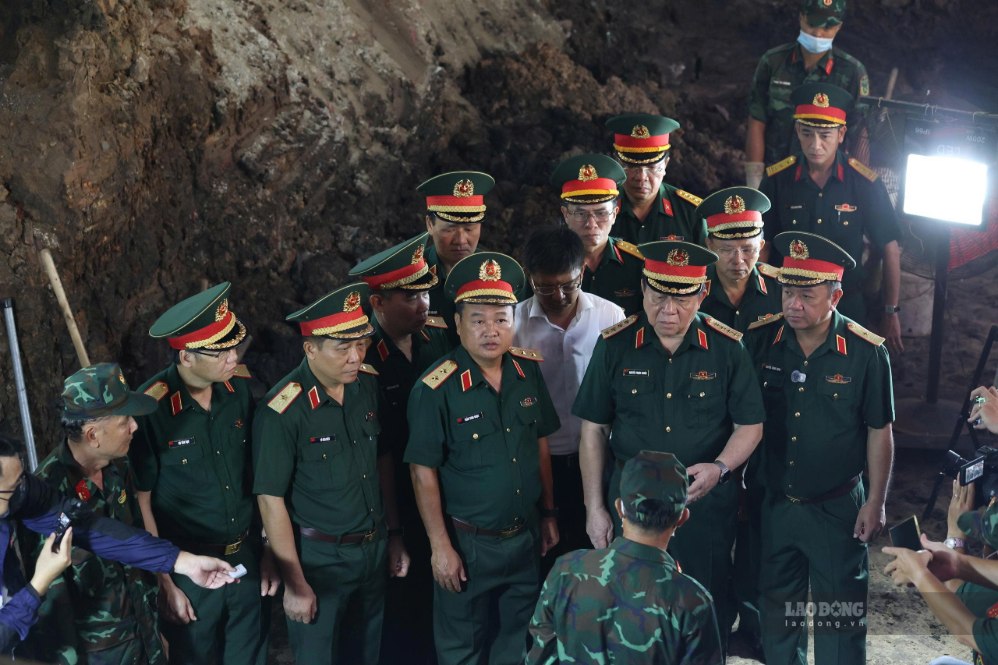
On that basis, the Ho Chi Minh City Command reported to the Steering Committee 515 of Military Region 7 and the Steering Committee 515 of Ho Chi Minh City, proposing to expand the first tomb groove with a length of about 50 m, width of 3 m and depth of about 3.5 m.
At the same time, functional forces will continue to excavate tomb grooves No. 2 and No. 3. According to archival photos from AFP, these two tomb grooves are parallel to the first tomb groove but in different positions. The excavation will be carried out in a layer-by-layer method to ensure the preservation of the original state and facilitate identification work.
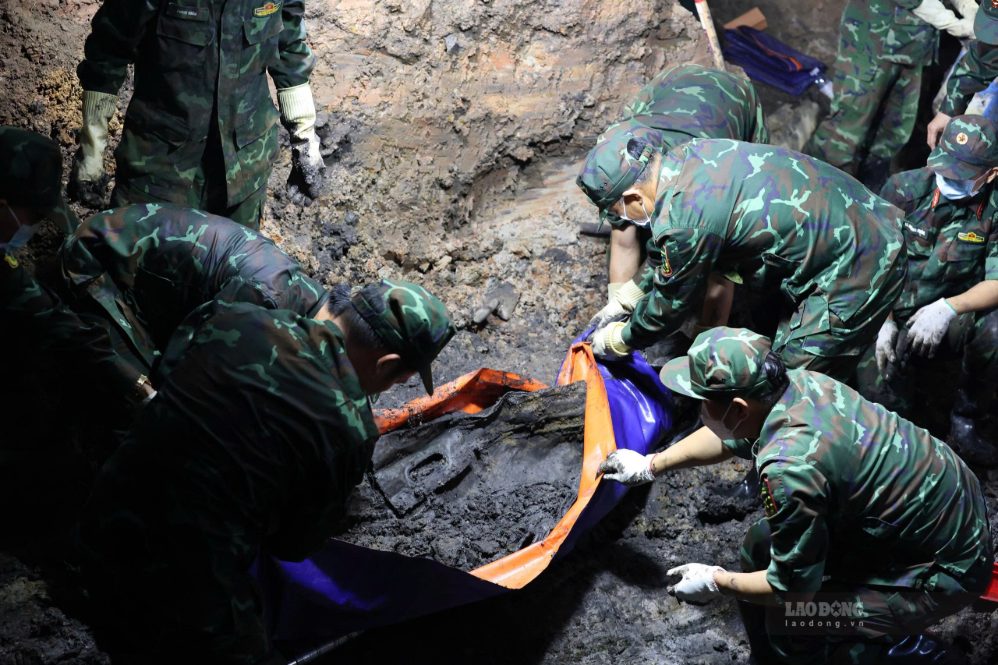
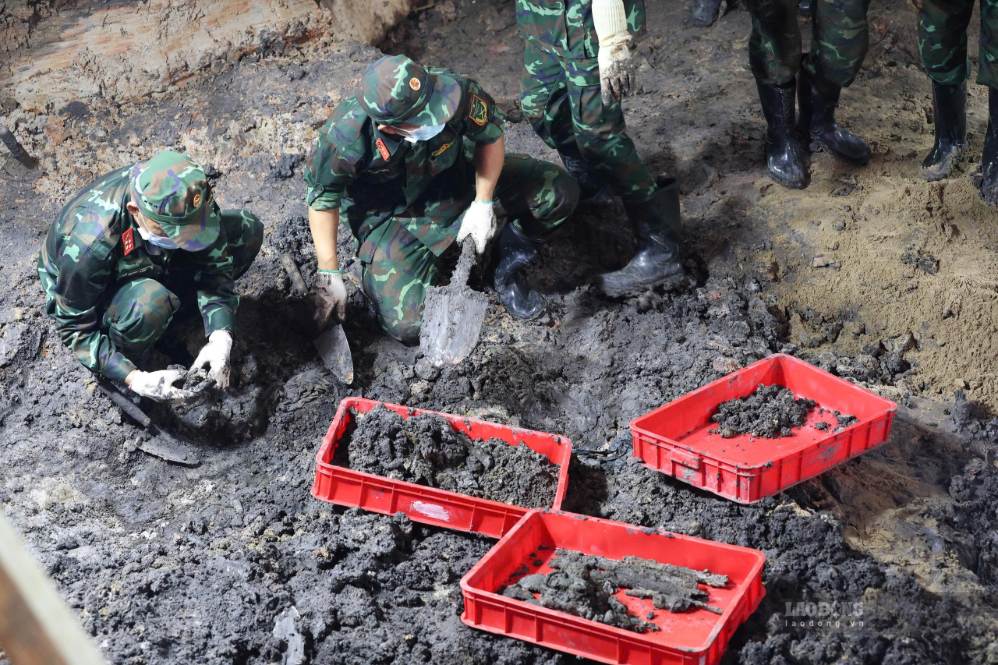
Speaking at the inspection, General Nguyen Trong Nghia praised the spirit of responsibility of officers, soldiers and forces participating in searching for and repatriating martyrs' remains at Le Thi Rieng Park.
General Nguyen Trong Nghia affirmed that the 500-day and night peak campaign to search, repatriate and identify the remains of martyrs is a particularly important political task, demonstrating the morality of "Drinking water, remembering the source", "Gratitude" and the responsibility of today's generation towards the heroic martyrs.
According to General Nguyen Trong Nghia, the campaign is not only aimed at searching for, repatriating and identifying martyrs, but also contributes to completing policy documents, supplementing historical documents and educating patriotic traditions for generations.
The forces need to continue to deploy the search work in a scientific, close, and meticulous manner; closely coordinate with specialized agencies in preserving artifacts, taking DNA samples and identifying martyrs.


