
Hanoi City People's Committee has just issued a decision on allowing controlled testing for the project "Testing a smart autonomous transportation system including buses, axi robots, automatic cleaning robots, delivery robots" of Phenikaa-X Joint Stock Company.
Phenikaa-X Joint Stock Company's controlled trial project is a high-level self-driving vehicle technology platform trial project in the controlled traffic area, including 4 groups of vehicles: self-driving buses, robotaxi, automatic cleaning vehicles/robots and delivery robots.
The test system integrates key technology components including LiDAR, cameras, 2D/3D HD digital maps, high-precision GPS positioning and AI algorithms (SLAM, machine learning, deep learning) and operates according to each vehicle group, each specific vehicle, each route, each operating condition and each stage.
The goal of the test is to verify the safety, reliability and readiness of self-driving vehicles in actual traffic conditions; assess the effectiveness of the self-driving public transport model, user experience and integration with existing systems; build a database, scientific reports and a platform to serve the promulgation of self-driving vehicle standards and regulations in Vietnam...
The test results are the basis for researching and developing smart transportation service models, self-driving buses, robotaxi, automatic logistics in controlled areas, contributing to building smart cities, green transportation, connecting transportation and urban development models in the direction of public transport - TOD of the Capital in the next phase.
The trial period is within 24 months.
The test scope is along fixed routes, with HD map setup and monitoring system at Hoa Lac High-Tech Park and Hanoi National University, Hoa Lac campus.
For the test area at Hoa Lac High-Tech Park, the main test vehicles include robotaxi and delivery robots with tests related to transporting people in the form of ride-hailing (similar to Grab - Green SM) and delivering food from restaurants/cafes in the area to company buildings and headquarters in the High-Tech Park.
The entire length of the route is about 11.5 km running on many different routes in the High-Tech Park.
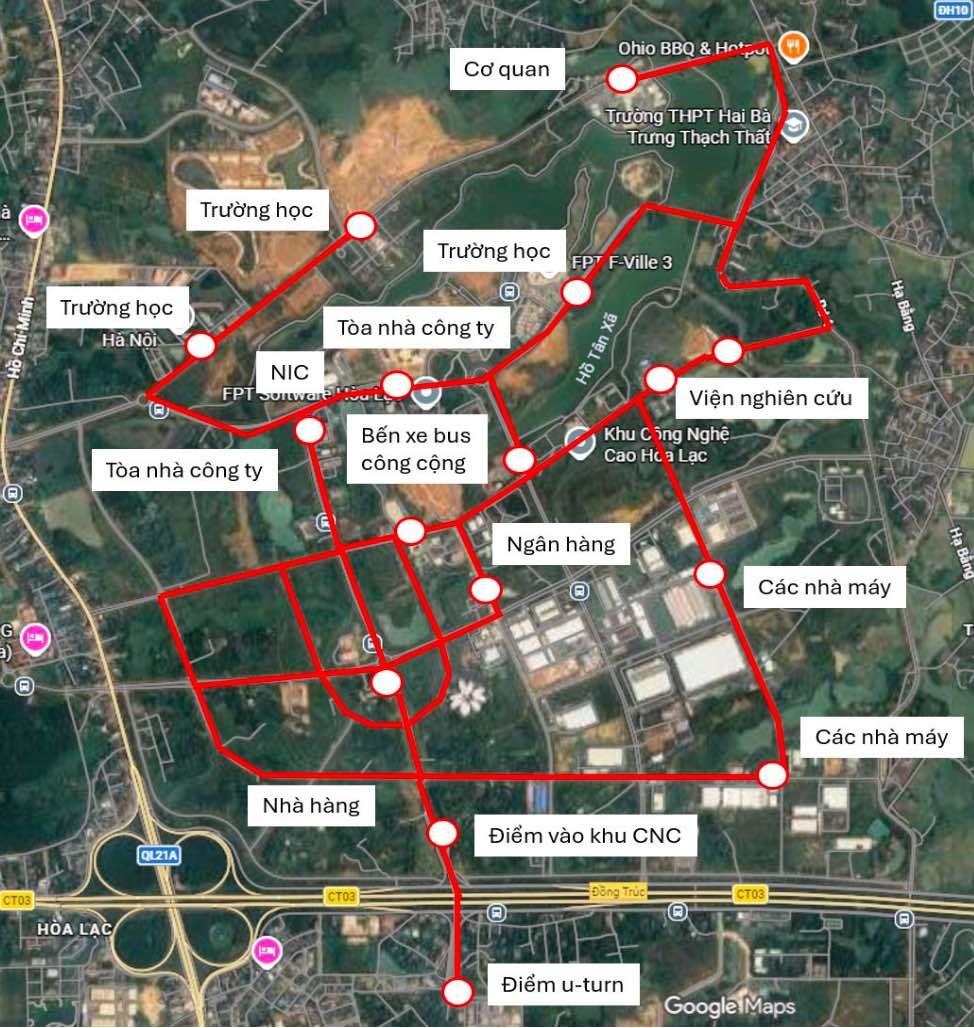
The testing unit will coordinate with the management board of Hoa Lac High-Tech Park to prepare and arrange a system of warning signs along the test route to warn, guide and provide necessary information for traffic participants in the area.
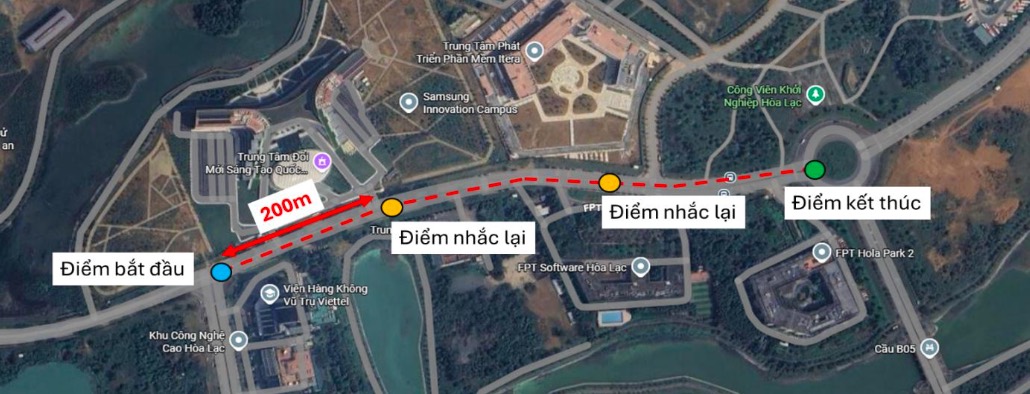
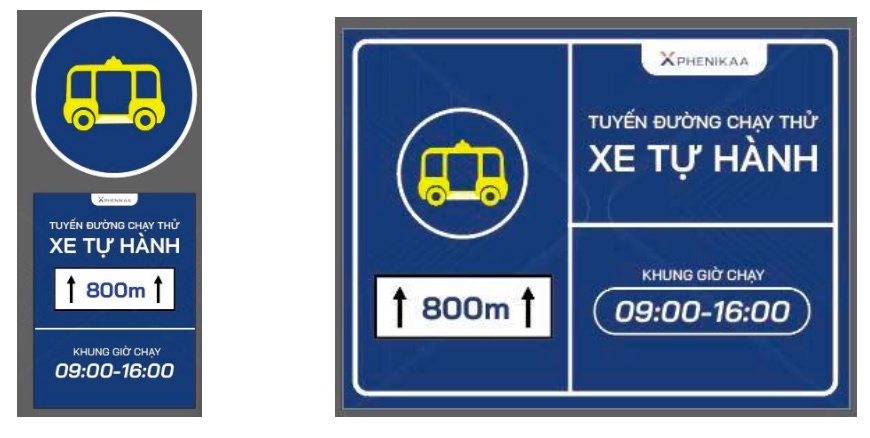
Notice signs will be placed at the beginning and end of the test route, according to the same principle as the arrangement of traffic signs, so that road users can clearly recognize the start and end times of the self-driving vehicle test area.
On the section between the two ends of the route, depending on the length of the route, traffic density, intersection location, entrance/exit point of the project or areas with limited visibility, some reminder signs can be arranged according to appropriate distances to maintain continuous recognition for traffic participants.
The content of the notice sign needs to be concise, easy to understand, easy to observe, clearly showing that this is an area under testing, recommending traffic participants to pay attention to observation, maintain a safe distance and comply with the instructions of the coordinating force when requested. In addition, a hotline will be written on the sign to contact in case of incidents.
For the test area at Hanoi National University in Hoa Lac, the main test vehicles include self-driving buses and autonomous sweepers with tests related to supporting students to move from student dormitories to lecture halls and military/bus station areas.
In addition, there may be self-driving delivery robots running tests along this route. The length of the route is about 2.8 km, including connecting roads and U-turns for self-driving vehicles.


