
Faced with increasing flooding pressure due to climate change and rapid urbanization, the city is urgently implementing a local flood control project at many hot spots in the inner city to improve drainage capacity before the 2026 rainy season.
Information from the Hanoi City Technical Infrastructure Management Center (Hanoi Department of Construction) said that in recent years the flooding situation in the area has become complicated. In particular, the heavy rain in September 2025 caused hundreds of flooding points, concentrated in the inner city area, low-lying areas and some urban areas that have not been synchronously invested in technical infrastructure.
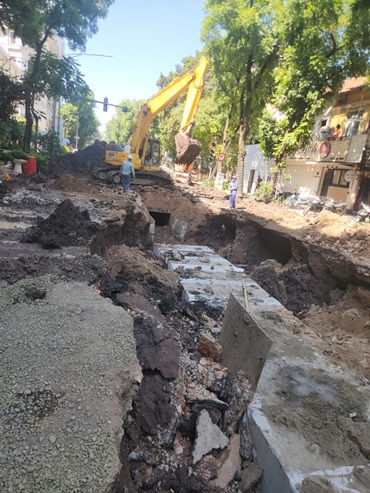
According to the city's assessment, heavy rain exceeding the designed capacity of the drainage system has caused localized flooding, affecting traffic and people's lives. The reason stems from increased extreme rain, rapid urbanization, and the lack of synchronous investment in drainage and regulating lakes.
Faced with this situation, the City Party Committee and Hanoi City People's Committee determined that urban flooding is one of the major bottlenecks that needs to be focused on resolving. The project to invest in building local flood control at some points in the inner city area was started in March 2026 with 22 items simultaneously.
The project includes renovating pumping stations at 6 lakes Thien Quang, Bay Mau, Ba Mau, Linh Quang, Van Chuong and Trung Tu; and simultaneously deploying construction at 16 points on many central streets such as Ly Thai To, Le Phung Hieu, Phan Chu Trinh, Trang Tien, Quang Trung, Quan Su and Nguyen Trai.
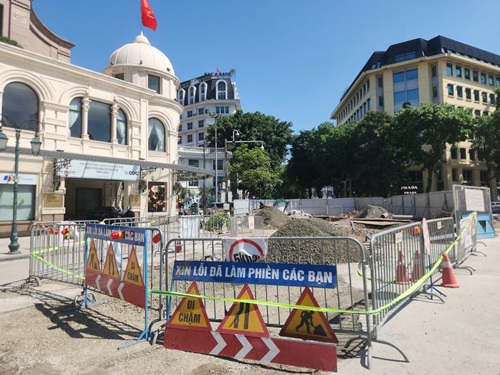
According to the initial plan, the project implementation time was 5 months. However, city leaders requested to shorten it to 90 days in order to put the project into operation before this year's rainy season. To limit the impact on traffic, most items are deployed at night, from 10 pm to 5 am the next morning.
Mr. Nguyen Duc Hung - Director of Hanoi City Technical Infrastructure Management Center - said that the construction process encountered many difficulties due to the existing underground infrastructure system under the road surface being very complex, while the construction site is cramped and there is no material gathering location. After each working shift, units must return the site, collect materials and ensure environmental sanitation before morning rush hour.
In addition, the project had to be temporarily suspended for 5 days to serve foreign affairs when Vietnam welcomed international delegations. Many heavy rains in May also caused contractors to temporarily suspend construction to handle the site and ensure safety.
To compensate for the progress, the Hanoi Department of Construction has allowed to extend the construction time to June 15, 2026. In which, Quang Trung street - a key item of the project - is organized to divert traffic to continuously construct 24/24 hours at many important intersections.
From May 25, the number of construction teams on Quang Trung route has increased from 4 to 10 teams, working continuously day and night. On average, about 60m of sewer line is completed each day. By May 29, two barrier points had been dismantled and it is expected that the entire sewer installation and basic road surface restoration will be completed before June 1 if the weather is favorable.
For other streets, units are speeding up progress to complete the installation of culverts, restore the road surface and dismantle all barriers before May 31, then complete the final road surface paving layer before June 15, ready to serve drainage work in this rainy season.


