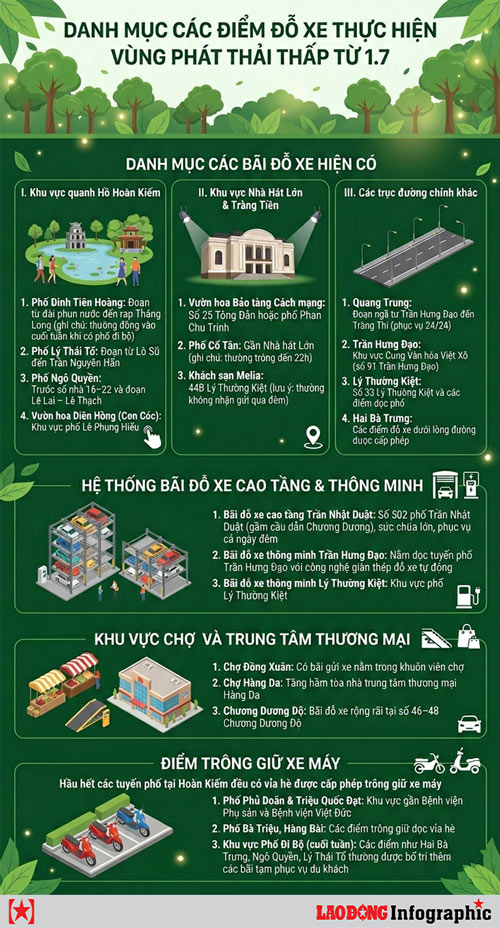
Hanoi prepares infrastructure for low-emission zones
According to the plan, Hanoi will pilot a low emission zone in phase 1 from July 1, 2026, with a buffer zone including streets: Hang Dau, Phung Hung, Trang Thi, Hang Khay, Trang Tien, Tran Quang Khai, Tran Nhat Duat in the Old Quarter area; the core zone belonging to Hoan Kiem ward includes 11 surrounding streets: Trang Tien, Hang Khay, Le Thai To, Hang Dao, Hang Ngang, Hang Buom, Ma May, Hang Bac, Hang Mam, Nguyen Huu Huan, Ly Thai To.
When deployed, a large number of vehicles that do not meet standards will be restricted from entering the center, thereby the need to convert vehicles or use transit services at the borders of the region will increase sharply. Therefore, the city is focusing on reviewing more than 210 locations in Ring Road 1 with a total area of nearly 24,000m2 to arrange parking lots and transit points.
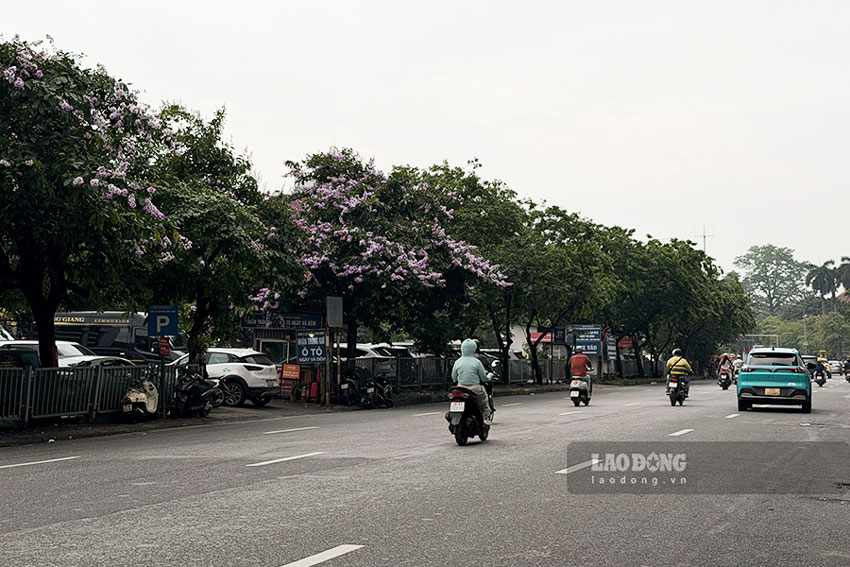
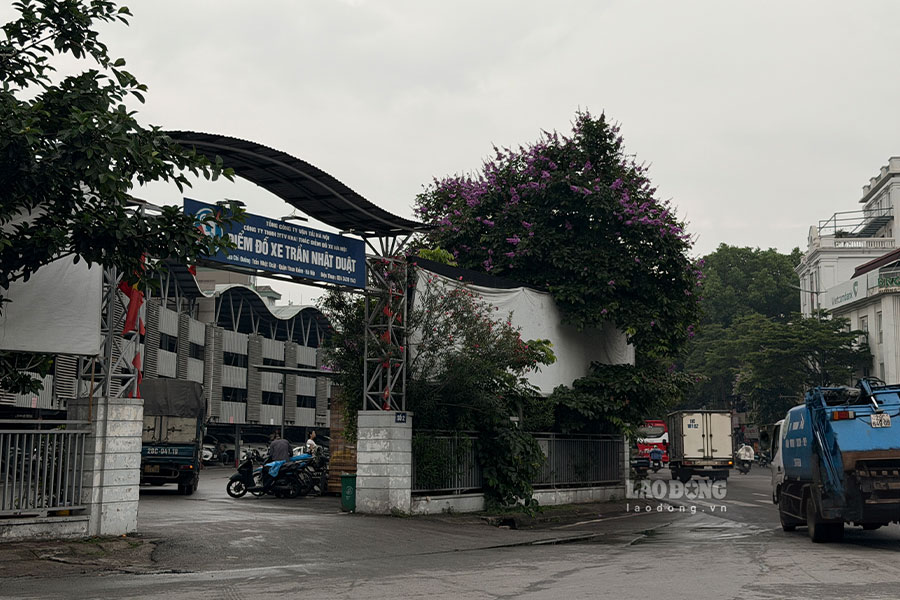
From a professional perspective, Dr. Khuong Kim Tao - former Deputy Chief of Office of the National Traffic Safety Committee - highly appreciated the city's efforts in deploying low-emission zones. He also noted the operation of waiting and picking up passengers and loading goods positions, and also solutions for people to choose to move in case they cannot use personal gasoline vehicles to enter restricted areas.
Avoid making waiting and pick-up points become new "bottleneck points
Dr. Khuong Kim Tao said that if not organized reasonably, the locations for waiting, picking up passengers and arranging goods may unintentionally become new "bottleneck points". If the situation of gasoline vehicles concentrating too much in the adjacent area to wait for passengers or transfer goods occurs, unintentionally pushing the entire source of emissions to concentrate at these points, causing the pollution situation in that area to become more serious instead of being overcome.
According to Mr. Tao, spatial planning for transit points that do not affect traffic is a key factor. The establishment of stops and parking points needs to be based on analyzing the actual vehicle flow, turning them into multimodal traffic junctions instead of just passive parking lots.
To solve the congestion problem, Mr. Khuong Kim Tao proposed that: Passenger cars to the transfer point need to have a certain stop time and must move away immediately; It is not allowed to have long-term vehicles stopping and waiting for each other here, because this will cause chaos and congestion right at the emission low zone boundary.
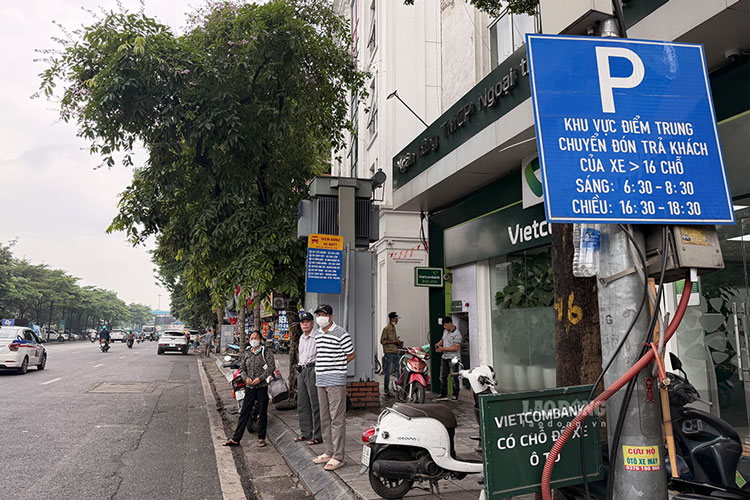
Another issue to pay attention to, emphasized by Dr. Khuong Kim Tao, is the management of the technology electric vehicle force operating in the core area. When personal vehicles are restricted, the demand for electric vehicles and electric taxis will increase. Therefore, the city needs a strict monitoring mechanism to avoid the situation of "overcharging", increasing service prices affecting the tourism image of the Capital. Strict management not only ensures the rights of people but also creates a healthy competitive environment for green transport business units.
To best support people and tourists, Mr. Tao also suggested that the city needs to maximize the connection of public transport systems. In addition to adjusting the routes of green bus routes and opening new mini bus routes in the future, he suggested that it is necessary to add a system of small electric vehicles to transfer between streets. These compact vehicles will be the optimal solution for the typical small streets of Hoan Kiem, where traditional buses are difficult to reach.
In addition, the battery exchange cabinet and charging station system being surveyed will be an important foundation for technology vehicles and delivery vehicles to completely switch to clean energy, helping movement in the core of Hoan Kiem become more environmentally friendly.
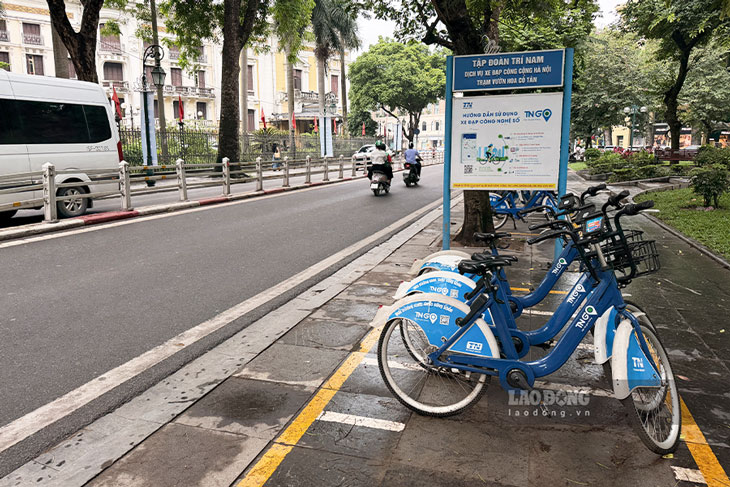
Currently, around the pilot area, the public bicycle station system has begun to be expanded. Connecting these stations with urban railway stations such as Nhon - Hanoi Station, Cat Linh - Ha Dong or large bus stops will create a convenient transportation network.
The deployment of low emission zones is not only limited to environmental indicators but also a problem of people's trust and convenience. When infrastructure and psychological barriers are removed, low emission zones will truly become an ideal living space, making an important contribution to the Net Zero commitment roadmap and national energy security in a sustainable way.