The Ho Chi Minh City Department of Construction has just sent a document to the Ho Chi Minh City People's Committee proposing to consider and propose to the Government to approve the policy of allowing the city to pilot a demand-driven transport (DRT) model in some suitable areas.
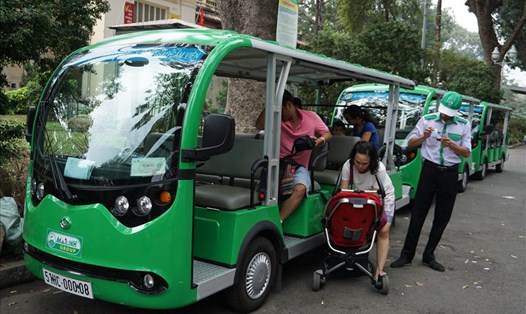
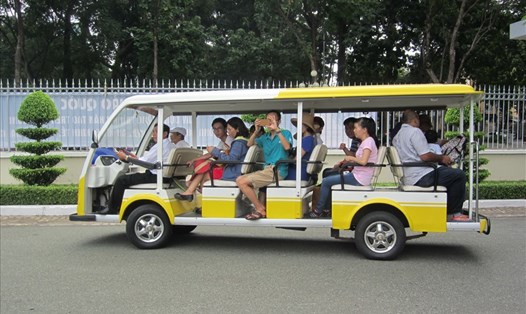
According to the proposal, small buses will be deployed in some residential areas with high travel demand but limited access to public transport such as the area of Ho Chi Minh City National University, the city center and along Metro Line 1 stations (Ben Thanh - Suoi Tien).
DRT service will be organized flexibly according to each time frame. During peak hours, vehicles operate similarly to traditional buses with fixed routes and stops to ensure transport capacity.
During off-peak hours, vehicles will operate according to actual needs. Cars only pick up and drop off passengers at points where people have registered in advance through technology applications.
The expected pilot period is no more than 3 years. After the first year of implementation, the city will assess operational efficiency, the ability to meet people's travel needs as well as the level of connection with the existing public transport system to improve the operating mechanism and consider expanding the model.
In the pilot phase, the DRT model will apply a management mechanism, ticket prices and support policies similar to current buses. Ticket prices are expected to be equal to traditional buses and the city will support funding to encourage people to use the service.
The system will also apply technology to operate, monitor operations and connect passengers with the bus through applications on smartphones, while interlinking with the city's public transport network.
According to the Ho Chi Minh City Department of Construction, public passenger transport currently only meets about 7% of people's travel needs.
One of the main reasons is the limited access to buses, especially in scattered residential areas, new urban areas or small roads that large buses find difficult to access.
Currently, many people have to walk a fairly long distance, over 400 - 500m to reach bus stops. In hot and humid weather conditions, heavy rain like in Ho Chi Minh City, this is a factor that makes people reluctant to use public transport.
In addition, the "first - last stage" connection between people's residences and the metro and main bus routes is still not convenient.
In that context, the DRT model is considered a suitable solution to complement the existing public transport network. This is a type of public transport that operates flexibly according to the actual needs of passengers in a specific area or corridor.
Unlike taxis or technology contract cars, DRT is still a type of public transport with a starting and ending point and a list of pick-up and drop-off points approved and publicly announced by the management agency. However, the route and operating time will be flexibly adjusted based on passenger booking needs through technology applications.
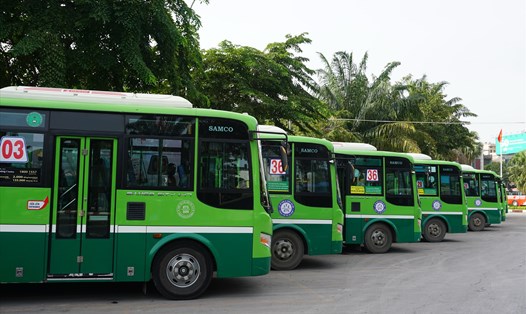
Ho Chi Minh City, after expanding its administrative boundaries, has about 180 bus routes, including inter-provincial and inter-provincial, with more than 2,400 buses, of which electric buses account for nearly half.
Ho Chi Minh City People's Committee plans to submit to Ho Chi Minh City People's Council on bus ticket exemption policies in June 2026.
According to the plan, toll exemption will be applied to 135 bus routes operating in the area, including 109 subsidized routes and 26 non-subsidized routes. Interprovincial bus routes are not applied.