
Hanoi Highway - Ring Road 3 connecting route
The project to complete the Go Cong traffic junction and the road connecting from Hanoi Highway (Tram 2 junction) to Ring Road 3 HCMC has a total investment of more than 12,400 billion VND. Currently, site clearance work is being implemented, expected to start in early 2027.
The newly built road is about 5.9 km long, 107 - 120 m wide. The initial phase is to build 2 parallel routes with a total of 6 lanes, the land in the middle is reserved for future expansion.
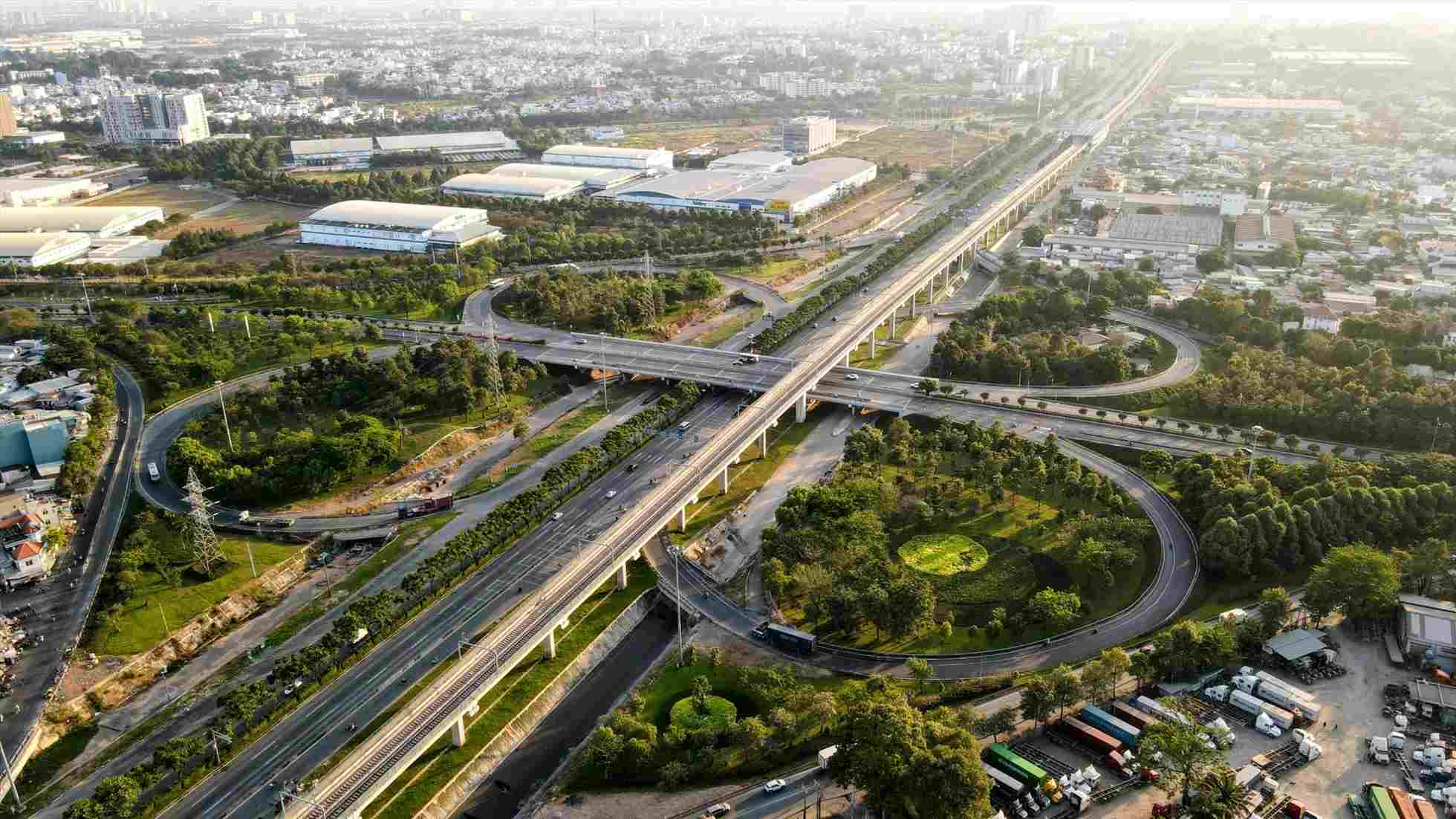
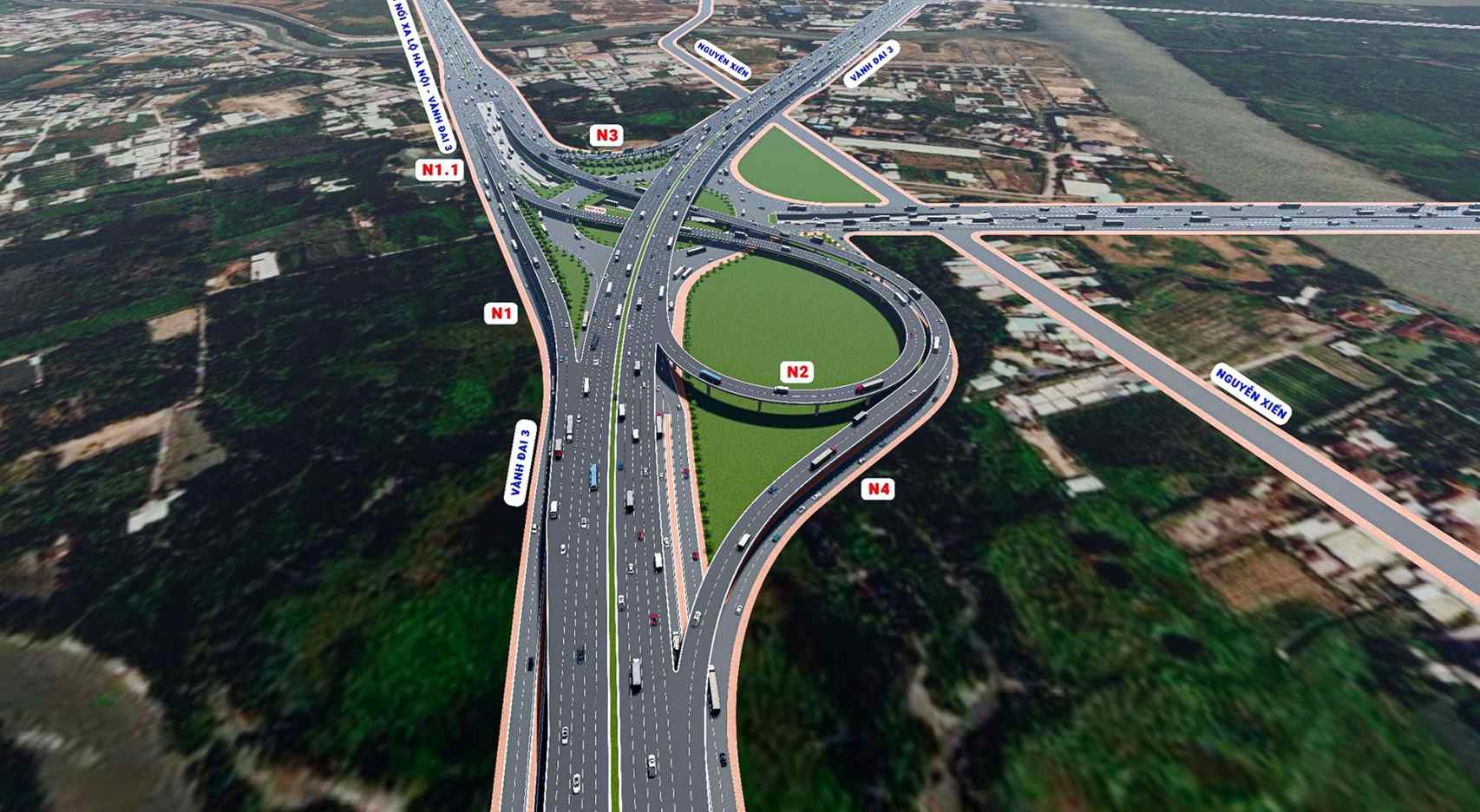
Go Cong intersection is designed in the form of a 4-level level crossroads, combined with a central roundabout, including bridge branches (N1, N2, N3, N4), each branch with 2 lanes.
On Ring Road 3, another 4-lane elevated bridge unit will be built, completing the cross-section according to the plan. Construction of underpasses on the branch connecting from Hanoi Highway through Long Phuoc, connecting to Long Hung bridge.
The project also builds a overpass at the Le Van Viet - D1 road intersection; Go Cong canal overpass; Trau Trau canal overpass.
The project is expected to be completed in the fourth quarter of 2028, directly connecting Ring Road 2 and Ring Road 3, thereby improving the efficiency of traffic infrastructure exploitation and reducing congestion pressure at the eastern gateway of Ho Chi Minh City.
Cat Lai - Phu Huu inter-port road
Cat Lai - Phu Huu inter-port road, connecting from Nguyen Thi Dinh street to the intersection of Ho Chi Minh City - Long Thanh - Dau Giay expressway and Ring Road 3 of Ho Chi Minh City (HLD intersection) started construction in the fourth quarter of 2026, completed after 2028.
The newly opened road is about 6 km long, 60 m wide, with a scale of 12 lanes, and a design speed of 60 km/h.
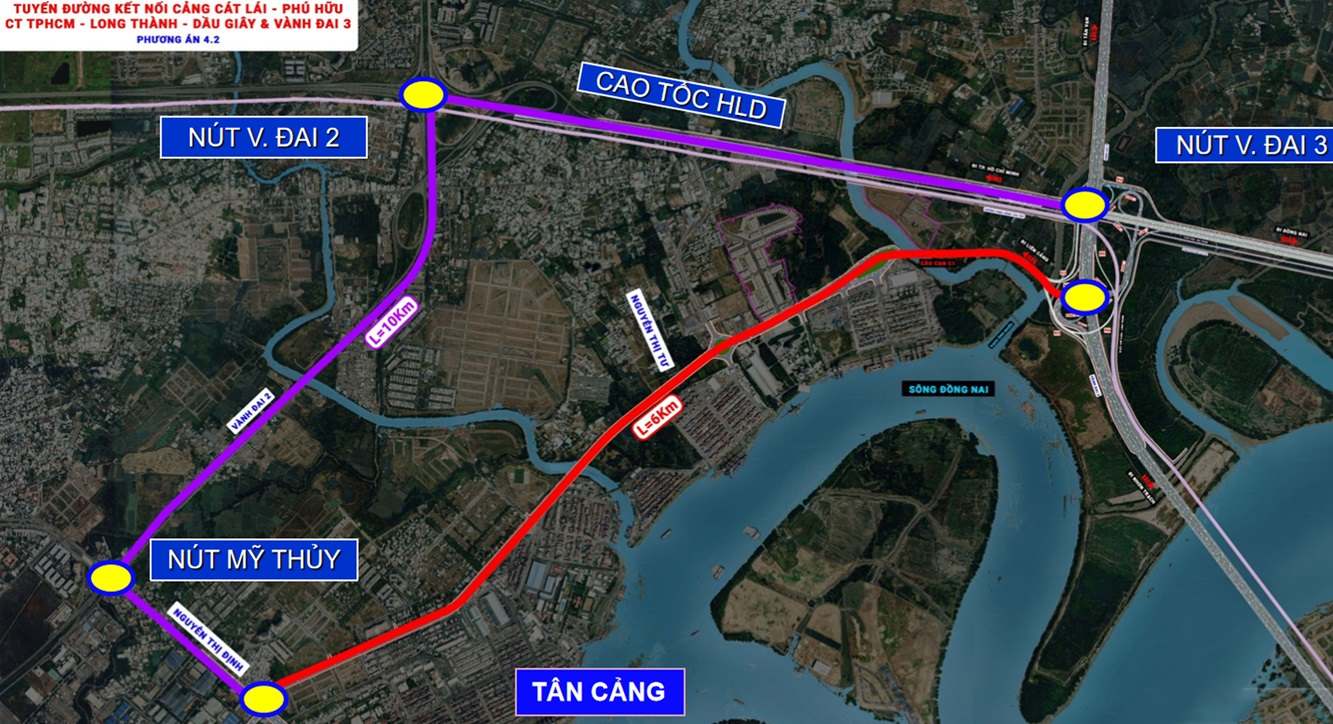
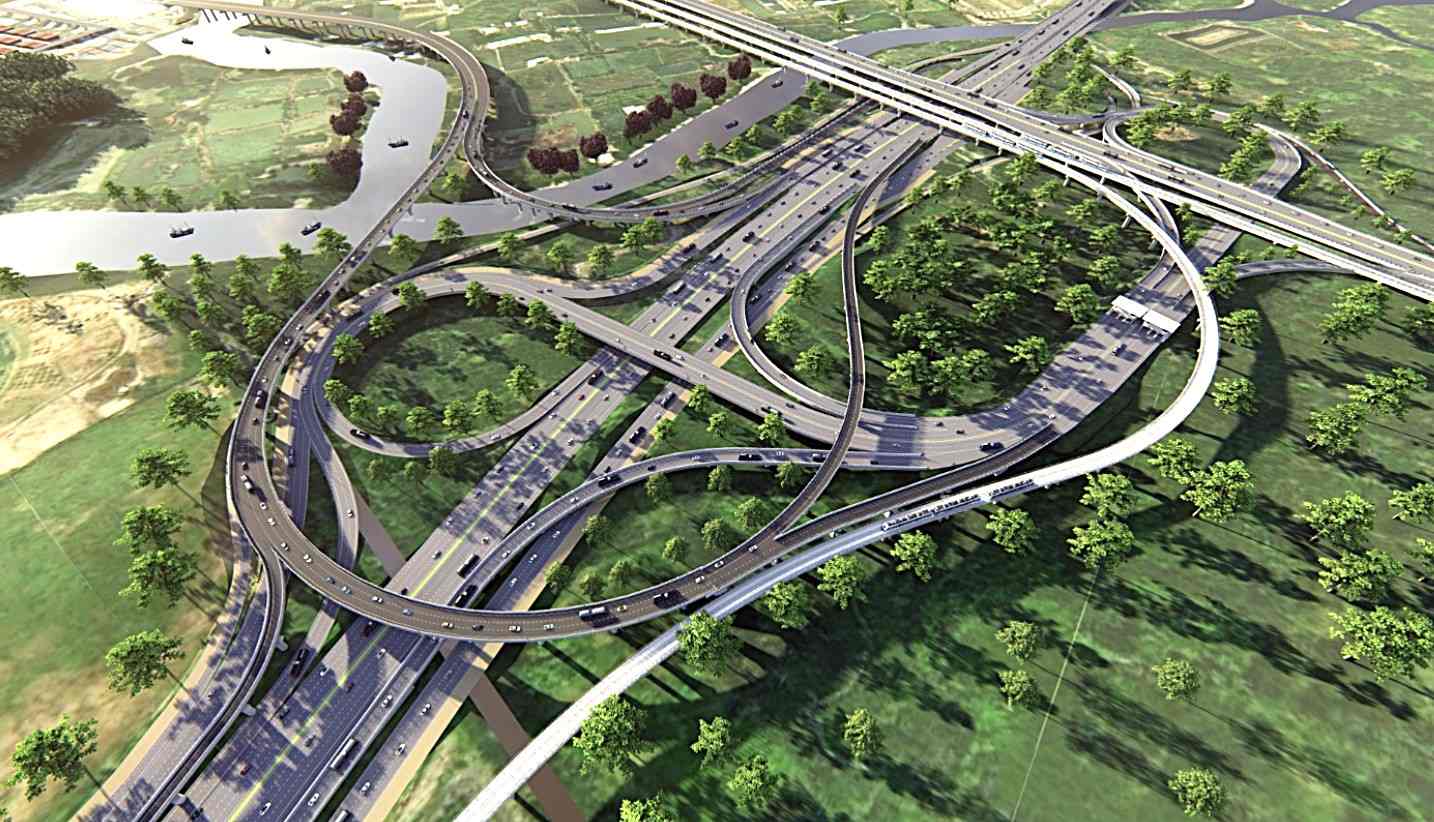
On the route, Ba Cua bridge will be built with 2 units, totaling 10 lanes. The section from Phu Huu port to the HLD intersection will be built with a 4-lane elevated road.
The project has a total estimated investment of 8,782 billion VND, of which construction and equipment costs are nearly 6,000 billion VND, compensation, support, and resettlement costs are about 1,290 billion VND,...
When completed, this route will reduce pressure on existing traffic axes such as Nguyen Thi Dinh, Nguyen Duy Trinh, Hanoi Highway, and at the same time create motivation for the development of logistics chains and seaport economy of Ho Chi Minh City.
Expanding Nguyen Thi Dinh street
The project to expand Nguyen Thi Dinh street (section from My Thuy intersection to Cat Lai ferry) is nearly 2 km long, with a total investment of about 5,000 billion VND.
According to the proposal, the existing road surface, about 24 m wide, will be expanded to 60 - 73 m, divided into 3 sections.
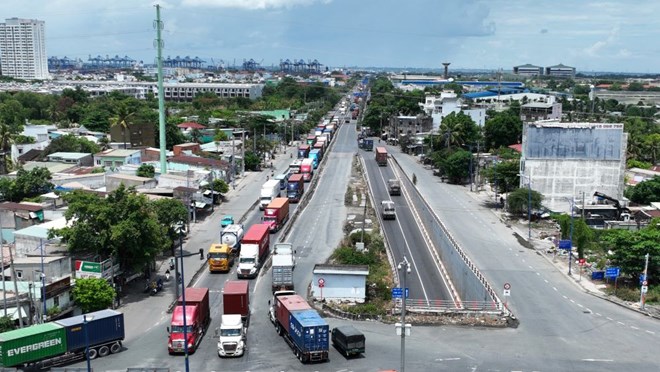
Section 1 (from My Thuy intersection to the beginning of Cat Lai bridge access road), about 260 m long, 60 m wide, including 12 motorized lanes and 2 mixed lanes.
Section 2 (bridge abutment area and under Cat Lai bridge), about 630 m long, with the largest cross-section of 73 m, arranged with 6 lanes for motorized vehicles and 2 mixed lanes, along with two medians for two Cat Lai bridge units.
Section 3 (from the static area under the bridge 5 m up to Cat Lai ferry terminal), about 800 m long, 60 m wide, with 6 lanes for motorized vehicles and 2 mixed lanes.
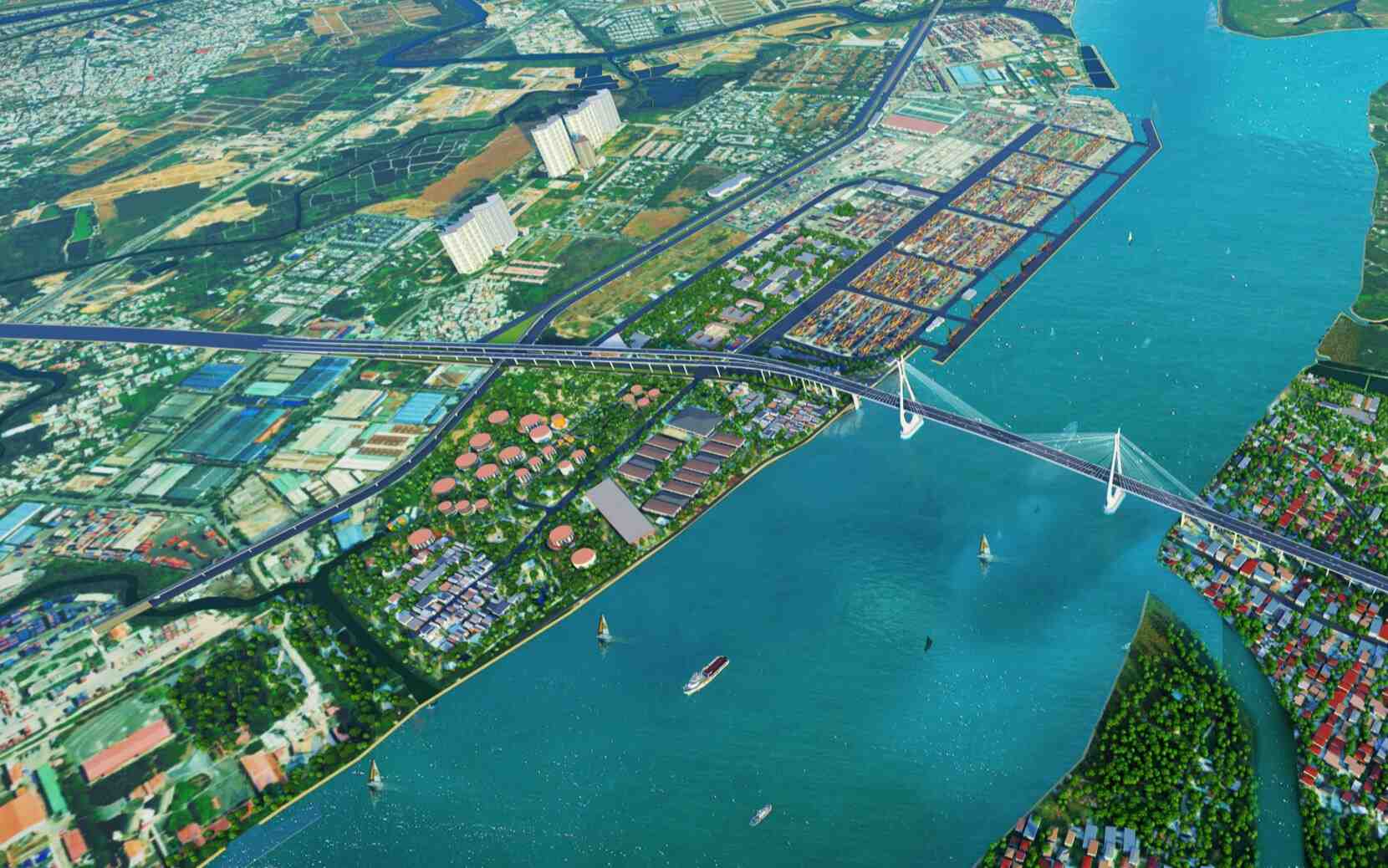
The project is expected to be submitted to competent authorities for approval in the first quarter of 2026. Nguyen Thi Dinh road after expansion helps increase the travel capacity of Cat Lai port, and at the same time forms an important connecting axis with Cat Lai bridge that is being implemented.


