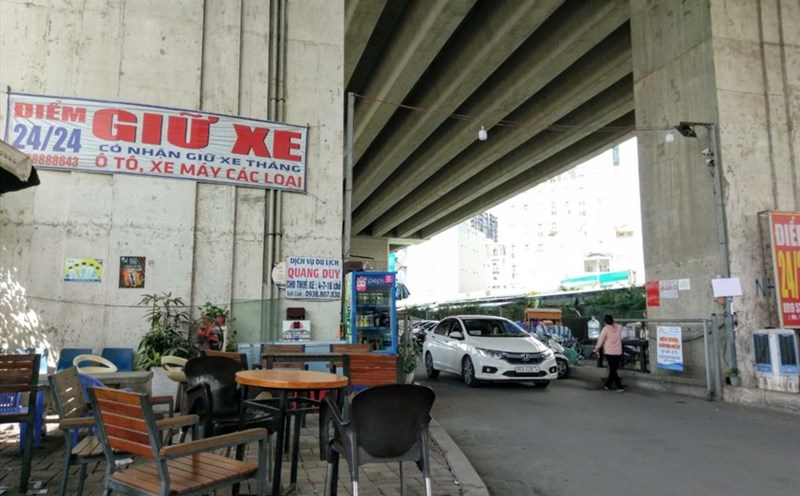
Ho Chi Minh City is facing a major paradox, cars are increasing very rapidly but parking spaces are too scarce. Many central roads have been turned into spontaneous parking places, roads are occupied, and traffic is increasingly chaotic.
Passing through routes such as Alexandre de Rhodes, Han Thuyen, Nguyen Van Chiem or Pham Ngoc Thach, it is not difficult to see cars lined up parked all over the road even though there are no-parking signs.
Currently, Ho Chi Minh City manages more than 12.8 million vehicles, of which nearly 1.2 million are cars. Every month, tens of thousands of newly registered cars are added. But the existing parking area only meets about 0.5% of the actual demand.
Without parking lots, it is impossible to just put up no-parking signs and then fine without alternative solutions.
People buying cars, going to work, transacting, medical examination, picking up and dropping off children all need a legal parking place. If there is no parking space, cars will continue to spill onto the road.
Therefore, Ho Chi Minh City's calculation to build underground parking lots, multi-story parking lots and underground traffic complexes is a necessary and urgent direction.
It is regrettable that many projects have been planned for more than ten years but are still on paper. Four large underground parking lots in the central area such as Le Van Tam Park, Tao Dan, Trong Dong or Hoa Lu were once expected to solve static traffic pressure, but have not yet been implemented.
Limited central land fund and multi-story prefabricated parking lots are very worth considering solutions.
Reality shows that many models previously deployed at Tan Son Nhat airport have been effective. Smart parking technology helps save space, increase capacity and reduce the situation of vehicles running around looking for parking spaces.
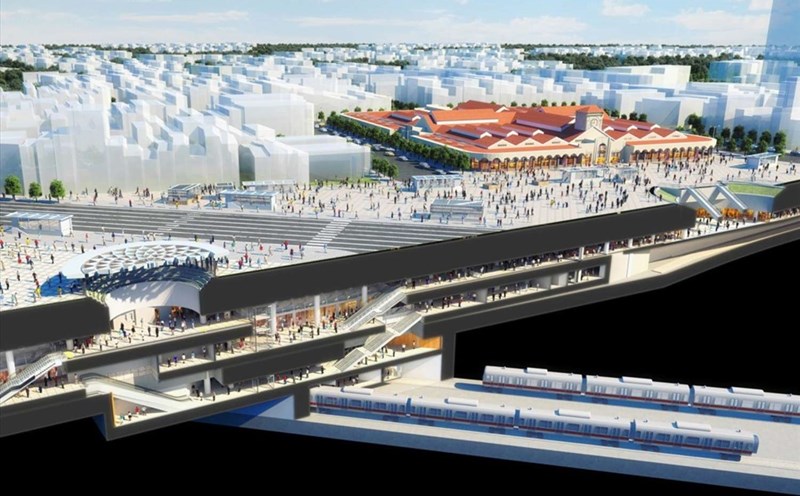
In particular, it is necessary to link parking lot planning with metro and public transport development. The Ben Thanh underground complex model directly connecting to Metro Line 1 is a direction suitable for modern urban trends.
People can park their cars and continue to travel by metro or bus, instead of driving private cars deep into the city center.
However, to solve the traffic problem from the root, we cannot just worry about parking spaces.
The city needs to strongly develop public transport to reduce dependence on private cars. When the metro and bus are convenient enough, people are willing to change their travel habits.
In addition, there needs to be a strong socialization mechanism to attract businesses to invest in parking lots. If procedures are prolonged, there is a lack of clean land fund or unclear mechanisms, projects will continue to stagnate as in previous years.
Lack of parking space is a limitation of urban management.
A modern city cannot let cars park all over sidewalks, occupy roads and cause chronic congestion.