
Ho Chi Minh City is entering a new stage of development when the economic space is expanded, closely linked with neighboring localities, forming an urban area of more than 14 million people.
In that context, infrastructure investment is seen as a foundation to promote economic growth, improve productivity and quality of life.
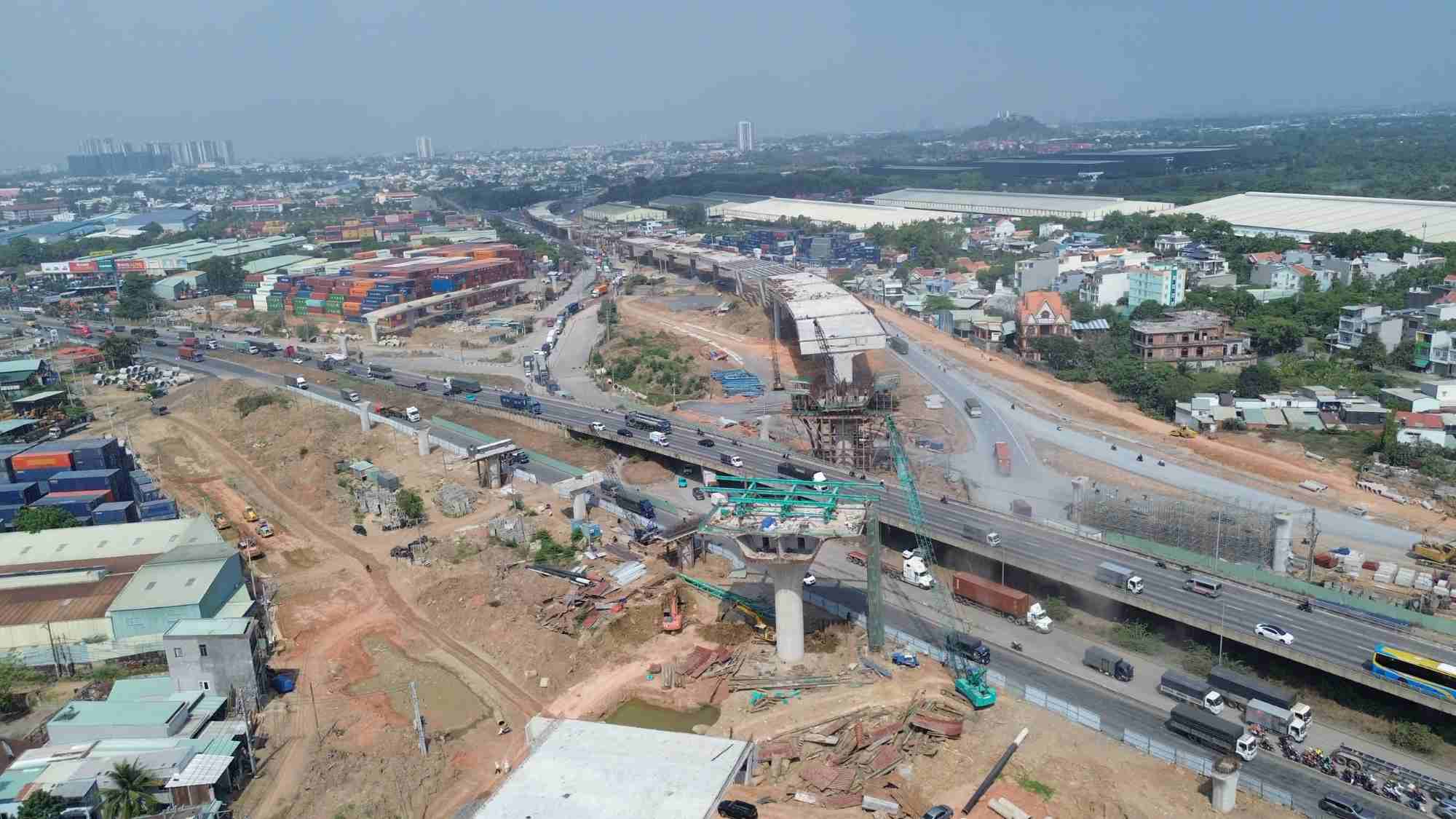
In recent years, Ho Chi Minh City has mobilized many resources, from public investment to public-private partnerships (PPP), to implement strategic transport projects to remove development "bottlenecks".
The city is focusing on completing radial traffic axes and ring road systems such as Ring Roads 2, 3, 4; inter-regional connecting expressways such as Ho Chi Minh City - Moc Bai expressway, Ho Chi Minh City - Chon Thanh.
At the beginning of 2026, Ho Chi Minh City organized the groundbreaking ceremony for four large-scale projects including: Metro Line No. 2 (Ben Thanh - Tham Luong section), Can Gio bridge, Phu My 2 bridge and Rach Chiec Sports Complex. The total investment of these projects is nearly 240,000 billion VND.
The above projects not only solve inner-city traffic pressure but also expand the development space of Ho Chi Minh City towards the sea, strengthening connections with provinces in the region.
In parallel, digital infrastructure is becoming a new pillar in the economic structure of Ho Chi Minh City.
Ho Chi Minh City is currently leading the country in 5G network deployment, with coverage reaching 100% in key areas and about 68% in the whole area.
The city is also attracting many large-scale data center projects from technology corporations such as CMC, Viettel, FPT. Along with that, the 2 billion USD data center project of G42 Group contributes to affirming Ho Chi Minh City's position in the global digital value chain.
Ho Chi Minh City has launched the Vietnam International Finance Center in Ho Chi Minh City (VIFC-HCMC), creating a premise for building a modern financial ecosystem, integrating financial technology (fintech) and green finance, catching up with the trends of major financial centers in the world.
According to the Ho Chi Minh City Department of Finance, strong investment in infrastructure has created positive spillover effects on the city's macroeconomic indicators.
With the goal of GRDP growth of over 10% by 2026, infrastructure plays a key driving force to increase GRDP per capita to about 9,800 USD.
Modern transportation and seaport systems help reduce logistics costs, improve business competitiveness and promote exports.
Infrastructure investment also creates more jobs when in 2025, Ho Chi Minh City has about 140,000 new jobs.
Synchronous infrastructure also contributes to improving the quality of life of people. The city sets a target in 2026 to reach 35 beds and 18 doctors per 10,000 people, and at the same time deploy electronic health records for all people.
This year, Ho Chi Minh City will build 28,500 social housing units and relocate 1,900 temporary houses along canals and ditches to improve living conditions for low-income people.
Anti-flooding, tide control and modern public transportation systems are also being promoted to create a safer living environment and better adapt to climate change.

To maintain the development momentum, the Ho Chi Minh City Department of Finance said that the city needs to build a diverse capital mobilization strategy for infrastructure projects.
In the context of limited budget, expanding the public-private partnership (PPP) model is considered an important solution to attract social resources.
At the same time, special mechanisms under Resolution No. 260/2025/QH15 are also used to implement new investment models and urban development in the direction of public transport (TOD) to optimize the value of land funds around metro stations,...
Attracting FDI capital also needs to shift from quantity to quality, prioritizing strategic investors in the field of green infrastructure and high technology.


