
The Ho Chi Minh City Department of Construction has just agreed on the policy of deploying public electric bicycle services to serve the connection of the first and last stages with the public passenger transport system, taking Metro Line No. 1 (Ben Thanh - Suoi Tien) as the focus.
The project is proposed by the 4th Industrial Revolution Center in Ho Chi Minh City (HCMC C4IR), aiming to add short, flexible and environmentally friendly travel methods, creating favorable conditions for people to access metro, buses and other public transport hubs.
A noteworthy point is that Ho Chi Minh City will study piloting a model of public electric bicycles without fixed stations (dockless) controlled by technology. Vehicles are managed through a positioning system, limiting the scope of operation and controlling parking locations to limit arbitrary parking, ensuring urban aesthetics and order. This is the first model to be researched and implemented in Vietnam.
According to the plan, the project is implemented in three key areas. In the Ho Chi Minh City National University Urban Area and Ho Chi Minh City High-Tech Park, the fixed parking station model will be applied to serve the needs of internal movement and connect with neighboring metro stations.
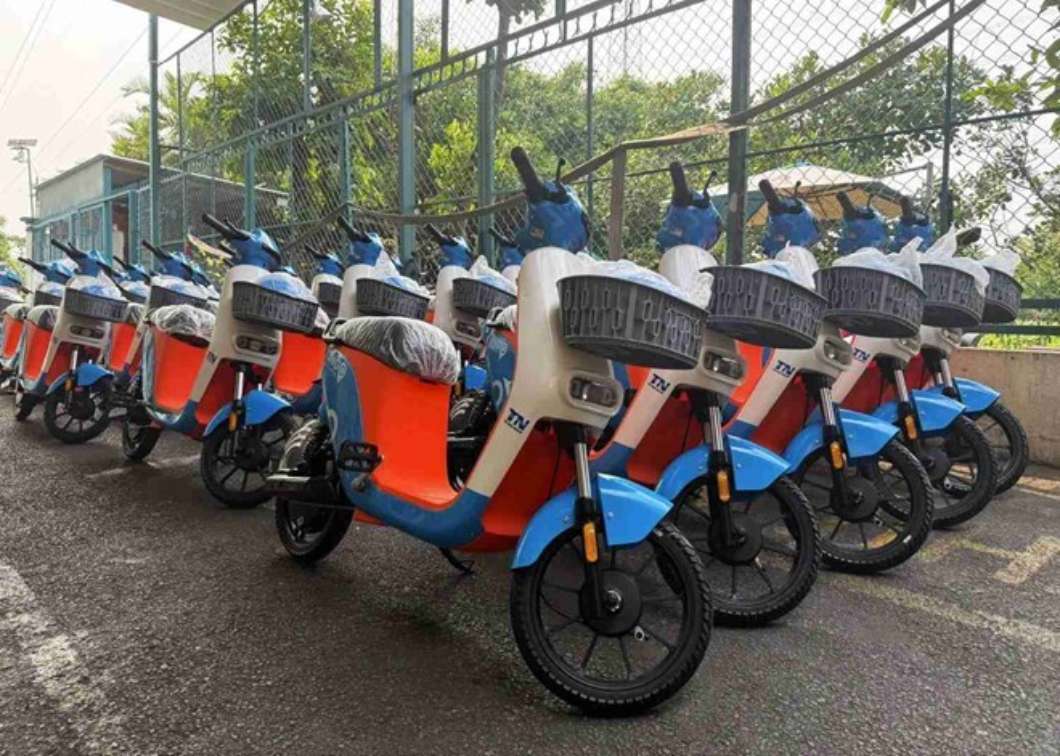
For the An Khanh area, including Thao Dien, An Phu and Thu Thiem, a pilot combination of a fixed parking lot model and a model without a controlled parking lot will be implemented. This area is assessed to have high population density, many commercial centers, offices and a large short-distance travel demand, suitable for testing new types of transportation.
The project is chaired by the Ho Chi Minh City Public Transport Management Center, in coordination with HCMC C4IR and related units to implement. Sunwah Loco Co., Ltd. participates as an investor, providing vehicles, technology solutions and operating plans.
According to assessments by specialized units, the addition of public electric bicycle services will help increase access to the public transport system, reduce dependence on personal vehicles in short journeys, thereby contributing to reducing traffic congestion and improving the quality of the urban environment.
In addition to traffic efficiency, the project is also expected to promote the development of green industries in Ho Chi Minh City such as electric bicycle production, energy storage batteries, technology research and development and new energy solutions.
The pilot results will be the basis for the city to assess the feasibility of the model, thereby considering expanding it to areas with short travel demand and high connection density, contributing to building a green, smart transportation system and towards the goal of net zero emissions by 2050.


