
Connecting two historical lands
After the merger of Binh Dinh and Gia Lai provinces (old), Gia Lai province has the 2nd largest natural area in the country, with a population of more than 3.5 million people.
The merger opens up a new development space, connecting and promoting the historical, cultural, and revolutionary values of the traditional martial land of Binh Dinh with the majestic Central Highlands.
Binh Dinh is a coastal province in the South Central Coast region, a land rich in historical and cultural traditions, associated with Sa Huynh culture and the Tay Son movement in the 18th century, with the name of the hero in cloth Quang Trung - Nguyen Hue.
After many territorial adjustments, in 1975, Binh Dinh merged with Quang Ngai into Nghia Binh province. On June 30, 1989, Binh Dinh was re-established, including 11 district-level administrative units and developed to June 30, 2025, marking 36 years.
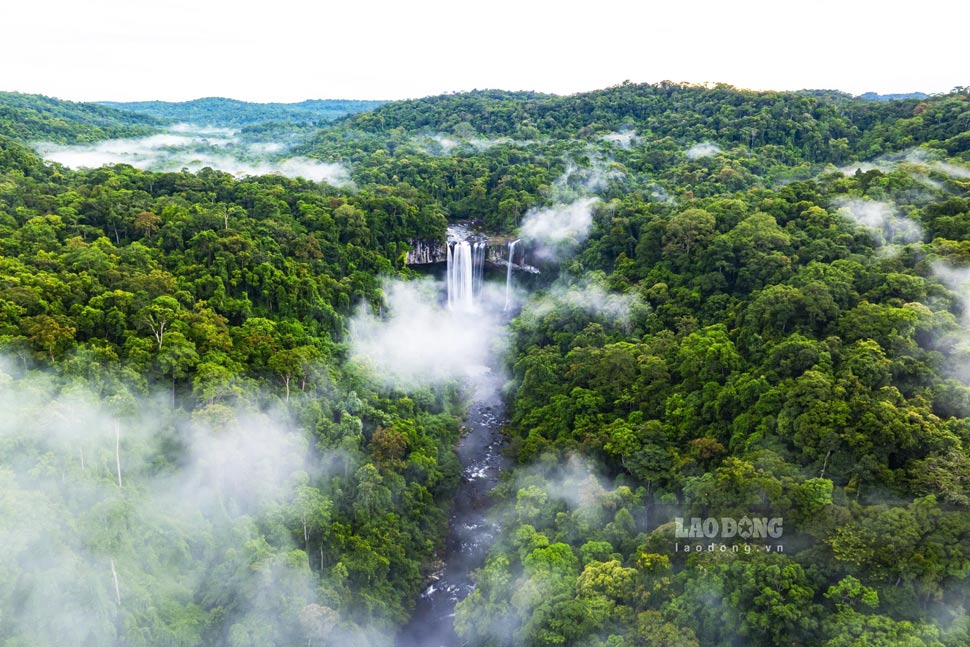
Meanwhile, Gia Lai (old) is a mountainous province in the Central Highlands region, the long-standing residence of the Jrai and Bahnar ethnic groups. In 1932, Pleiku province was established, including Pleiku agents and Cheo Reo agents.
After the August Revolution succeeded, the revolutionary government called the province Gia Lai and it was maintained until 1975.
On September 20, 1975, Gia Lai and Kon Tum merged into Gia Lai - Kon Tum province. By August 12, 1991, Gia Lai province was separated, including 10 district-level administrative units and developed until June 30, 2025.
Forest connects sea, opening up development
According to Mr. Pham Anh Tuan - Member of the Party Central Committee, Chairman of Gia Lai Provincial People's Committee, Gia Lai has a rare advantage when it converges both the great forest and the blue sea, along with the cultural diversity of many ethnic groups.
The province owns a diverse ecosystem, stretching from plateaus, grasslands to plains, and the vast ocean. This space creates complementarity between the plateau and coastal areas, expanding the possibility of linkage in agricultural, industrial, commercial, service - tourism development.
In particular, the infrastructure system is connected by the North-South and East-West axes. Transport infrastructure combines seaports, airports, national highways, highways and railways, creating conditions for regional linkage development space.
In the new development phase, Gia Lai identifies 5 growth pillars including: Developing processing and manufacturing industry; making tourism a key economic sector; developing high-tech agriculture and sustainable forestry; developing port - logistics services; rapid and sustainable urban development.
The province also focuses on implementing 4 breakthrough stages: Improving institutions, strongly improving the investment environment; developing science, technology, innovation and digital transformation; improving the quality of human resources; creating breakthroughs in investment in transport infrastructure construction.
Creating new urban areas and economic centers
To exploit the rare advantages, Gia Lai is currently general planning for urban, rural and functional areas, gradually completing the planning system and reorganizing the development space.
According to the plan, the province will develop a detailed plan at a scale of 1/500 for the northern area of the Casa Marina Resort expansion project in Quy Nhon Nam ward, with an area of 4.87ha; Detailed plan at a scale of 1/500 for Sub-zone 2.3 - Bai Xep International Sea Resort, with an area of 7.83ha.
1/2,000 scale zoning plan for the vicinity of the North-South high-speed railway station in the Bong Son area, an area of 440ha, and Dieu Tri, an area of 443ha.
The province also plans a general construction scale of 1/5,000 for Bien Ho - Chu Dang Ya Tourist Area, with an area of 6,300ha; general planning for expanded Quy Nhon urban area with an area of 119,080ha; expanded Pleiku urban area 126,300ha; Hoai Nhon urban area 42,090ha; An Khe urban area 13,050ha...
Chairman of Gia Lai Provincial People's Committee Pham Anh Tuan affirmed the determination to turn challenges into motivation, turn pressure into action, turn policies into specific and practical results; maximize new potentials and advantages associated with preserving and developing traditional values.
The goal is to build Gia Lai into a large-scale locality with high competitiveness, deeply integrated into the national and global value chain, creating a solid foundation to enter the era of national rise.


