
Starting from the years of youth volunteers
Visiting the family of Mr. Ha Van Dung (born 1954) and Mrs. Bui Thi Ngoc (born 1956, in Cat Loi village, Hop Tien commune, Thanh Hoa province), it is easy to see that despite their old age, the two former youth volunteers are still diligently working and producing.
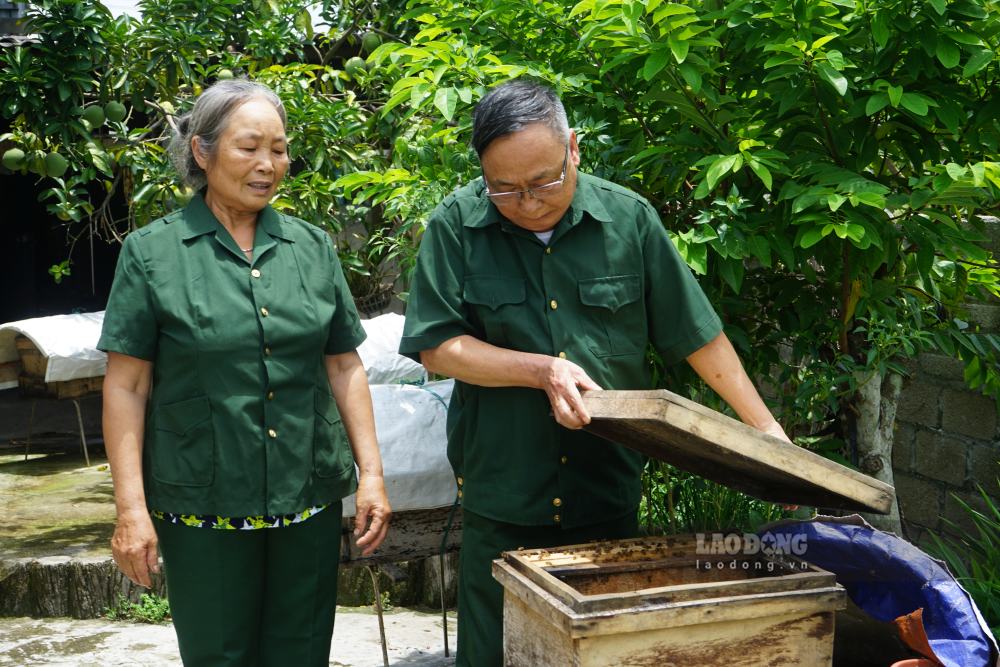
He and his wife always keep in mind: "Young people volunteer, old people are exemplary". Therefore, maintaining production not only helps the family have more income and support for children and grandchildren but is also a way for them to set an example for the younger generation.
Sharing with a reporter from Lao Dong Newspaper, Mr. Ha Van Dung said that he and Ms. Ngoc participated in the youth volunteer force in the old Quan Hoa district from 1977 to 1980.
Because they were from the same hometown, the two met and admired each other during their time on duty away from home. In 1980, after completing their youth volunteer service, they returned to their hometown, married and started a business in Trieu Thanh commune, former Trieu Son district, now Hop Tien commune.
He and his wife had 5 children. In the early years, the family's life faced many difficulties. To have money to cover living expenses and raise their children to study, they did many jobs, from repairing household electricity, reclaiming land for rice cultivation to raising livestock and poultry, digging ponds to raise fish.
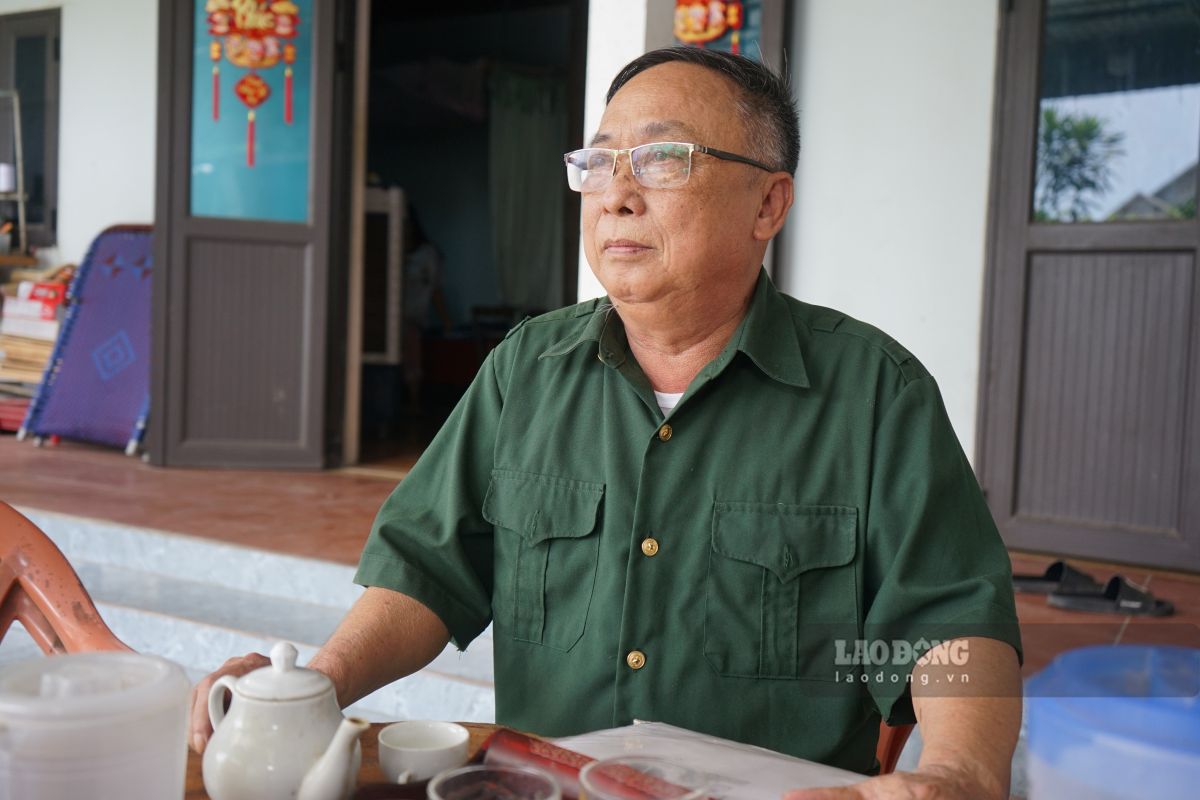
As their children grew older and their tuition and living expenses increased, Mr. Dung and his wife spent many nights struggling to find economic development directions suitable for their family and local conditions.
In 2000, realizing that his hometown had a large forest area and abundant natural flower resources, Mr. Dung decided to start a honey-bearing profession.
Initially, he invested in some beehives and then brought them into the forest of an acquaintance to send them to bees to harvest honey. He and his wife spent a lot of time choosing locations, monitoring bee colonies and experimenting with care methods, gradually accumulating experience and limiting risks.
At that time, Mr. Dung was holding the position of Vice Chairman of the Commune Gardening Association, so he had the opportunity to access scientific and technical knowledge to serve production. He also participated in vocational training classes on honeybee farming, and then applied the knowledge learned to practice.
According to Mr. Dung, when he first started, his family raised 30 colonies of bees, each colony worth about 700,000 VND. With the motto of working and learning, after about 3 years, the family began to have a relatively stable income from selling honey and bee seeds.
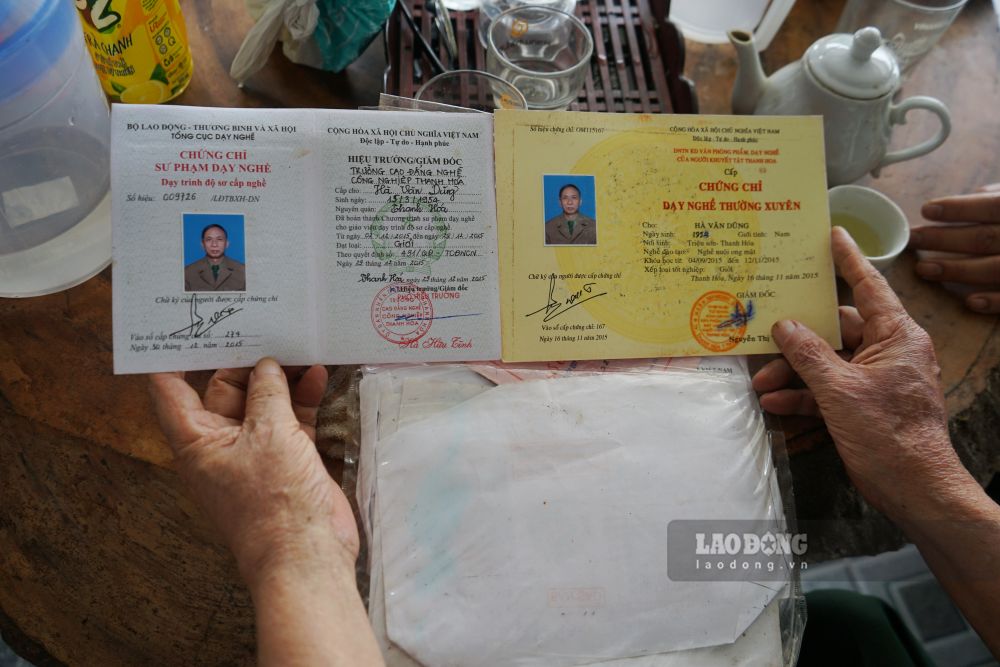
After accumulating experience, Mr. Dung was invited by the Gardening Association and the Farmers' Association of former Trieu Son district to participate in imparting beekeeping techniques to households in the district and in Nam Dong commune, former Quan Hoa district.
More than 100 beehives generate stable profits
According to Mr. Dung, beekeeping looks easy on the outside, but in reality, it requires beekeepers to have a solid grasp of techniques, regularly monitor the weather, flower sources and the condition of each beehive.
Beekeeping is not easy at all, especially raising in the forest, because it contains many risks. At times, storms and floods swept away all the beehives, causing the family to lose about 50 million VND. However, my husband and I were not discouraged, and then continued to rebuild and develop the bee colony" - Mr. Dung shared.
Thanks to persistence, to date, his family has maintained more than 100 beehives in the forest, bringing in a stable income.
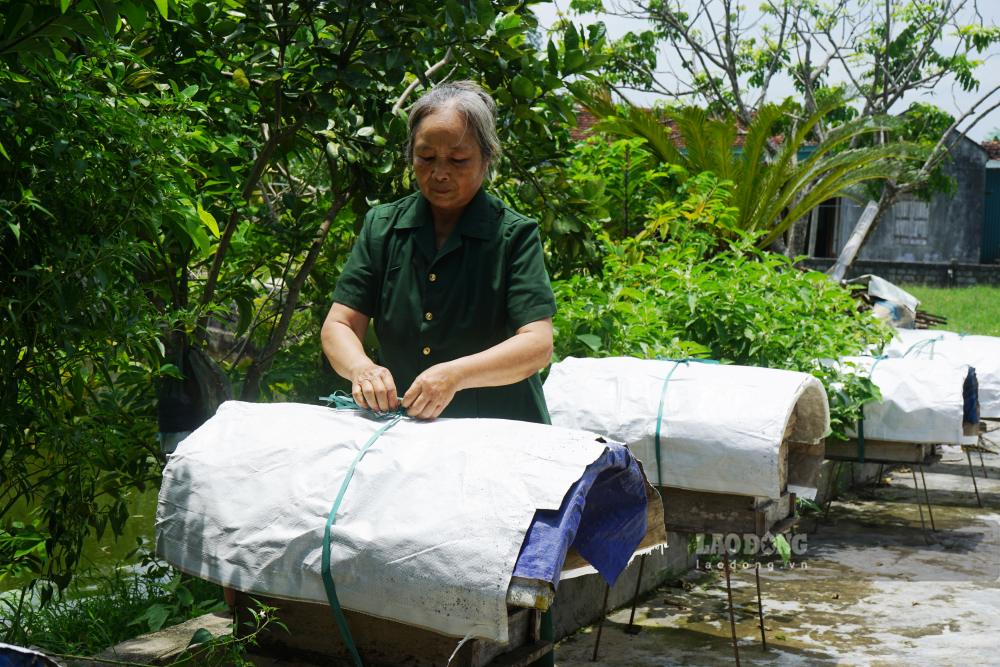
Although they are old, every week or 10 days, they go to the forest to check the bee colonies and harvest honey. In the season when forest flowers bloom a lot, the amount of honey increases, the family has to hire 3 more workers to support them.
According to Mr. Dung's calculations, more than 100 beehives produce about 1.5 tons of raw honey each year, bringing a profit of over 100 million VND.
In addition to the bees raised in the forest, his family also maintains about 20 beehives at home to sell honey and supply bee breeds. He and his wife also combine digging ponds to raise fish and planting fruit trees to take advantage of land and diversify income sources.
Not only actively developing the family economy, Mr. Dung and his wife also regularly participate in local movements, encouraging and supporting comrades to rise up in life.
He and the association organization mobilized members and people to contribute funds, labor days and materials to build 2 houses of gratitude; and at the same time awarded 2 savings books to members in difficult circumstances.
With the spirit of not being afraid of difficulties, not being afraid of hardships, former youth volunteer couple Ha Van Dung and Bui Thi Ngoc still maintain a diligent, united working lifestyle, helping the community.
For many years, Mr. Dung's family has been recognized by the local government and the Thanh Hoa Provincial Former Youth Volunteers Association as a good labor and production household.


