
White license plate car still accepts passengers, publicly quotes prices
Decree 238/2026/ND-CP, effective from August 15, 2026, supplements regulations on penalties for the act of using unlicensed cars for transportation business to transport passengers for profit. Vehicle drivers may be fined 12 - 14 million VND if they use personal vehicles to transport passengers and collect money but do not meet the conditions for transportation business.
Although the new regulations on penalizing private cars carrying passengers for collecting money have taken effect, many drivers of combined cars and convenient cars still publicly receive passengers on social networks.
In the role of someone who needs to take a shared car from My Dinh (Hanoi) to the center of Hai Phong City, a reporter was quoted a price of 400,000 - 450,000 VND/trip depending on the pick-up point, if including the whole car, it is 800,000 VND.
The driver said: "This is a private car, the friend at which address informed me to pick it up, but for a combined car, it must be announced early, if it is urgent, it must be covered for the car to be available immediately.
In another case, when reporters asked about the need to issue invoices for a business trip, a contact point running the Hanoi - Hai Phong route said that they could support posting on groups to find suitable cars.
I waited for you for 10 minutes, I asked my husband to post it, if anyone can issue it, they will accept it, there are many combined cars, but very few can issue invoices," this person said.
These exchanges show that there is still a form of connection between drivers, transferring passengers to each other to find vehicles suitable for passenger requirements.
Continuing the survey at a group of shared cars picking up passengers from Hanoi to University of Education 2 (Xuan Hoa ward, Phu Tho province), immediately after posting the article, reporters received many invitations to pick up and drop off on the spot.

Booking a shared bus route, reporters arranged to pick up at Giang Vo street (Hanoi). When present, the driver used a white license plate car to pick up passengers. The driver said that he could not issue an invoice because he was using a private car.
According to this person, currently some drivers have switched to yellow license plates and registered for transportation business, but they themselves still choose the old option.
Currently, there is also a ride-sharing app, but as far as I know, this app charges a fee and requires me to register for a service car, so I don't do it, running a white license plate like this is still more convenient," the driver said.
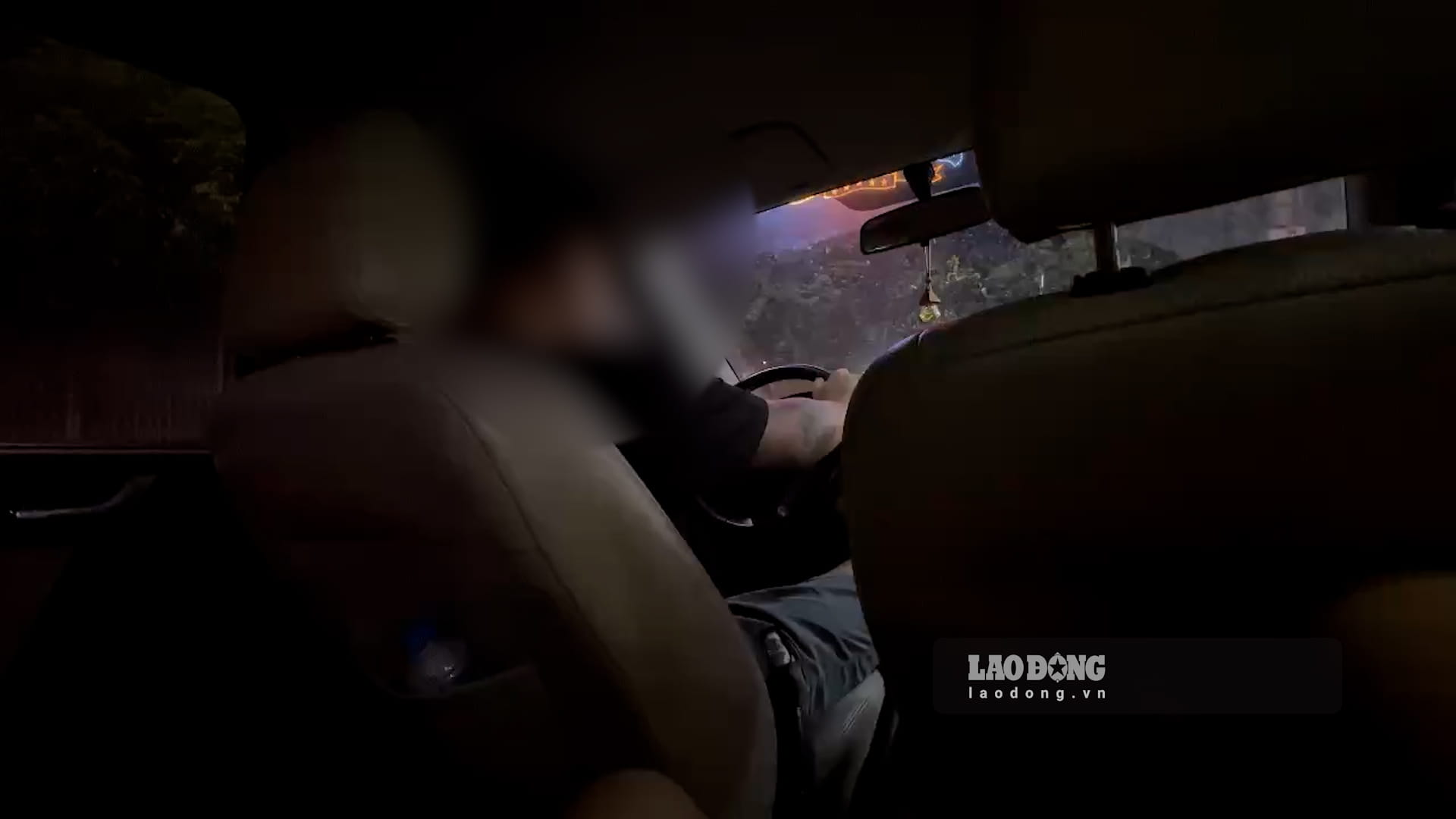
When asked if he was worried about being fined according to the new regulations, the driver admitted to worrying but said that he had not switched to yellow license plates, registering for service vehicles immediately, but would wait for a while longer.
The boundary between convenient trips and transportation business
Discussing this issue, lawyer Dang Van Cuong (Head of Chinh Phap Law Office, Hanoi Bar Association) said that it is necessary to distinguish between transporting acquaintances, relatives or convenient trips that are not for profit purposes and the frequent use of personal vehicles to pick up passengers and collect money.
For personal vehicle users, it is necessary to understand that personal vehicles are registered to serve the travel needs of themselves and their families, not for transportation business when they do not meet the conditions prescribed by law," lawyer Dang Van Cuong said.

If there is a need for transportation business, it is necessary to fully implement procedures according to the provisions of the Road Law of 2024 and guiding documents for implementation.
The Road Law of 2024 stipulates that when operating in a business nature, vehicle owners must meet the prescribed conditions, including requirements for transport business licenses, vehicles, journey monitoring equipment, tax obligations and safety-related conditions.
According to the lawyer, the essence of the new Decree 238/2026/ND-CP is to handle the situation of illegal cars, disguised combined cars, and convenient cars operating as a type of transport business but not fulfilling mandatory legal obligations.
''Intentionally operating in the form of evading business conditions not only risks being administratively sanctioned but can also generate many other legal consequences related to insurance, compensation for damages when accidents occur or tax obligations'', the lawyer emphasized.


