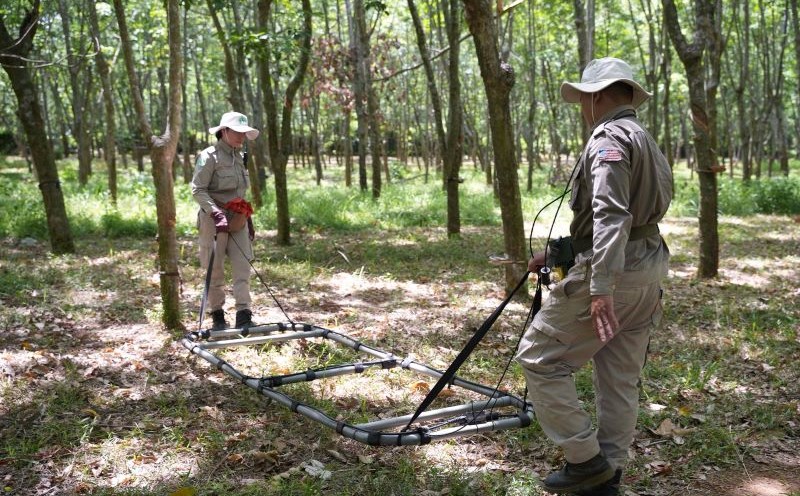
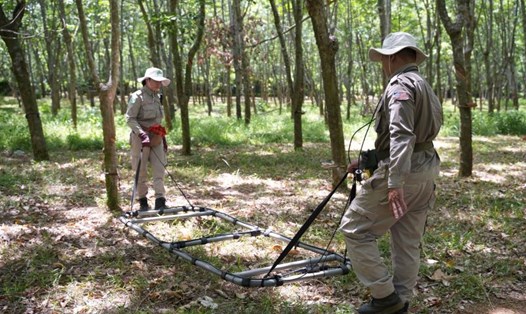
On the morning of January 8, the Regional Defense Command 3 - Bao Lam (Lam Dong Provincial Military Command) said that the unit is coordinating with the Military Command of Cat Tien 3 commune to ensure conditions to serve the chemical force and the military agency of Military Region 7 to handle CS chemical toxins in the area.
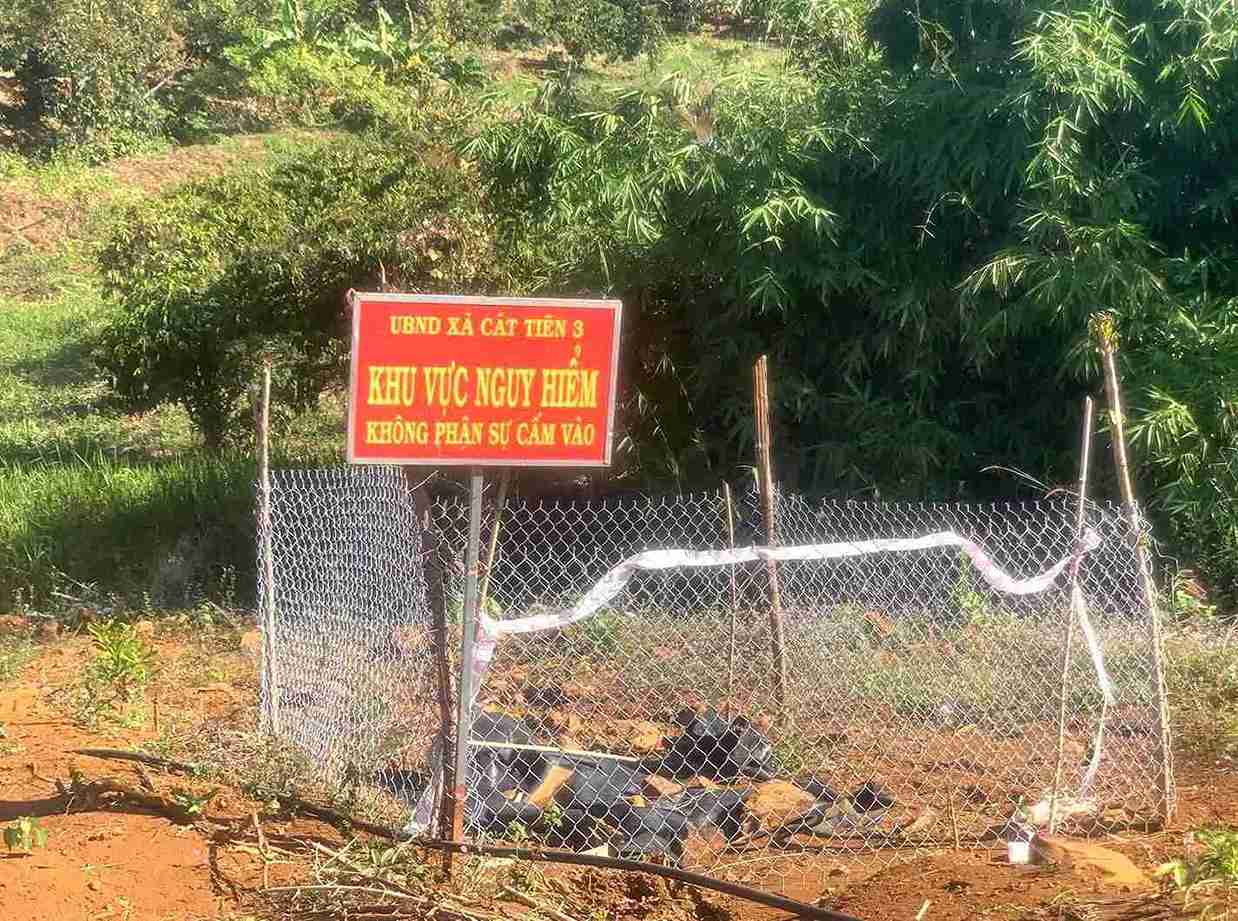
Accordingly, from January 7, the chemical force and military agency of Military Region 7 organized the collection and thorough treatment of CS poison and hydrolysis products of CS poison left over from the war in Bu Gia Ra and Bu Sa villages (Cat Tien 3 commune).
According to local authorities, during the two resistance wars against French colonialism and American imperialism for national salvation, Bu Gia Ra and Bu Sa villages, belonging to the old Dong Nai Thuong commune (now Cat Tien 3), were revolutionary bases, gateways to War Zone D.
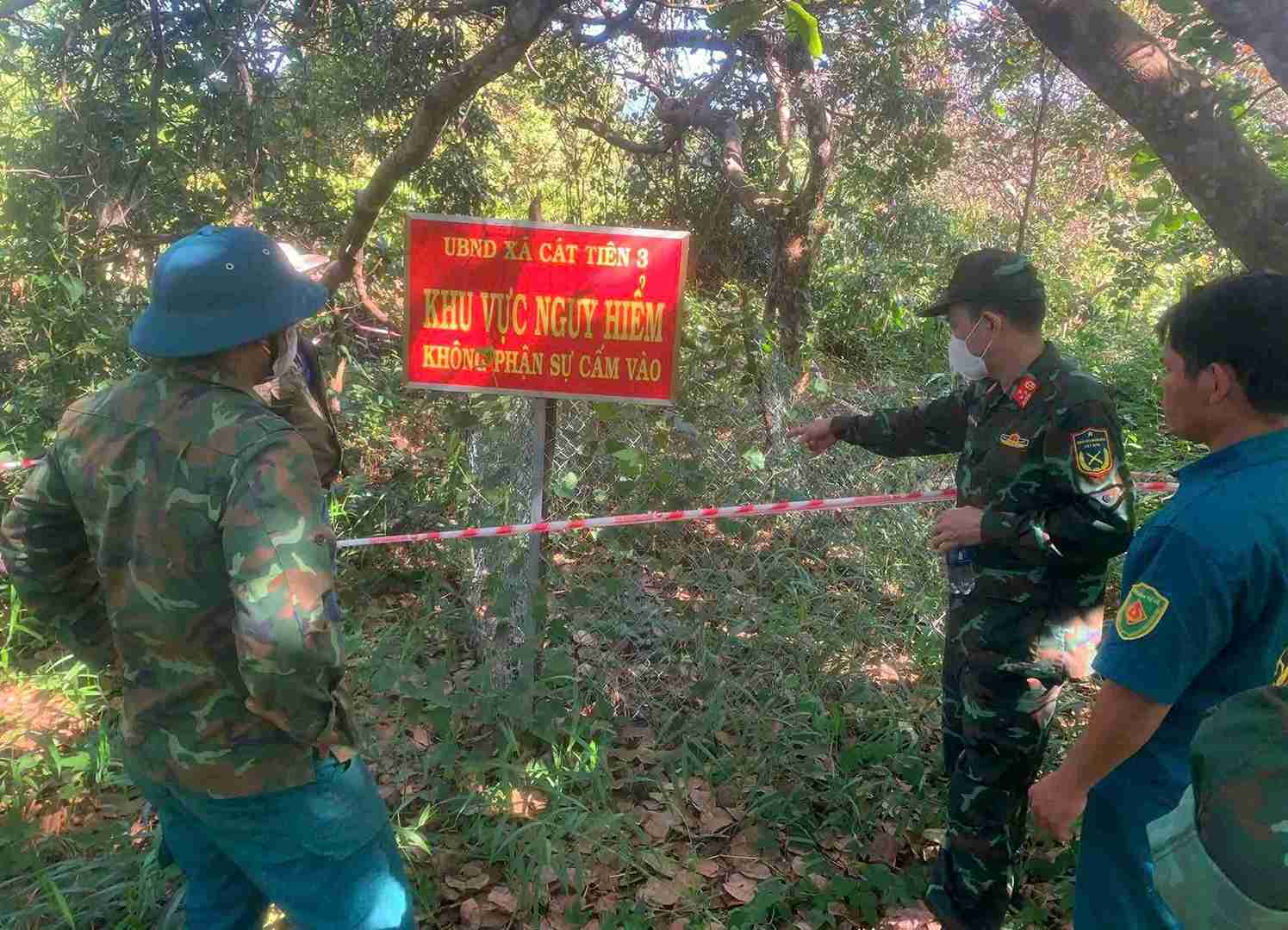
This area plays an important strategic role in building and leading the revolutionary movement of the South, and is also the operating place of the Central Bureau of the South.
Dong Nai Thuong commune revolutionary base is a place with a strong historical mark, associated with the great victories of the Vietnamese nation in the two resistance wars.
In the process of handling in the two villages above, functional forces focused on collecting and thoroughly treating about 400kg of CS poison and 300m2 of soil contaminated with CS residue after the war.
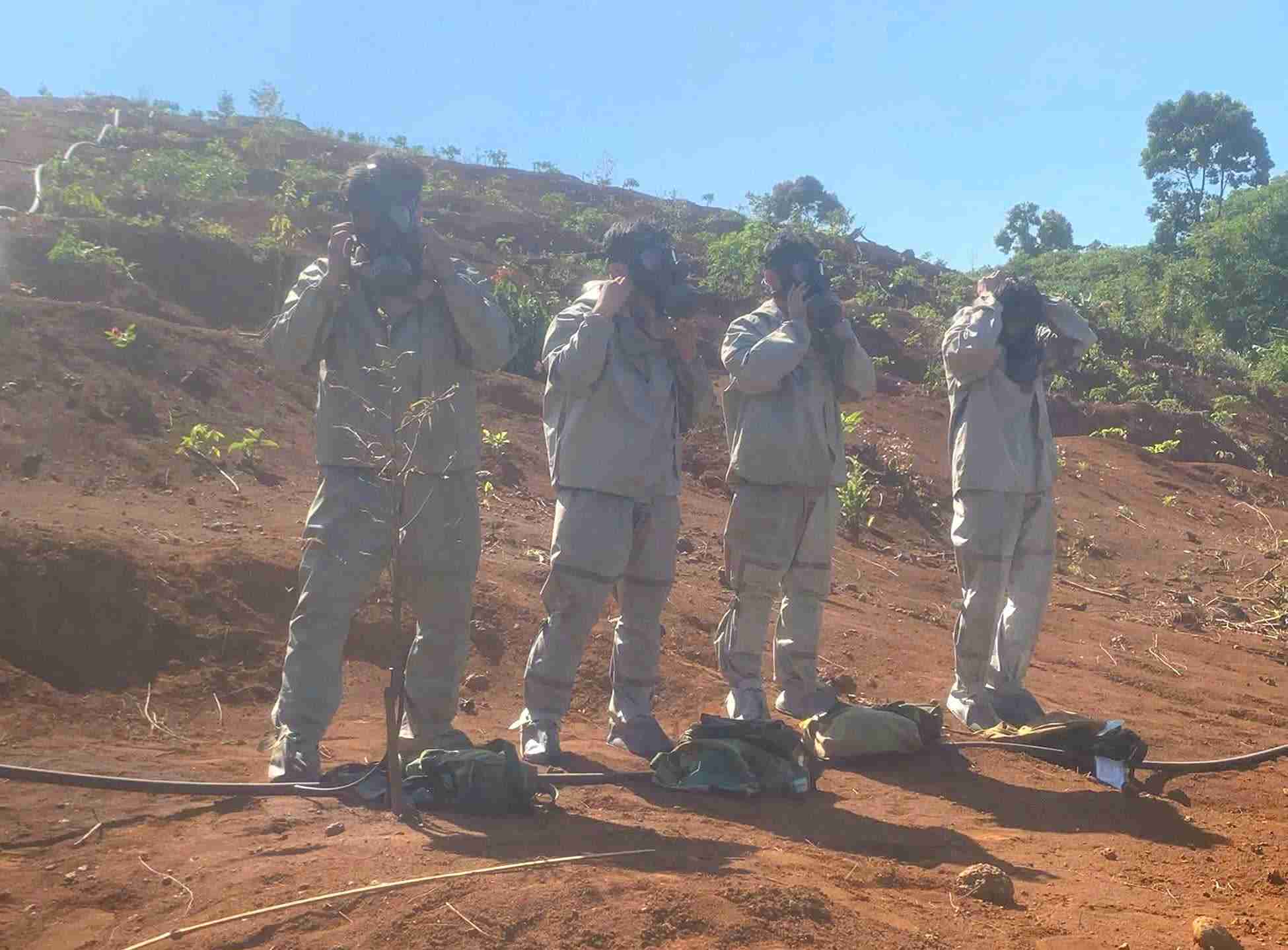
CS poison is the common name for the compound 2-chlorobenzalmalononitrile (o-chlorobenzylidene malononitrile), which is often classified as "sweet". This is acute poison, causing strong irritation and toxicity to the environment, human and animal bodies.
According to specialized literature, CS can be harmful to humans at very low concentrations. The limit exposure concentration of CS is only about 0.4 mg/m3 (0.05 ppm).
At high concentrations, from 25,000 - 50,000 mg/m3/minute, especially in closed spaces such as tunnels and tunnels, CS can be fatal.