Number of emission test vehicles increases significantly
Mr. Tran Quoc Huy (45 years old) - owner of a 2010 7-seater car - said that before he only changed oil and air filters periodically. However, before the emission reduction requirement, he decided to maintain more comprehensively. "I cleaned the injection needle, checked the high-pressure pump, cleaned the combustion chamber, replaced the high-quality air filter and switched to using fuel that meets higher Euro standards.
Costs have increased, but the car runs smoother, and the smoke has decreased significantly," Mr. Huy said.
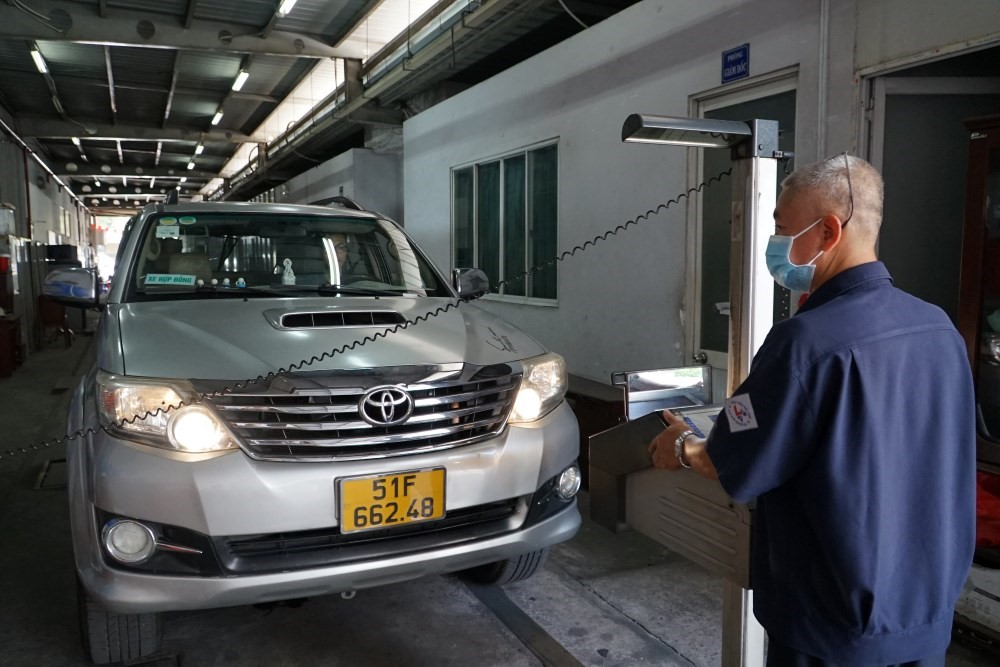
In An Khanh ward, Mr. Le Hoang Anh - owner of a car garage - said that the number of cars coming for emission inspection recently has increased significantly. It is noteworthy that customers have asked more carefully about long-term solutions.
“Previously, many people only wanted to temporarily adjust to pass the registration. Now they ask if they should replace the new catalyst, upgrade the injector or overhaul the engine.The thinking has changed” - Mr. Hoang Anh commented.According to Mr. Hoang Anh, some transport businesses even sign package maintenance contracts quarterly to continuously control emissions, instead of minor repairs each time.Not waiting until the vehicle is refused inspection, Minh Thanh Transport Co., Ltd.
(HCMC) has reviewed all 60 container trucks and heavy trucks.Overly old vehicles with high fuel consumption are put on the liquidation roadmap, replaced by newer vehicles.
We determine that tightening emissions is not a short-term matter. If we do not restructure soon, businesses will face great risks when vehicles are not allowed to circulate in central areas" - Mr. Binh said.
In addition, businesses also installed integrated journey monitoring devices to monitor fuel consumption levels. According to Mr. Binh, unusually increased fuel consumption is often an early sign of engine emissions exceeding standards, helping the company handle it before major risks arise.
In the small transport segment, Ms. Pham Thi Lan Anh - owner of a delivery business in Thu Duc ward - informed that the initial investment cost is not small, but in return is long-term proactiveness.
Replacing an exhaust gas treatment system can cost tens of millions of VND. But if cars are restricted from entering the inner city, the damage will be even greater. This year I plan to gradually upgrade 5 out of 12 cars" - Ms. Lan Anh shared.
The emission curbing roadmap is increasingly clear
According to information from the Ho Chi Minh City Department of Construction, this agency is completing a project to control emissions from vehicles, expected to be submitted to the Ho Chi Minh City People's Committee in March and submitted to the Ho Chi Minh City People's Council for approval in the second quarter of 2026.
It is expected that from the beginning of 2027, Ho Chi Minh City will establish a low-emission zone (LEZ) in the central area. When LEZs are applied, cars that do not meet Euro 4 emission standards will be charged when entering the center (except for ambulances, fire trucks, national defense, police and funeral vehicles).
From September 2027, motorbikes that do not meet Euro 2 standards will be banned from entering the LEZ area during two peak hours: 6 - 9 am and 4 - 7 pm. According to the roadmap, by 2028, all gasoline motorbikes will be banned from circulating in the LEZ area (except for vehicles of people with disabilities). At the same time, cars that do not meet Euro 4 standards will also be banned from entering the city center during peak hours, except for special vehicles.
By 2030, the low-emission zone is expected to expand to the Ring Road 1 area, including major axes such as Pham Van Dong, Kha Van Can, the area around Tan Son Nhat airport, Cach Mang Thang Tam, Au Co, Luy Ban Bich, Kinh Duong Vuong and Vo Van Kiet. Emission control measures will continue to be tightened in stages.