
Implementing Resolution No. 72-NQ/TW dated September 9, 2025 of the Politburo on a number of breakthrough solutions to strengthen the protection, care and improvement of people's health, Hanoi is gradually concretizing the policy of proactive health care, from early on, from the grassroots level. In which, the implementation of free periodic health check-ups for children and students is a practical activity, contributing to early detection of health problems, monitoring the development process and improving the quality of health care for the young generation of the Capital.
Accordingly, from August 18 - September 4, 2026, Hanoi city will implement free periodic health check-ups for children in preschool education institutions and students in general education institutions in the area. The city strives to complete health check-ups for 100% of children and students under the subject group before the opening day of the new school year.
On August 19, Chu Van An Secondary School (Thanh Liet ward) coordinated with Hanoi Children's Hospital and Thanh Liet Ward Health Station to organize health check-ups for more than 2,340 students. Preparation and coordination between the school and medical units were thoroughly implemented to ensure the program takes place smoothly and effectively.
Ms. Tran Thi Thanh Tinh - Vice Principal of Chu Van An Secondary School - said that after receiving the plan from the Department of Health, the school has closely coordinated with medical units, prepared facilities and assigned officials, teachers, and staff to support the examination process, from data entry to regulation and student support.
I think this is a necessary and meaningful program because it can monitor students' health, especially early detection of common diseases for school-age children such as eye diseases, height, weight and even spine," Ms. Tinh said.
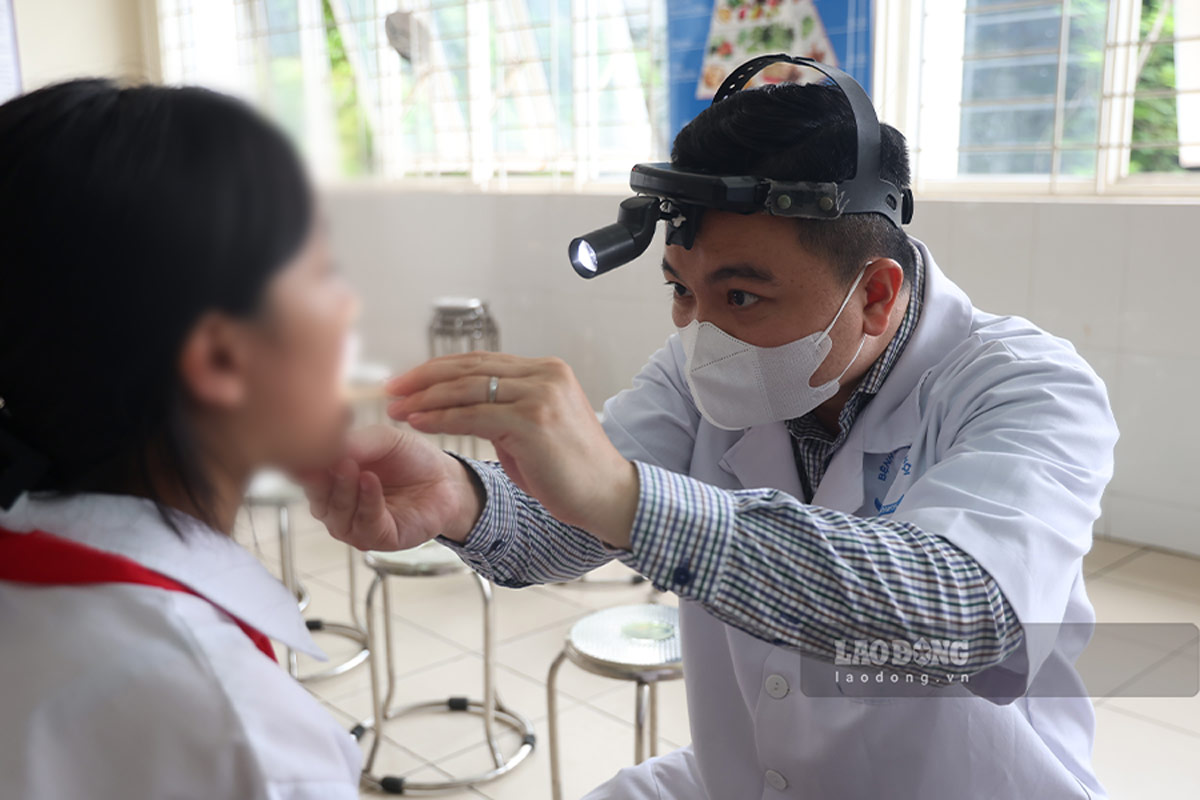
To serve the examination, Hanoi Children's Hospital assigned 38 medical staff, including more than 16 specialists in fields such as Ear, Nose, Throat, Odonto-Stomatology, Surgery and common deformities in children.
In addition to basic equipment and supplies for examination, the delegation also brought some screening support equipment, such as hearing testing machines and eye duct testing equipment for cases with vision-related risks.
According to the plan, students from 6 to under 18 years old are allowed to explore family history, personal history, vaccination status, illness and current treatment; and are also examined physically and in specialties such as pediatrics, ophthalmology, otolaryngology, maxillofacial dentistry.
Through actual examinations at Chu Van An Secondary School, MSc. Dr. Nguyen Hoai Nam - Head of the Department of On-Demand Treatment, Hanoi Children's Hospital - said that eye and oral problems are recorded in many students: "The children have many vision problems, especially reduced vision due to nearsightedness diseases. In addition, tooth decay is also a very common medical condition at this age.
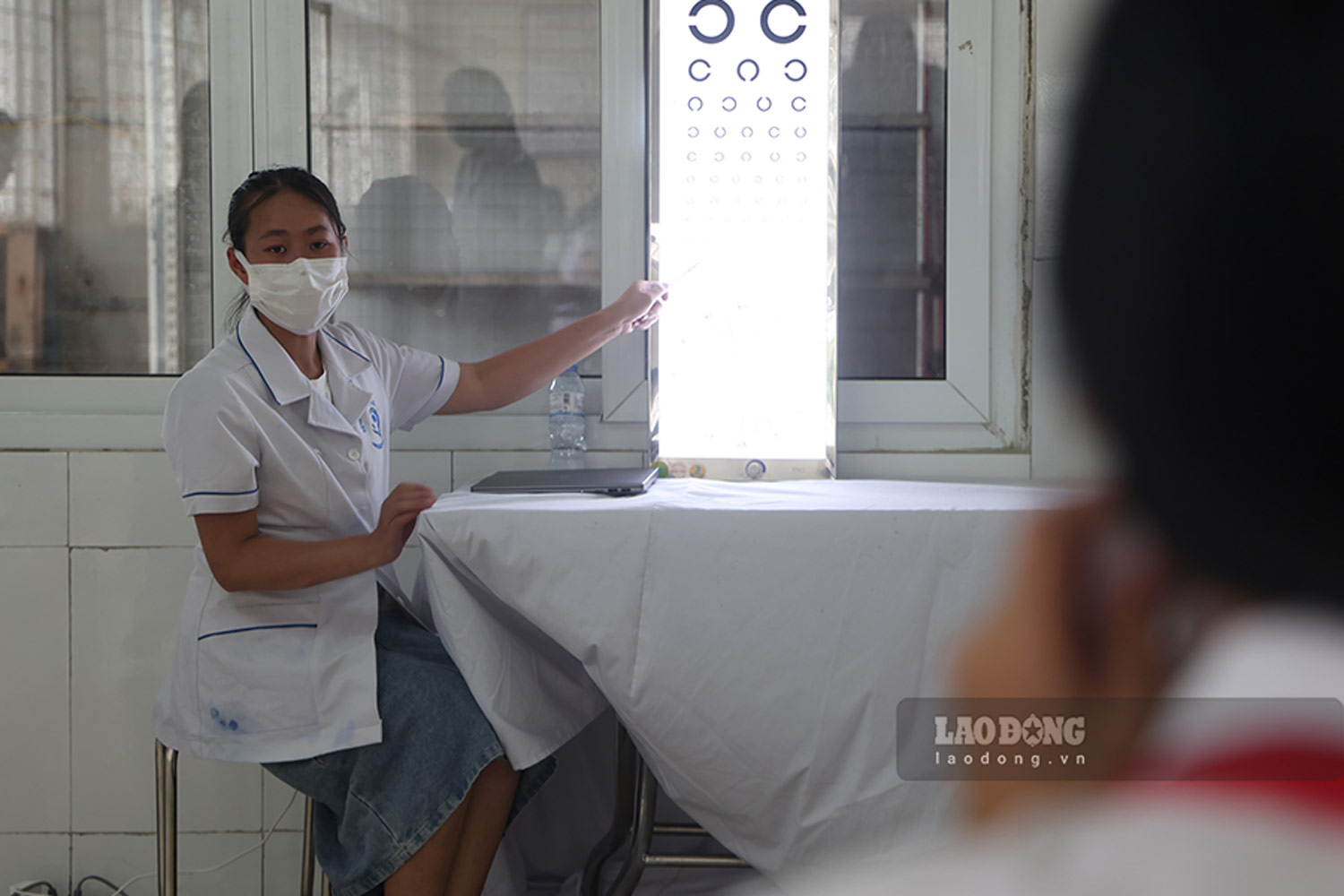
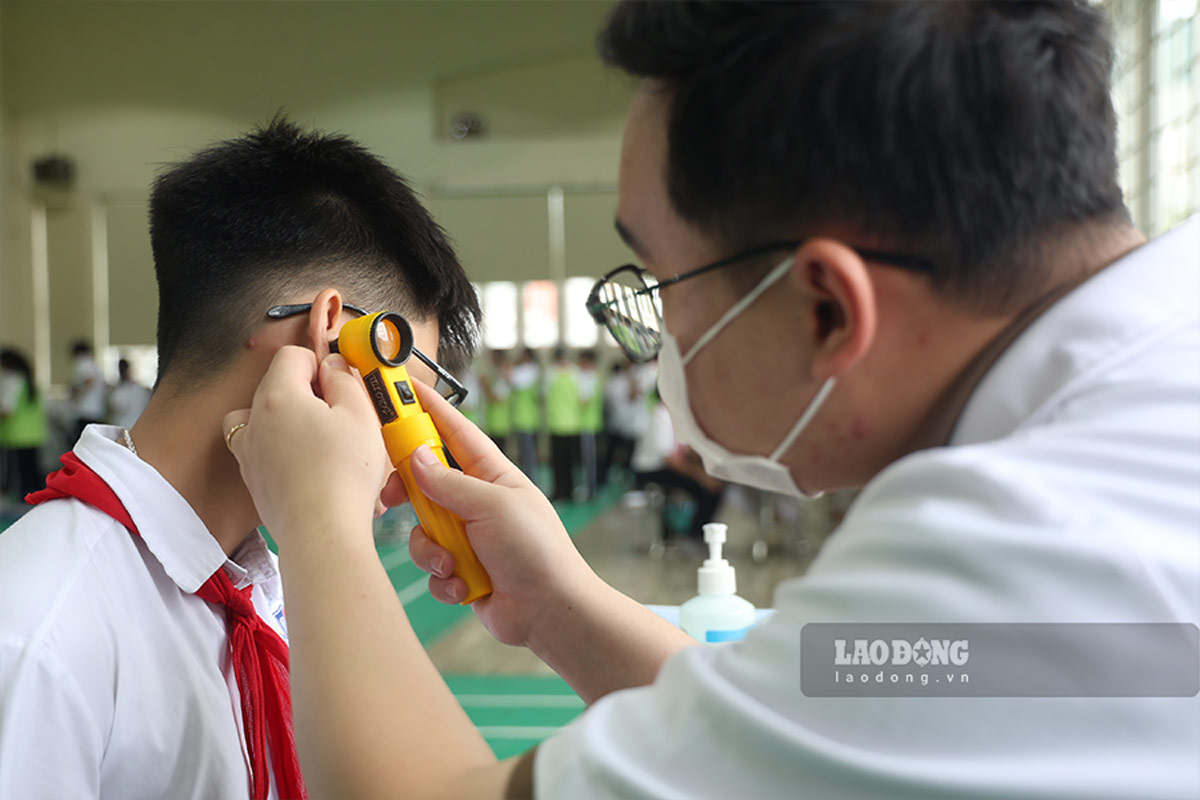
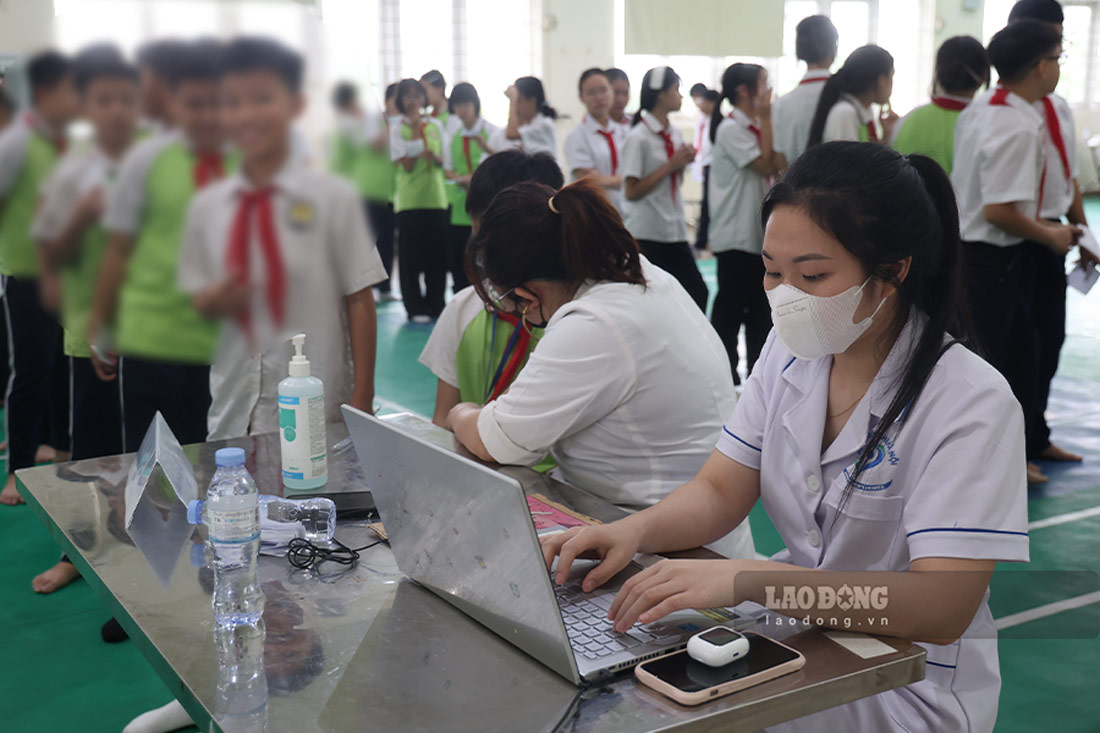
According to Dr. Nguyen Hoai Nam, at the secondary school age, in addition to health check-ups and disease screening, it is also very necessary to understand the risk factors related to psychology and physiology. This is a stage when children have strong physical and psychophysiological development, so simple screening questions can help detect some risks to have appropriate counseling and intervention directions.
For students who need in-depth examination, after the examination, information about their health status will be reported to the school, health station and parents. From there, students are guided to be examined at appropriate specialties or continue to be managed and monitored. In cases where tests or diagnostic imaging are needed, they can be introduced to health stations or hospitals.
Dr. Nguyen Hoai Nam said that for students, indicators such as height and weight still need to be monitored but do not fully reflect their health status. In puberty and post-puberty, it is necessary to pay more attention to psychological and physiological development as well as common diseases in school age.


