
Warning numbers
Can Tho City Children's Hospital - a final-line pediatric hospital in the Mekong Delta region - is recording an increase in the number of hand, foot and mouth disease cases compared to the same period in 2025. Notably, severe cases appear sporadically from the beginning of the year, instead of focusing on the two epidemic peaks of April - May and September - November as usual.
At noon on May 4th, talking to reporters, BS.CKII Huynh Hung Dung (Head of the Department of Infectious Diseases, Can Tho City Children's Hospital) said that before and after the April 30th and May 1st holidays, the department received and treated an average of 50 cases of hand, foot and mouth disease/day.
Explaining why the number of severe cases is higher than last year, Dr. Dung analyzed that it may be due to the circulation of the strain of Enterovirus A71 (EV71) increasing the risk of recording severe cases. "After receiving and treating, we see that the EV71 strain appears in about 50%" - Dr. Dung said.
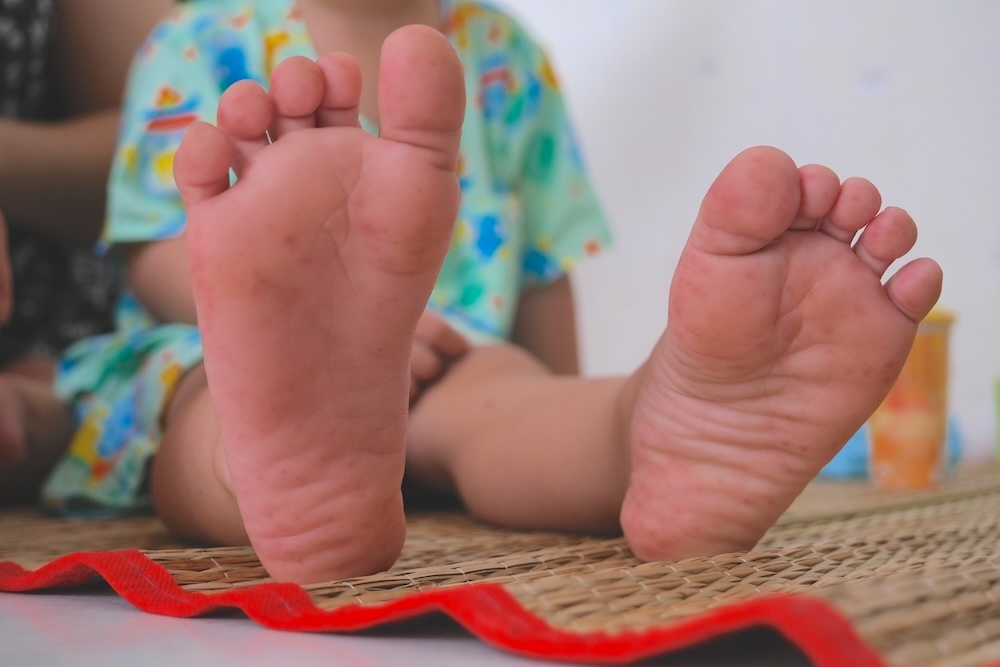
Doctors further noted that in recent years, hand, foot and mouth disease has been circulating year-round and no longer follows clear seasonal rules. The disease is caused by many virus strains, so a child can get sick 2-3 times, even many times a year.
Data from the Pasteur Institute of Ho Chi Minh City, as of week 12, the Southern region recorded more than 17,000 cases of hand, foot and mouth disease. The disease is concentrated in provinces and cities: Ho Chi Minh City, Dong Nai, Tay Ninh, Can Tho, Dong Thap...
In Can Tho, statistics as of April 20, 2026, the city has more than 1,430 cases of hand, foot and mouth disease, an increase of about 800 cases compared to the same period in 2025, including 1 death.
Previously, information from the Can Tho Center for Disease Control (CDC), results collected from the System for managing and monitoring infectious diseases, community and other data sources showed that the number of hand, foot and mouth disease cases was recorded in all 103/103 wards and communes in the city.
The highest age group with the disease is the group under 3 years old (accounting for 55.7%), the group from 3 to 5 years old (accounting for 35.3%) and the group over 5 years old (accounting for 9%).
Parents, don't be subjective
For hand, foot and mouth disease, the most obvious thing is that parents do not clearly recognize the signs of the disease in children, leading to sending their children to the hospital in a serious condition.
Ms. Nguyen Thu Thuy (Ninh Kieu ward, Can Tho city) shared that initially the baby only had a mild fever and then complained of mouth pain, refusing to eat. Ms. Thuy thought her child had mouth ulcers due to heat in the body, so she only bought topical medicine. When the baby started to startle when sleeping, the fever became more severe, and had to be taken to the hospital to find out that her child had hand, foot and mouth disease.
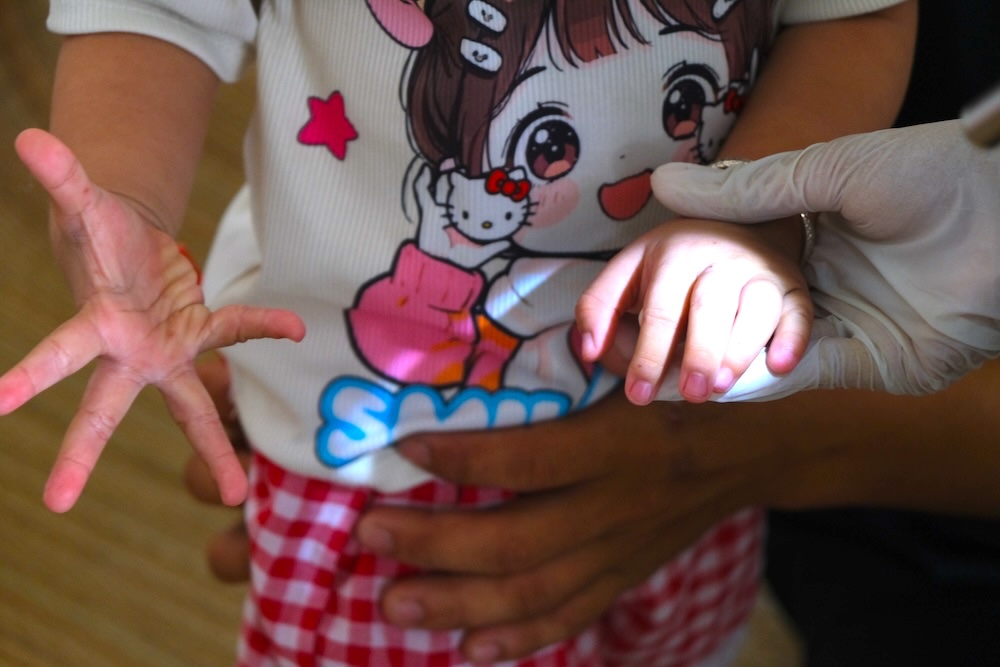
Similarly, Mr. Tran Van Kiet (Dong Thap province) - said that the weather in the South these days is hot and prolonged, seeing a few red spots on his child's hand, the family thought the child was allergic, so they were subjective, unexpectedly upon examination they found out that their child had hand, foot and mouth disease.
Doctors recommend that early recognition is the "key" to avoid complications. Parents need to pay special attention to signs such as continuous high fever (children have a fever above 39°C); startling dizziness (which is an early warning sign, often appearing when children start to fall asleep) or fussiness, lethargy (accompanied by abnormal fatigue, frequent vomiting or staggering gait).
Disease prevention must start from hygiene habits, eating cooked food, drinking boiled water, washing hands regularly with soap, disinfecting toys, contact surfaces...


