Based on Article 23 of Decree 101/2024/ND-CP, from 2026, the new issuance of Land Use Right Certificates (red books) will be applied in six mandatory cases. These situations all make the existing Certificates no longer physically or legally appropriate, creating a risk of information distortion and affecting the rights of land users. The new issuance is implemented to ensure the accuracy, uniformity and transparency of the national land data system.
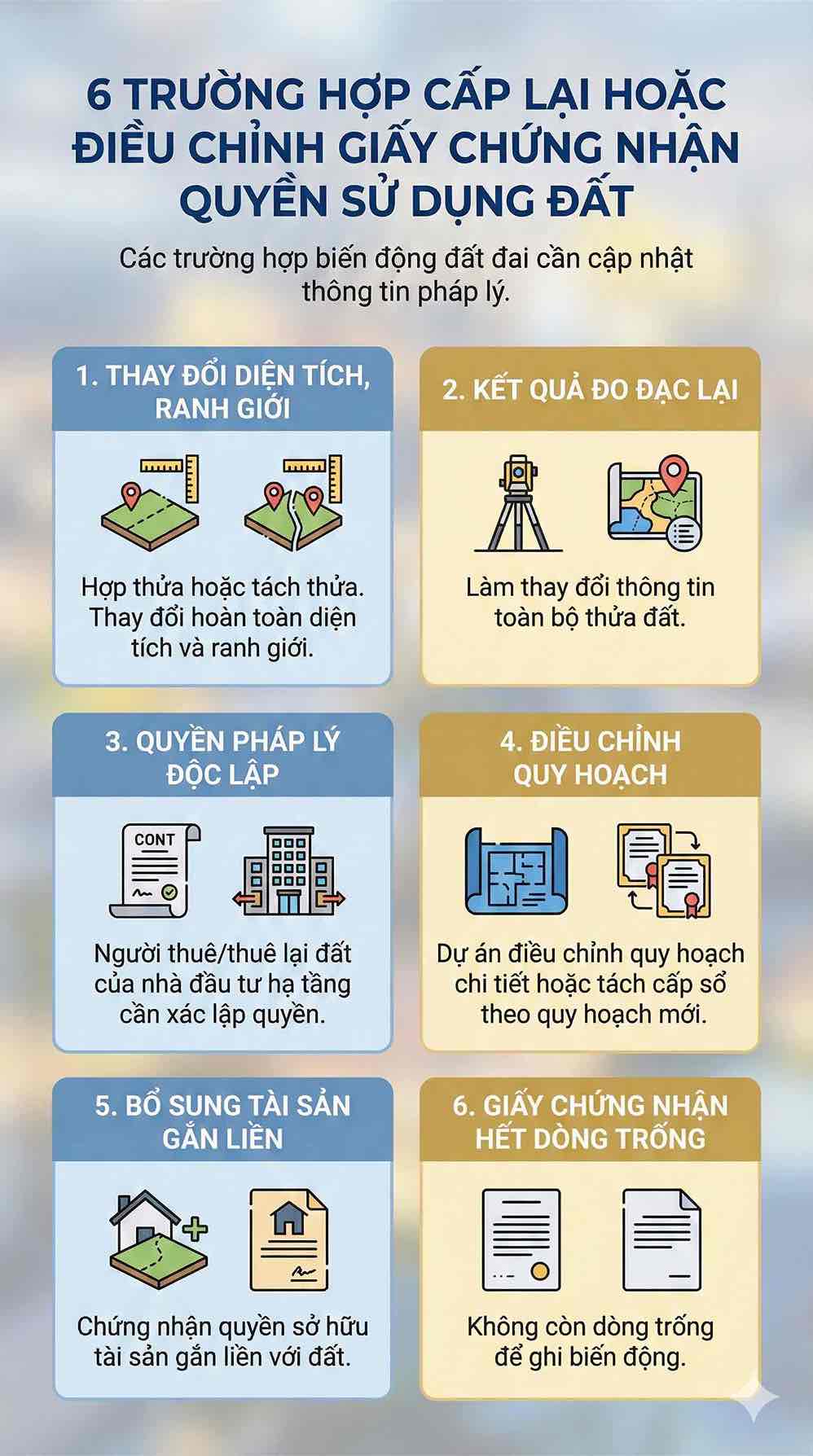
First case: Land consolidation or separation completely changes the area and boundaries of land plots
Any fluctuations leading to the formation of new land plots in a state different from the old book must be newly issued. This is a mandatory step to re-establish information on area, boundaries and shape of land plots according to standardized cadastral maps.
Case number two: The re-measurement results change the information of the entire land plot
When a land plot is measured using new technology and standards and changes in area or size (including residential land) occur, the old Certificate will no longer be valid. The new issuance helps bring cadastral data into the digitalized system, reducing disputes and information misinformation in land management.
Third case: Land leasers or subleasers of infrastructure investors need to establish independent legal rights
In industrial parks, export processing zones, and high-tech zones, tenants/relocaters must be issued separate Certificates. This ensures that their land use rights are recognized independently, transparently, and are eligible for transactions, mortgages, or fulfillment of financial obligations.
Fourth case: Project adjusting detailed planning or requiring separate book issuance according to new planning
When detailed planning is adjusted or the investor requests to separate land plots for each part of the project, functional agencies are required to issue a new Certificate. This is a way to ensure synchronization between the legal documents of the project and the approved planning, avoiding data overlap or conflicts.
Fifth case: Supplementing certificate of ownership of assets attached to land
When detailed planning is adjusted or the investor requests to separate land plots for each part of the project, functional agencies are required to issue a new Certificate. This is a way to ensure synchronization between the legal documents of the project and the approved planning, avoiding data overlap or conflicts.
Case number six: The issued certificate has no empty lines to record changes
When the red book has recorded too many fluctuations to the point of running out of space, instead of using an uncontrollable supplement page, the land registration agency will issue a new blank to ensure that the dossier is clear, consistent and convenient for long-term management.
Early identification of the above six cases helps people and businesses proactively prepare dossiers, avoiding delays or arising procedures. More importantly, this is the foundation for the land law system, especially the 2024 Land Law, to be implemented synchronously, towards a transparent land market, reducing disputes and promoting the digitalization of land management nationwide.