
Real value reigns, market enters screening phase
According to Mr. Tran Quang Trung, Business Development Director of OneHousing, the market is entering a stronger screening phase as buyers increasingly prioritize assets with real usable value and sustainable exploitation capabilities.
According to Mr. Tran Quang Trung, the average absorption rate of primary projects in the first 6 months of 2026 is about 50-60%, a significant decrease compared to the level of over 80% in 2025.
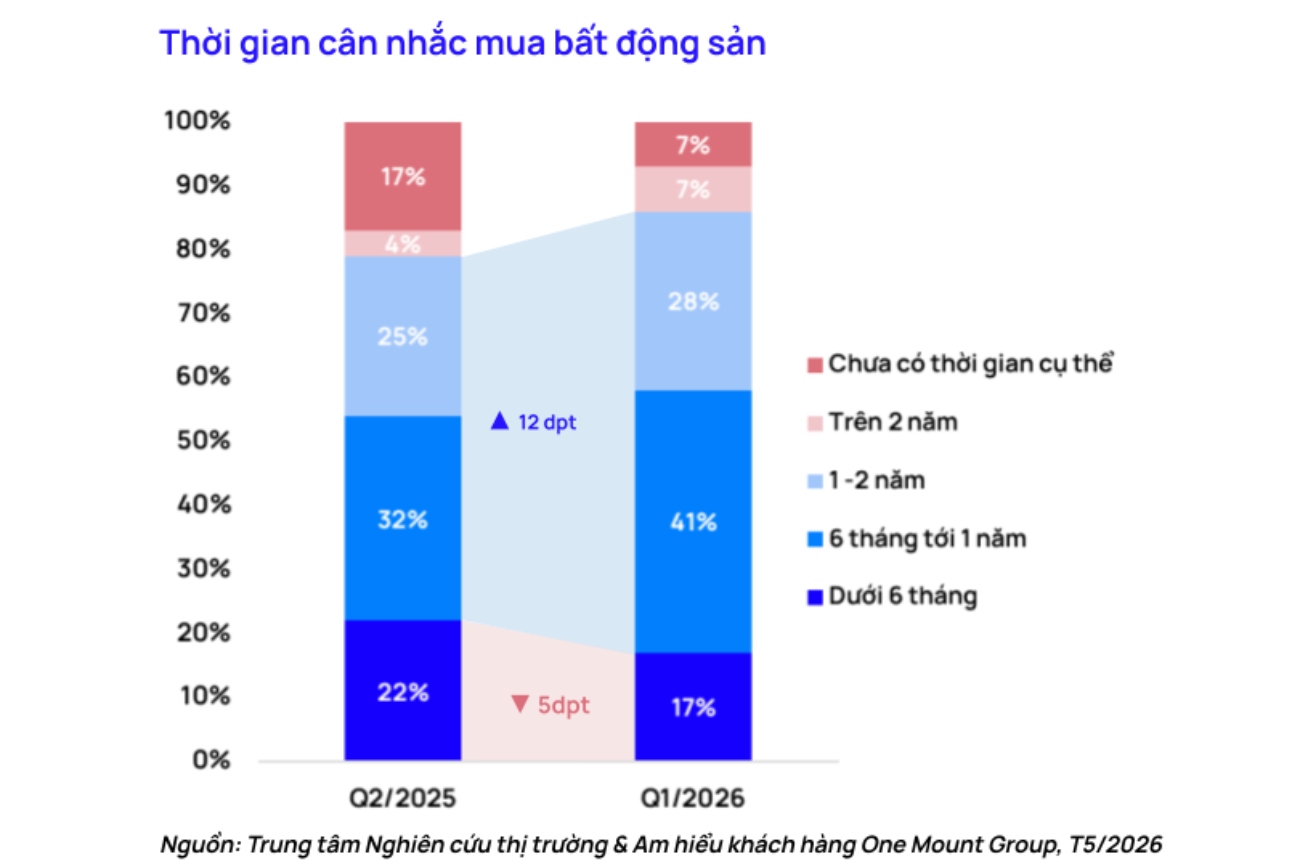
However, the decrease in liquidity does not mean that cash flow is withdrawing from the market. "Buyers are not losing the need to own real estate. They are becoming more cautious and selective in the decision-making process," Mr. Trung said. Reality shows that many projects with convenient locations, synchronous planning and developed by reputable investors still maintain an absorption rate of 70-80% even during the market differentiation phase.
If in the past, many investors were willing to spend money based on expectations of price increases thanks to future planning or infrastructure, now buyers tend to pay more attention to actual exploitation capabilities. The increasing transparency of planning information, supply and infrastructure progress helps customers have more basis to make decisions. This also makes the market gradually shift from the mindset of "buying to wait for price increases" to "buying to exploit value".
According to Mr. Trung, the change in asset selection thinking is creating a clear screening process in the market. Projects with good locations, convenient connecting infrastructure, synchronous planning, population formation capacity and developed by reputable investors still maintain their attractiveness and record positive absorption rates. Conversely, products that depend heavily on price increase expectations or require a long time to form demand are facing greater liquidity pressure.
Urban reconstruction is creating new needs
According to Mr. Tran Quang Trung's point of view, the trend of urban development associated with the TOD model (urban development oriented towards public transport) and new economic and commercial centers is an inevitable direction for major cities, including Hanoi. As the State is allocating significant resources to restructuring planning, investing in transport infrastructure and developing new growth poles, areas benefiting from public transport systems and inter-regional connectivity routes are expected to become new residential centers in the future.
However, the success of new cities depends not only on transport infrastructure but also on the level of synchronization between housing, employment, education, healthcare and social utilities... When these conditions are synchronously completed, satellite cities will contribute to reducing pressure on the core urban area, while creating new growth momentum for the real estate market.
Assessing the real estate market in the second half of 2026, Mr. Trung predicted that the market will continue the trend of clear differentiation. Segments that meet real housing needs, have good locations, convenient connectivity, existing residential communities and appropriate financial policies still maintain their attractiveness and play a leading role in the market.
In addition, the general level of interest rates is forecast to not have much fluctuation in the last 6 months of the year, contributing to maintaining market stability but also making investment cash flow more selective.
Notably, the demand for accumulation is still present but has changed in nature. Instead of expecting short-term price increases, buyers are increasingly prioritizing assets that can retain value, have good liquidity and can be exploited in the future.
In the medium and long term, large infrastructure projects along with the orientation of developing new urban space, especially in the eastern area of Hanoi and along the Red River corridor, may create a significant wave of population migration. This is considered one of the important driving forces promoting housing demand and real estate transactions in the period of the end of 2026 and 2027" - Mr. Trung assessed.


