
A household in Bac Ninh reflected that the family bought land from the village in 1993 and built a level 4 house in 1994. In 2002, the provincial inspectorate issued a decision proposing that the Provincial People's Committee recover the land plot allocated by the village and commune to the family to return the electrical corridor.
In 2004, the ward government came to work with the family, requesting voluntary dismantling of the house according to the above decision. However, the family did not agree. Since then, the family has still used the house stably, no disputes have arisen with anyone and said that there has been no land recovery decision from the province.
Currently, the family wants to carry out procedures to apply for a Certificate of Land Use Rights, but the dossier has been returned on the grounds that the land plot violates the land law according to Article 139 of the Land Law.
People wonder if the family's case is considered a violation of land law or not, because this land was not encroached upon but was bought from the village and commune and has a full receipt.
Answering this content, the Ministry of Agriculture and Environment said that because the reflected content is not clear and there is no complete dossier, the Ministry answers according to general principles.
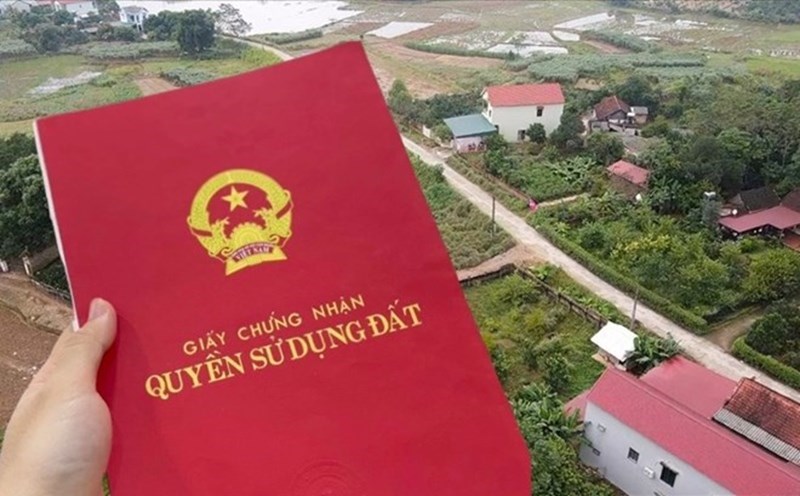
According to the Ministry of Agriculture and Environment, the 1993 Land Law and the 2013 Land Law both stipulate that communes are not authorized to allocate or sell land for housing construction purposes. Therefore, cases where people reflect may fall into the case of illegal land allocation.
The Ministry of Agriculture and Environment said that the issuance of Certificates of Land Use Rights for cases where land is allocated without proper authority is currently carried out in accordance with Article 140 of the 2024 Land Law.
According to this regulation, land allocated improperly to households, individuals or land purchased, received for liquidation, price reduction, distribution of houses, construction works attached to land not in accordance with legal regulations will be considered for Certificate issuance if they meet specific conditions.
In case the land has been used stably before October 15, 1993, and is now certified as having no dispute by the commune-level People's Committee where the land is located, the land user is granted a Certificate of land use rights and ownership of assets attached to the land for the allocated land area according to regulations.
In case the land has been used stably from October 15, 1993 to before July 1, 2004, the issuance of the Certificate is considered if it is confirmed by the commune-level People's Committee where the land is located that there is no dispute, and it is consistent with the district-level land use plan, general plan, sub-area plan, construction plan or rural plan.
For cases where land has been used stably from July 1, 2004 to before July 1, 2014, land users also need to be certified by the commune-level People's Committee that there is no dispute and the land plot must be in accordance with the plan. If the land plot has houses, houses and works serving life, the residential land area is recognized based on the residential land allocation limit according to regulations.
The 2024 Land Law also stipulates that in cases where land is allocated from July 1, 2014 to before the effective date of this law, if the commune-level People's Committee confirms that there is no dispute, in accordance with land use planning, and the land user has documents proving that they have paid money to use the land, the land limit for issuing a Certificate will be determined according to regulations.
However, the State does not issue Certificates of land use rights and ownership of assets attached to land for land that has been allocated or leased without proper authority from July 1, 2014 onwards, unless the law provides for exceptions.
The Ministry of Agriculture and Environment notes that land users who are granted Certificates in the above cases must fulfill financial obligations in accordance with the law.


