
Over the past time, the Xuan Mai commune government (Hanoi) has received many petitions from people related to land acquisition and site clearance (GPMB) to expand National Highway 6, Ba La - Xuan Mai section such as: Land price; traffic corridor boundary markers; asset compensation unit prices; resettlement plan...
Representatives of functional agencies have answered many people's petitions in accordance with regulations.
Mr. Le Minh Khoi, Deputy Head of Site Clearance Department - Hanoi Traffic Construction Investment Project Management Board (Project Management Board) said: From July 1, 2025, the Project Management Board will be the sole investor (replacing the old District/District People's Committee) for both site clearance and construction of the National Highway 6 expansion project, Ba La - Xuan Mai section.
This is a project using entirely the City budget capital (public investment capital), not a project of a business. Therefore, all compensation policies must absolutely comply with the price framework and regulations of the State, and cannot negotiate prices like commercial projects of businesses.
Policy on compensation for land and property according to general principles: All households with land use right certificates (red books) are compensated and supported according to regulations.
In case the land does not have a red book, or does not have a book, it will be based on cadastral records from various periods (1986, 1996) and documents stored in the commune: land registers, maps stored at the Commune People's Committee to determine the origin and conditions for compensation.
In case it is proven that the land is used stably, without disputes, and in accordance with the planning at the time of use, compensation is still considered.
Regarding the abolition of support funds, Mr. Le Minh Khoi said that according to the 2024 Land Law, support funds for construction works on agricultural land or encroached corridors (which the 2013 Land Law once allowed) have now been abolished.
The city strictly implements this regulation to strictly manage the land fund, avoiding encroachment and waiting for compensation.
Regarding land prices and coefficient K, the Project Management Board has coordinated with tax authorities and land registration offices to survey the actual transfer price.
The results show that the current compensation price is equivalent to the transaction value that people declare and pay taxes in the locality. The compensation price and resettlement price are calculated correspondingly. If the compensation price is low, the resettlement land price that people have to pay will also be correspondingly low, helping to reduce financial pressure for households whose land is recovered.
Regarding resettlement and social security support policies, Mr. Khoi clearly stated the criteria for consideration: The recovered land is residential land; the remaining area outside the limit is less than the limit (under 50m2 in Xuan Mai commune); there is no other place to live in the commune.
However, for households that do not meet the residential land conditions but in reality have no other place to live, the Commune People's Committee will conduct actual inspections. If the urgent need is correct, the State will still consider allocating resettlement quotas to ensure "no one is left behind".
While waiting for new houses to be built in the resettlement area, people will receive housing rental support money (temporary residence).
For land allocated ultra vires: Only compensation is allowed if it is in accordance with the plan and financial obligations have been fulfilled. Cases of violations from the old era (communes and villages selling land ultra vires) will be carefully reviewed with the original dossier of the commune.
Mr. Le Minh Khoi affirmed that the Project Management Board will provide complete compensation policy documents for people to easily compare, look up and be ready to directly dialogue and compare cadastral maps with each household to ensure accuracy.
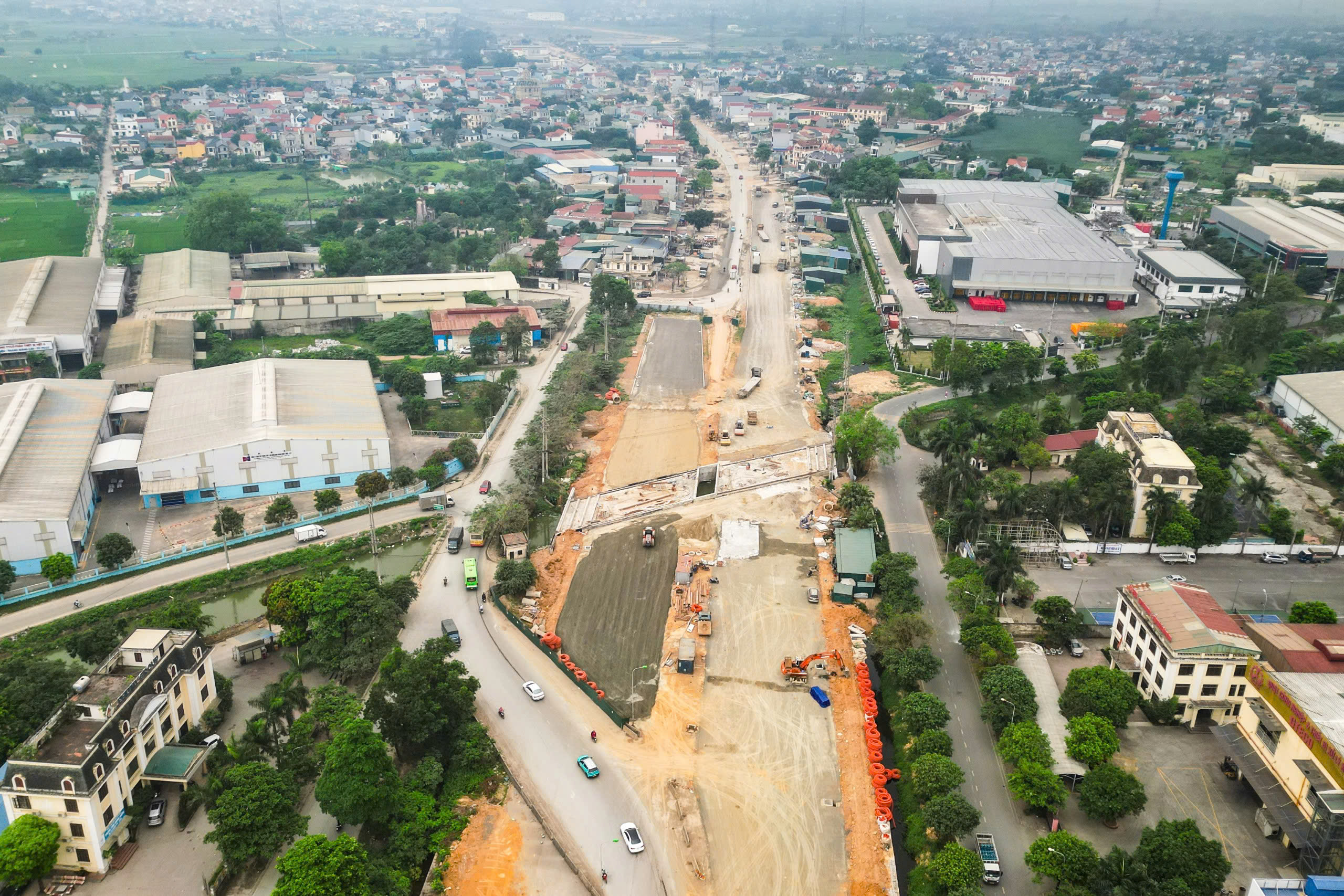
The project to renovate and upgrade National Highway 6, Ba La - Xuan Mai section, has a total length of 21.7 km, passing through many communes and wards in Hanoi. The project started construction at the end of 2022, with a total investment of more than 9,590 billion VND.


