
Talking to Lao Dong reporters, lawyer Nguyen Van Dinh said that Article 10 of Resolution No. 254 stipulates the reduction of land use fees when changing land use purposes to residential land for three groups of land including: garden land, pond land, agricultural land in the same land plot with residential land determined when recognizing land use rights; land originating from garden land, pond land attached to residential land but land users separate it to transfer land use rights; and land originating from garden land, pond land attached to residential land but the surveying unit before July 1, 2014 has separated it into separate plots.
According to Mr. Dinh, this regulation only applies to agricultural land plots located in the same land plot with residential land or in the past once located in the same land plot with residential land. In essence, this regulation is aimed at resolving the legitimate rights of people with land types that have a long history of management and use. Meanwhile, other purely agricultural land types such as rice fields allocated by the State without land use fees will not be eligible for incentives.
Regarding the reduction level, Resolution No. 254 allows people to pay 30% of the difference between land use fees according to residential land prices and agricultural land prices for the area within the residential land allocation limit; pay 50% of the difference for the part exceeding the limit but not exceeding one limit; and pay 100% of the difference for the remaining area.
One point that many people are interested in is the "retroactive" policy for dossiers before January 1, 2026. Lawyer Nguyen Van Dinh said that according to Clause 10, Article 4 of Resolution No. 254 and Clause 2, Article 12 of Decree No. 50/2026/ND-CP, if the tax authority has not issued a notice to pay land use fees, it will recalculate according to the new policy. If a notice has been issued but people have not paid, people are requested to recalculate. If a part or the entire amount has been paid, it is also requested to recalculate; if the new amount is lower than the amount already paid, the State will refund the difference.
According to regulations, people must submit a written request for recalculation of land use fees to the inter-agency one-stop shop no later than January 1, 2027. This department receives dossiers, transfers them to the commune-level People's Committee to determine the residential land allocation limit, then the tax authority recalculates the land use fee and issues an adjustment notice.
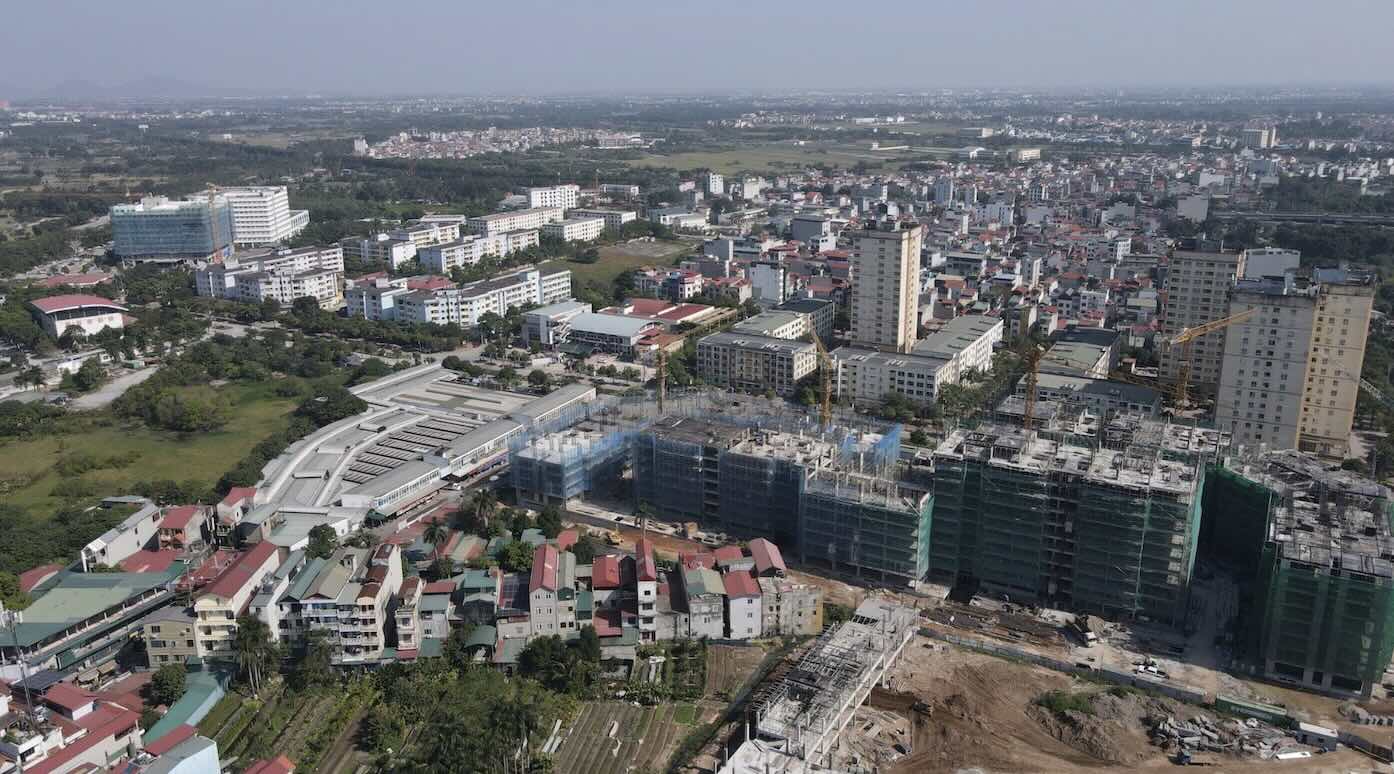
Citing a real case, Lawyer Nguyen Van Dinh said that a resident in Hanoi has a plot of land for perennial crops with an area of 100m2, originating from garden land attached to residential land but has separated the plot to transfer land use rights, and is eligible for land use fee reduction when changing land use purpose to residential land according to point c, clause 2, Article 10 of Resolution No. 254.
In November 2025, this person submitted a dossier requesting land use purpose conversion, and has completed obligations such as house and land registration fees, non-agricultural land use tax and late payment fees. Regarding land use fees, people have paid 50% according to the notice, and the remaining part is waiting to be reduced according to the new policy. On February 5, 2026, people submitted a request to recalculate land use fees, but after 2.5 months, they received a written reply from the Ward People's Committee with instructions to contact the Hanoi City Public Administrative Service Center to submit the dossier.
However, when the authorized representative came to submit the dossier at the inter-agency one-stop shop, the dossier was still not received because the locality had not issued an internal process to resolve corresponding administrative procedures.
Lawyer Nguyen Van Dinh commented: "The lack of uniformity in resolving procedures between agencies leads to prolonged administrative procedures, not promptly protecting the rights of people." According to him, the slow recalculation of land use fees also puts people at risk of having to pay late payment fees according to tax management laws.
Mr. Dinh said that there needs to be unified guidance from ministries, branches and localities to implement policies. Provincial-level People's Committees need to direct specialized agencies to urgently build internal procedures, and at the same time guide commune-level People's Committees and Public Administration Service Centers to receive and process dossiers.
From a legal perspective, he believes that the procedure for recalculating land use fees should be considered as part of the procedure for applying for land use purpose conversion, and should not be separated into independent administrative procedures, causing additional procedures for people. The slow issuance of internal procedures by superiors should not be a reason to refuse to resolve the legitimate rights of citizens when central legal documents have clearly stipulated.


