
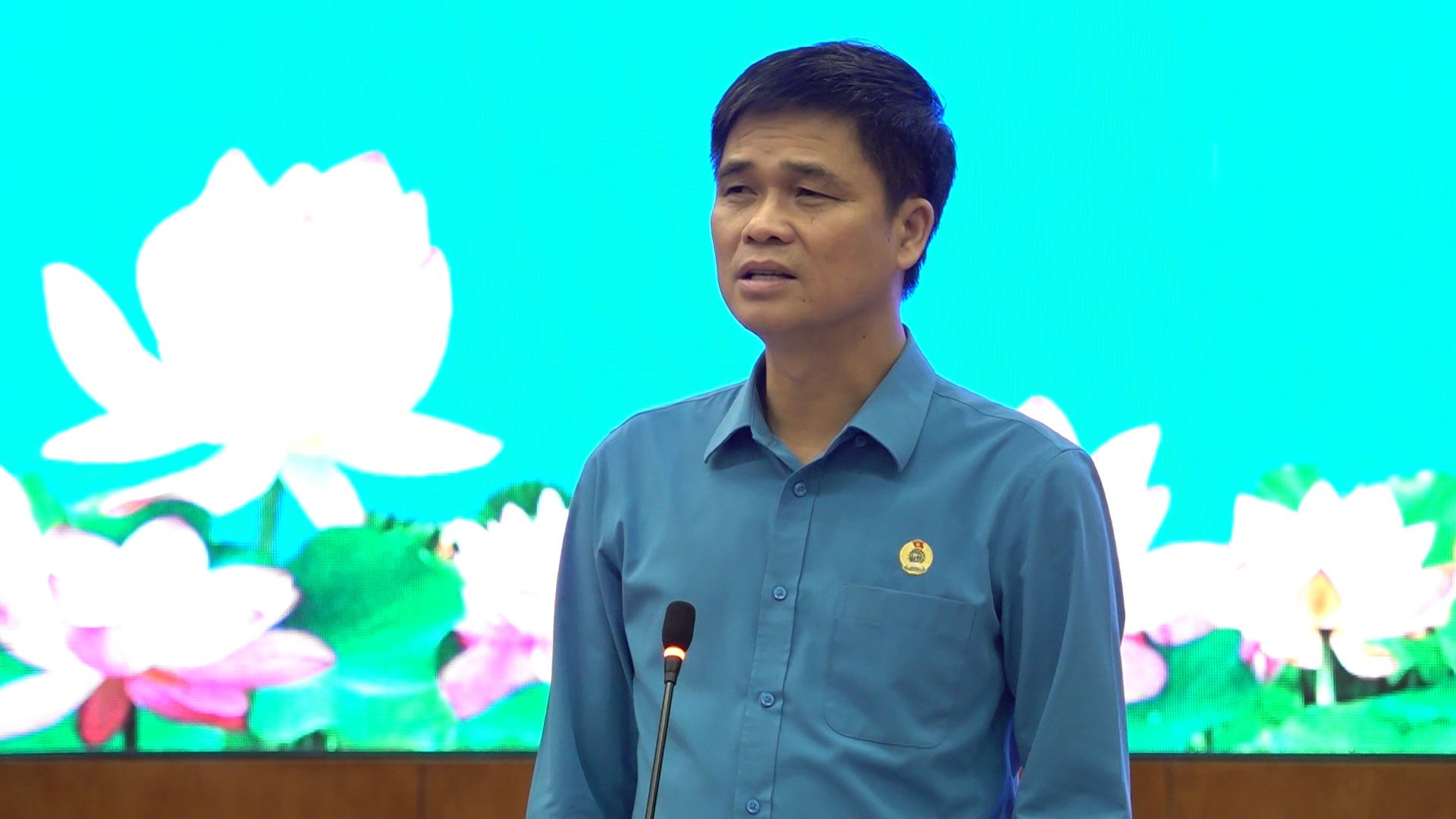
Speaking to direct the workshop, Mr. Ngo Duy Hieu - Vice President of the Vietnam General Confederation of Labor (VGCL) - emphasized that digital transformation is creating many new jobs and forms of work, but also entails many risks to workers' health.
Issues such as stress, mental illness, or "unidentifiable" diseases are becoming increasingly common.
“It is impossible to approach in the old way, but it is necessary to apply digital technology and science and technology in monitoring and handling occupational safety risks,” Mr. Hieu stated, and at the same time requested delegates to focus on clarifying new risks and proposing appropriate solutions.
Analyzing in more depth the impact of digital transformation, Prof. Dr. Le Van Trinh - Chairman of the Vietnam Association of Labor Safety and Hygiene Science and Technology - said that the labor market is changing strongly with the increase of new labor groups such as freelancers and digital platform workers. Although technology helps improve productivity and reduce traditional accident risks, the digital working environment arises many new risks.
One of the prominent issues is "techno-stress", when workers must always be connected, working unlimited hours. With just one mobile device, working hours can exceed 8 hours per day, leading to the risk of overload, affecting physical and mental health, such as musculoskeletal disorders or psychological problems.
Notably, current digital platforms operate based on algorithms - a factor that workers are almost unable to access or understand clearly. Job assignment, performance evaluation or income depend on "hidden" criteria, which may be subjective and detrimental to workers.

Faced with that reality, Prof. Dr. Le Van Trinh said that the Trade Union organization needs to proactively adapt. First of all, the Trade Union must self-transform digitally, improve capacity to keep up with trends. At the same time, it is necessary to understand and grasp the operating mechanism of algorithms to effectively protect the rights of workers.
In addition, organizing trade union models for grassroots workers - similar to traditional trade unions - is necessary to gather, represent and protect this group of workers. Trade unions also need to strengthen dialogue, helping workers identify new risks such as technology pressure, overtime, and the risk of exhaustion.
Another issue that delegates are concerned about is the current legal gap. According to Prof. Dr. Le Van Trinh, labor law and labor safety and hygiene do not fully cover the basic labor group. Therefore, it is necessary to soon amend and supplement to ensure their rights.
Sharing the same view, Mr. Nguyen Khanh Long - Deputy Director of the Department of Employment (Ministry of Home Affairs) - said that the current legal system has not kept up with the development of the digital economy and green economy. Current regulations mainly apply to traditional labor, not covering digital labor, foundational labor or freelance labor.
Mr. Long proposed that it is necessary to soon study and supplement this group of workers into relevant laws, especially the Law on Occupational Safety and Health. At the same time, it is necessary to consider establishing a focal agency on national safety techniques to support state management in this field.
According to Prof. Dr. Le Van Trinh, international studies show that overworking significantly increases the risk of work accidents and occupational diseases. Specifically, people who work overtime for more than 4 hours a day have a 38% increased risk of work accidents, while the rate of occupational diseases increases from 15-20%. This shows that controlling working hours and protecting workers' health is an urgent requirement in the digital age.
In the context of deep and widespread digital transformation, the Trade Union is not only a representative organization but must also become a pioneer force, adapting to technology, contributing to building a safe and sustainable working environment for workers.


