
On the morning of April 23, the National Assembly discussed in the hall the draft Law amending and supplementing a number of articles of the Law on Personal Income Tax, Value Added Tax (VAT), Enterprise Income Tax and Special Consumption Tax (SCT).
Regarding the SCT policy for battery-powered electric vehicles, delegate Doan Hung Vu (Dong Thap delegation) noted the risk of environmental pollution from electric vehicle batteries when damaged or expired.
The delegate believes that tax incentive policies for electric vehicles should be accompanied by the development of charging station infrastructure, completion of technical infrastructure and promotion of technology transfer for environmentally friendly battery production.
It is necessary to soon issue regulations requiring businesses producing, assembling, and importing electric vehicles to recall and recycle used batteries; build a professional collection and treatment system; promote research on recycling technology, replace old generation batteries with safer batteries," the delegate emphasized.
Delegates from the Dong Thap delegation said that encouraging the use of battery-powered vehicles is in line with Vietnam's green growth orientation, energy transition, greenhouse gas emission reduction and zero net emission target by 2050.
The extension of SCT incentives not only contributes to reducing air pollution and noise in urban areas but also opens up opportunities for the development of new industries, creating jobs and promoting economic growth.
Delegate Pham Van Hoa (Dong Thap delegation) also proposed to fully assess both the positive aspects and the limitations of electric vehicles.
Also according to the delegate, some current regulations such as limiting electric vehicle parking in the basement of apartment buildings or not allowing battery charging here in some cities such as Hanoi and Ho Chi Minh City also create additional barriers in the process of popularizing this means of transport.
The delegate especially noted the environmental issue when handling electric vehicle batteries after they expire.
If there are no appropriate solutions, the risk of pollution from battery waste can be very high, even causing long-term negative impacts," the delegate said.
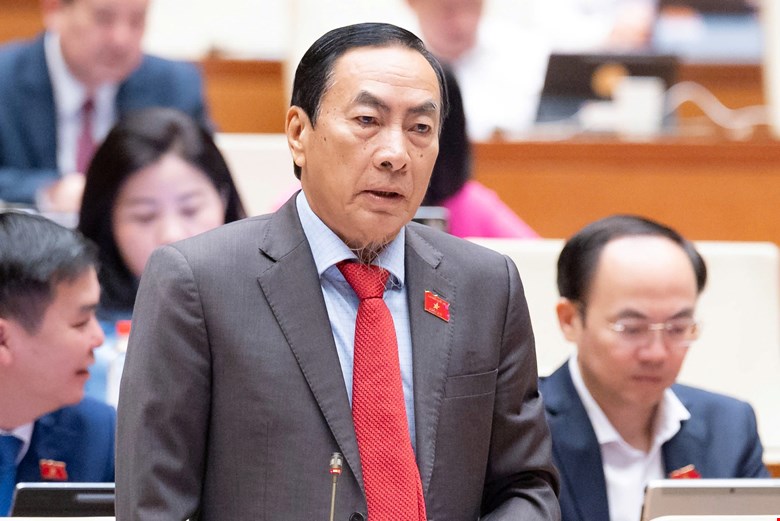
According to the delegate, it is necessary to consider ensuring fairness in tax policies between electric vehicles and vehicles using traditional fuels.
Delegate Nguyen Thi Viet Nga (Hai Phong delegation) assessed that the preferential SCT policy for vehicles running batteries with fewer than 24 seats in the draft law is consistent with the goal of green transformation, reducing dependence on fossil fuels and creating policy stability for the market.
The delegate acknowledged that tax incentives will only be effective when accompanied by charging infrastructure, the capacity of the distribution grid, waste battery treatment and increasing the localization rate. Therefore, it is necessary to synchronously implement non-tax solutions.


