
A local citizen reflected to functional agencies about problems in the process of carrying out procedures for separating his family's residential land plot. According to the presentation, his family is owning about 800m2 of legal residential land, the land plot is not in the planning area, is not entangled in a project and has a drainage system connected to the main road.
However, because the land plot does not have a direct access road to public transport, when there is a need to separate the plot to divide for children and grandchildren to build houses, the family faces difficulties.
People said that to meet the conditions for plot separation, the family has proactively agreed with the adjacent land user to open a common walkway connecting to the existing road. The purpose is to ensure convenient and legal travel after plot separation, and at the same time create conditions for children and grandchildren to have land to build houses and stabilize their long-term lives.
However, during the application process, the family was informed that they could not donate land to open roads in the expected way. This makes citizens concerned because according to his understanding, there is no regulation prohibiting people from voluntarily donating land to make walkways to serve the needs of land separation and inheritance.
Meanwhile, with an area of more than 800m2, each year the family still has to pay relatively high non-agricultural land use tax.
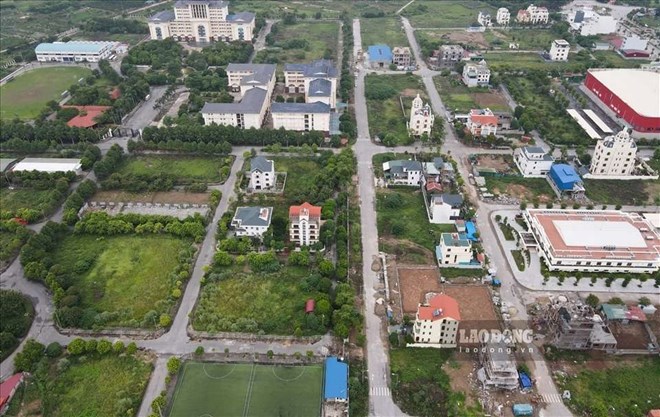
Answering this content, the Ministry of Agriculture and Environment said that Clause 1, Article 220 of the 2024 Land Law and Clause 3, Article 11 of Resolution No. 254/2025 of the National Assembly have clearly stipulated the general principles and conditions when implementing land plot separation.
According to regulations, the separated land plot must ensure a walkway and be connected to existing public roads. This regulation aims to ensure the legitimate right of access of land users, and is consistent with the provisions of the Civil Code on the right to walkway through adjacent real estate.
The Ministry of Agriculture and Environment also emphasized that the law does not require that the walkway must be a public road with a separate land code. The walkway can be formed on the basis of agreement with adjacent land users, as long as it ensures connection with public roads.
In addition, the 2024 Land Law assigns provincial-level People's Committees to base on the actual conditions in the locality to specifically stipulate the minimum area and conditions for land separation for each type of land. Therefore, the settlement of specific dossiers still depends on detailed regulations issued by the locality.
For cases where land users have a need to donate land use rights to the State for the purpose of expanding traffic roads, this must be in accordance with the approved plan according to the provisions of law.
The Ministry of Agriculture and Environment requests citizens to contact the competent authority in their locality directly for guidance and settlement in accordance with regulations. In case they do not agree with the results of administrative procedure settlement, people have the right to complain or sue according to the provisions of land law.
Through the case, it can be seen that understanding the regulations on walkways when separating land plots is very necessary to ensure the rights of land users and avoid arising problems in the process of carrying out administrative procedures.


