
With an income of about 25 million VND per month, after many years of accumulation, Mr. Nguyen Van Duc (28 years old, office worker) hopes to buy a small apartment in Hanoi. However, the reality of the market with high prices makes his settlement plan increasingly distant.
Mr. Duc said that house prices in many areas are still at a high level, exceeding the affordability of most young people who just start working. Currently, he has accumulated more than 1 billion VND and plans to borrow more from banks and relatives to buy apartments under 3 billion VND. However, after more than a month of researching apartment projects in suburban areas, he still finds it difficult to find products suitable for his financial capacity.
Previously, he had considered the option of buying social housing but did not meet the conditions due to income exceeding the prescribed threshold. This situation caused him to fall into the "mid-range" group - not eligible for preferential policies, but also not strong enough to access the commercial housing segment.
Similarly, Ms. Tran Thu Huong (30 years old, accountant in Hanoi) is also struggling with the problem of settling down even though her income is about 22 million VND/month. After many years of working, she has saved nearly 800 million VND.
Ms. Huong said that she once planned to buy apartments in the price range of 2-2.5 billion VND in the suburban area of Hanoi. However, when actually surveying, the prices of many projects have far exceeded initial estimates. Many small apartments also have prices of nearly 3 billion VND, not including incurred costs such as furniture and maintenance fees.
Income is not low, but if you borrow too much, the monthly debt repayment pressure is very high. Currently, home loan interest rates at many banks are high. I am worried about risks if the job is not stable for a long time" - she shared.
Therefore, when hearing information about housing development orientations for income groups over 20 million VND/month, Ms. Huong expressed her expectation. According to her, if more segments suitable for the financial capacity of young people appear in the market, the opportunity to settle down will become more realistic.
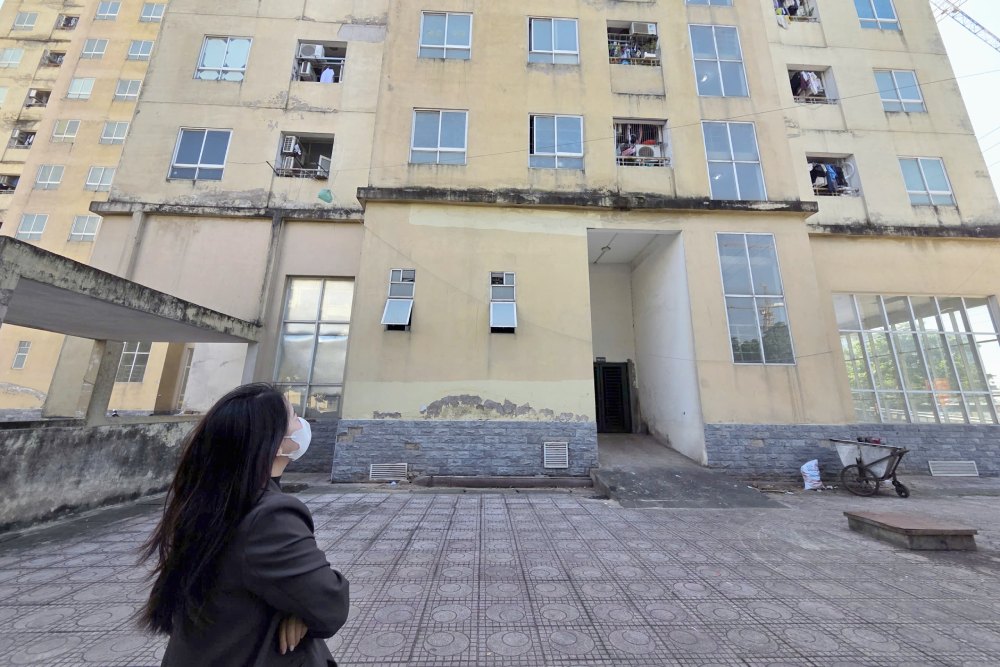
At the recent meeting of the Central Steering Committee for the Real Estate Market, Prime Minister Pham Minh Chinh assessed that the housing demand of middle-income workers (over 20 million VND/month) is increasing. The Prime Minister said that it is necessary to develop diverse housing segments, especially affordable commercial housing, with full and synchronous infrastructure. The goal is to increase supply and reduce costs so that people can access housing fairly and transparently.
In the draft Resolution of the Government on piloting the development of affordable commercial housing being consulted, the Ministry of Construction proposes that domestic individuals must buy and lease-purchase affordable commercial housing. Each person is only allowed to buy or lease-purchase one unit and is not allowed to sell for 5 years. This policy does not apply to foreign organizations and individuals.
Commenting on this issue, Dr. Nguyen Van Dinh - Vice Chairman of the Vietnam Real Estate Association, Chairman of the Vietnam Association of Realtors (VARS) - said that he highly appreciates and agrees with the orientation of issuing this pilot Resolution. Developing affordable commercial housing as an intermediary pillar in the housing ecosystem, helping to fill the gap between social housing and high-end commercial housing. This is a structural solution to fundamentally solve the supply-demand mismatch problem, while expanding access to housing for middle and upper-income groups in urban areas.
However, considering the actual situation, especially through the time of monitoring the implementation progress and results of the Project to develop at least one million social housing units by 2030, to ensure that the Resolution promotes real effectiveness, it is necessary to carefully study, synchronously design and concretize the details of preferential mechanisms and policies, especially on land, finance, implementation organization and implementation supervision, in order to ensure feasibility and investment attractiveness.


