Research data from the Vietnam Association of Realtors (VARS) shows that in 2025, the entire market recorded about 128,000 new products on sale, the highest level in the period 2019-2025 and approaching the "peak" of supply.
However, the market has not yet been completely "refreshed". Because the supply structure continues to be unbalanced when there is a serious shortage of affordable housing products, most of the new supply comes from high-end apartment projects and high-value low-rise products. Notably, about 25% of the apartment supply is priced at over 100 million VND/m2, mainly concentrated in some large investors.
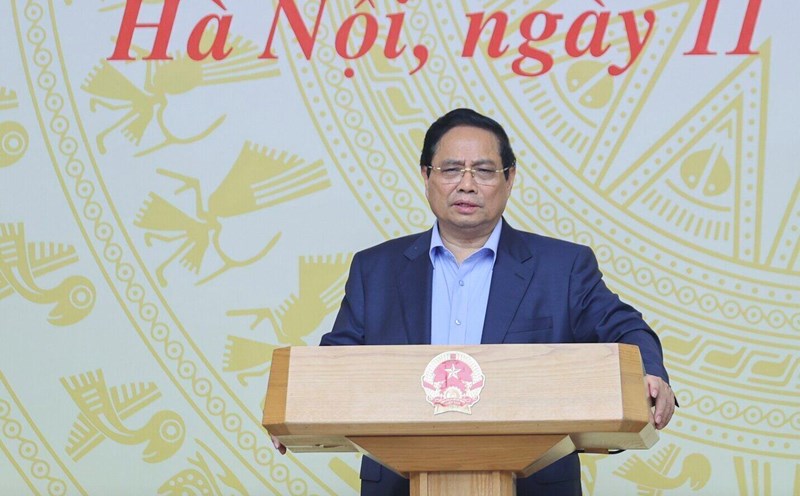
Recently, at the 5th meeting of the Central Steering Committee for Housing Policy and the Real Estate Market, the Prime Minister requested to build mechanisms and policies to develop housing for people with an average income of over 20 million VND/month. Increase the supply of different segments to increase access to housing for people.
Sharing with Lao Dong Newspaper, Mr. Pham Duc Toan - General Director of EZ Real Estate Joint Stock Company - said that the development of housing for middle-income groups over 20 million VND/month is a very practical direction. Over the past time, the market has focused strongly on two segments: social housing for low-income people and high-end commercial housing, while the housing segment for middle-income people is almost vacant.
According to Mr. Toan, this is a group with a very large demand for buying houses but falling into the "vacant area" of the market: Not eligible to buy social housing, while commercial housing prices exceed their financial capacity. Currently, commercial apartments priced under 50 million VND/m2 are almost no longer on the market, making it increasingly difficult for middle-income groups to access housing.
Assessing the policy of developing housing for middle-income groups, Mr. Toan said that this is the right direction but very difficult to implement without a strong enough support mechanism. According to him, the most important condition is to have a clean land fund with reasonable costs. The State and localities need to proactively create land funds, then allocate or allow businesses to access at appropriate prices to reduce input costs.
In addition, there needs to be policies to reduce land use fees, tax incentives and credit support for businesses. The formation of low-interest loan packages will help businesses reduce financial costs, thereby being able to offer a more suitable selling price for middle-income people.
If the Prime Minister's directives are concretized by clear and feasible mechanisms, many businesses will be willing to participate in the affordable housing segment. This is a large-scale market with high real demand and lower risks compared to the high-end segment" - Mr. Toan said.
Mr. Nguyen Van Dinh - Vice Chairman of the Vietnam Real Estate Association - said that the synchronous formation of segments including: high-end housing, social housing, rental housing and affordable housing will help the market fully access all social groups. This is a humane policy, suitable to economic conditions and the actual needs of workers.
Regarding the impact on real estate businesses, Mr. Dinh said that the new direction will force businesses to restructure their business strategies, instead of just focusing on the high-end segment as before.
Mr. Dinh said that the State is issuing many policies to support businesses to participate in developing social housing and affordable housing. This is both an opportunity and a challenge, requiring businesses to choose a segment suitable for their capacity and long-term orientation. If there is close coordination between the State and businesses, the real estate market will gradually develop more stably, effectively and sustainably.