
Liverpool has broken a series of transfer records in the past two summers. However, the biggest problem with Michael Edwards is not in the deals he has made, but in the plans he has not been able to complete.
This summer, Liverpool parted ways with many important figures, from Mohamed Salah, Andy Robertson to Edwards himself. In his first term at Anfield, he was considered one of the best sports directors in European football. When he returned, Edwards took on the role of Football CEO of Fenway Sports Group (FSG), with the task of building a multi-club model.
However, that project has never become a reality. FSG has considered a series of targets such as Malaga, Bordeaux, Toulouse and many other clubs, but ultimately did not complete any acquisitions. While Liverpool spent more than half a billion pounds on player transfers, FSG still only owns a single team.
Edwards' decision to leave Liverpool was made last year, when he resigned even though he still had one year of contract left. This happened before the team's decline, before Arne Slot was sacked and after a transfer window costing about 450 million pounds. Among them, the most prominent is the £125 million contract for Alexander Isak.
During his administration, Edwards brought Julian Ward back as FSG's Technical Director, appointed Pedro Marques as Football Development Director, and chose Richard Hughes as Liverpool's Sporting Director.
However, when the multi-club project did not meet expectations, Edwards said that his role was no longer necessary. He also did not want to return to the job of Sporting Director as before and decided to close his second term.
Edwards' departure makes Liverpool face another period of volatility. Richard Hughes only has one year left on his contract and is said to be able to move to Al-Hilal after the 2026 summer transfer window closes. This means that the Anfield team is at risk of losing another key personnel in the operating apparatus.
For many years, Liverpool has been seen as a model of how to operate the club, with a smart transfer strategy, developing young players and long-term planning. However, the structure that once created that success is gradually changing.
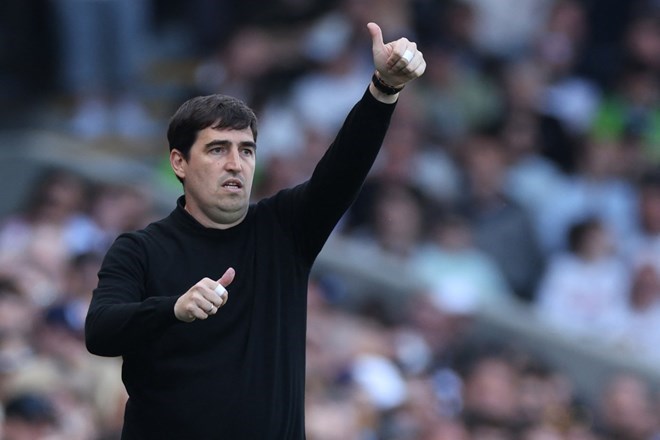
New coach Andoni Iraola takes over the team in the context of many important positions at the top level constantly fluctuating. Although still possessing a potential force, The Kop still has many problems to solve, from finding a successor to Salah to building a defense for the post-Virgil van Dijk period. Besides, Iraola also has to find ways to maximize Florian Wirtz, Jeremie Frimpong and reshape the midfield.
It is undeniable the legacy that Edwards left behind in his first term. He made great contributions to bringing to Anfield successful signings such as Salah, Sadio Mane, Roberto Firmino, Georginio Wijnaldum, Fabinho, Alisson Becker, Van Dijk and Robertson. This is the foundation for Liverpool's brilliant period of success.
Conversely, the second term left more controversy. Although Liverpool still won another Premier League title and once succeeded with the decision to appoint Slot, the huge investment in the transfer market has not brought about commensurate efficiency. Their squad still has many gaps and needs more rebuilding.
Edwards left when many plans were still unfinished. Past success helped him continue to be a sought-after name in the football management market. However, Liverpool's upcoming journey under Iraola will partly reflect the true value of the decisions Edwards and Hughes made in the past two years.


