Michael Carrick has Manchester United blood. And just after leading the team in his interim role at Old Trafford, he was praised as the club's savior.
On the contrary, the lack of any imprint of Tottenham Hotspur in his history or football philosophy makes Thomas Frank struggle every day to keep the head coach position.
Reality, of course, is not that simple, but it is gradually becoming like that. If you choose to break the so-called identity, coaches only have one way to survive. That is to win and win quickly.
But ultimately, what is football DNA? It is a term that usually only appears when things start to go wrong. When the results decline, fans and former legends often gather all their dissatisfaction into a vague but heavy concept - the club's identity.
When Man United sacked Ruben Amorim earlier this month after 14 disappointing months, Gary Neville made an attention-grabbing statement.
Manchester United needs a coach who fits the club's identity. Ajax does not change for anyone, so does Barcelona. I don't believe Manchester United should change for anyone" - the former M.U defender said.
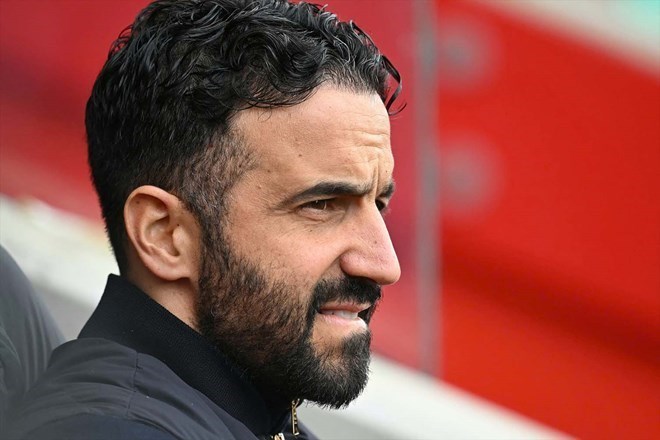
Whether intentionally or unintentionally, Man United's leadership seems to have listened. They interviewed 3 former players - Carrick, Ole Gunnar Solskjaer and Ruud van Nistelrooy - for the leadership position of the team until the end of the season. And Carrick won that race.
And right in the first match, he helped Man United defeat Manchester City 2-0 with fast, direct, and confident attacking football. Is that the DNA of Man United? Perhaps so. But right here, that theory began to collapse.
No coach has won more titles than Sir Alex Ferguson in Man United history - 48 titles - but when he arrived at Old Trafford in 1986, Ferguson had absolutely no connection to the club. His football career was associated with Scotland, and United's only thing in his history was a season at Ayr United.
Similar stories also happened in other empires.
Arsene Wenger did not carry the "Arsenal blood" when he came from Nagoya Grampus Eight in 1996. Jose Mourinho had no connection with Chelsea before leaving Porto in 2004.
Before Wenger, Arsenal was famous for their dry defensive style to the point of being ridiculed. It was the French coach who completely broke down the old identity to create a beautiful and victorious football era.
Chelsea before Mourinho was seen as a team lacking bravery. He turned them into a powerful, pragmatic machine and dominated England in a completely different style from tradition.
Manchester City even "bought" Barcelona's DNA by appointing Pep Guardiola in 2016. And Guardiola brought that whole philosophy to Etihad.
No Arsenal, Chelsea or City fans complain about their coaches losing their identity, because they won.
After all, football DNA is just a form of nostalgia. It is a spiritual aspect to cling to when the present becomes chaotic and the past suddenly becomes divinized. With Man United, where Ferguson is still regularly present in the honorary stands, comparing any coach to an 84-year-old man is almost inevitable.
Tottenham is different. Frank does not have to face a dense mythical council, because Spurs are a symbol of promising a lot but too little success. If Tottenham has an identity, then those are repeated disappointment cycles, although fans still nostalgic for the golden age of the 1950s and 1960s.

When Frank was appointed after his success at Brentford, fans excitedly welcomed him. But as soon as they witnessed goalkeeper Vicario taking a free kick from midfield or Kevin Danso throwing a long line like rugby in the European Super Cup match against PSG, warning bells rang.
That's not the Tottenham they knew. Frank had to win to defend his philosophy. But 6 months passed, victory did not come and that playing style became evidence to accuse him.
Carrick did not have that problem. Man United defeated Man City with football reminiscent of Ferguson's time - the football that Carrick lived in throughout his football career. That brought him prestige, sympathy and even the expectation of being officially appointed if the results continue to be positive.
But in the end, all of that has nothing to do with DNA. Football has only one truth. When you win, no one asks about identity. When you lose, DNA becomes a problem.