
Football is not an easy sport to explain. Data companies today can collect millions of information points just from what happens to the ball. The new tracking technology also adds another huge amount of data, continuously updating the position of 22 players and the ball many times per second throughout a match.
That complexity comes from all the factors on the field: the ability of each player to handle the ball in their own way, the fact that they can do anything with the ball except with their hands, or the unpredictable nature of the balls originating from human feet. All of this creates the most popular sport in the world, a game that is both chaotic and magical to the point that we often have to use metaphors to explain the special moments we witness.
And the only player who both showed and broke all those rules was Lionel Messi.
For nearly 20 years, Messi has done what seemed impossible: making football simple. He is the greatest player we have ever seen because he can do well in all aspects of the match: scoring goals, assisting, dribbling, passing, and even controlling the pace of the match.
That has always been true, but before the 2026 World Cup kicked off, that belief was somewhat shaken.
At the age of 38 when the tournament started and turning 39 during the World Cup, Messi is no longer expected to lead Argentina to victory alone like in his peak years. People are just waiting for him to create a few special moments, supporting the team instead of becoming a decisive factor.
But Messi once again did the familiar thing - proving that he is still the best player in the world.
After what he showed at the 2026 World Cup, the debate about Messi's position seems to have come to an end. He is not only the greatest football player in history, but also deserves to be considered one of the greatest sports stars of all time.
Why is Messi still number one at 39?
Analyst Michael Caley once made a noteworthy comment: "Lionel Messi is not only the best player of his time. He is the three best players in the same era".
The reason lies in rare comprehensiveness. In football, a team needs to go through three steps to create a goal: put the ball forward, put the ball in a favorable position and finish the opportunity. Messi is an excellent player in all three stages.
El Pulga can put the ball through the defense himself, create opportunities for teammates and also directly score goals.
At his peak at Barcelona, Messi went through a period of scoring 96 goals and having 27 assists in 64 starts in La Liga. Although he no longer maintains those extraordinary numbers, he still continues to do things that most other players cannot.
At the 2026 World Cup, Messi leads the scoring list with 8 goals, equal to Kylian Mbappe. Not only that, he is also the player with the most shots in the tournament with 34 times.
But scoring ability is not the only thing that makes Messi different.
Regarding assists, the number of assists does not fully reflect his influence. An assist can be just a simple pass for a teammate to score, while a pass that opens up a great opportunity but a teammate finishes off is not counted.
Therefore, the expected assist rating (xA) more accurately reflects the player's chances creation ability. And Messi is leading the 2026 World Cup in this rating.
While top strikers like Mbappe or Erling Haaland mainly focus on scoring, Messi can still both score, assist, and control the game.
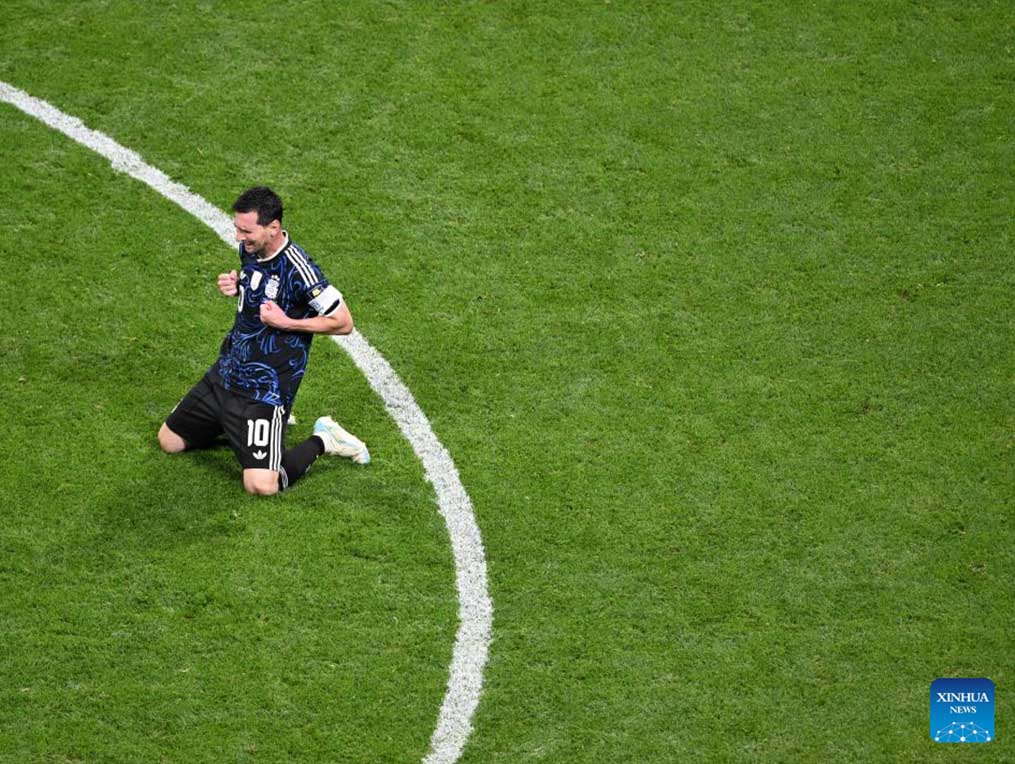
Messi controls the match in a way that no one else can.
According to data from Futi, Messi has made 68 assists in his journey to the 2026 World Cup final, at least 20 more than any other player.
El Pulga also had 45 dribbles towards the opponent's goal, more than Lamine Yamal - his potential opponent in the final.
These data show that Messi is not only the scorer, but also the player who completely changes the structure of the match with each touch of the ball.
Futi's "ball control value" model, built to assess the impact of each touch of the ball on scoring ability or preventing opponents from scoring, also yields surprising results.
Among the players from the 4 teams in the semi-finals of the 2026 World Cup, Mbappe ranked second with a score of 83.
What about Messi? He reached 99 points. At the age of 39, Messi is still doing what he has been doing for nearly two decades. That is making football, which is inherently complex, unbelievably simple.


