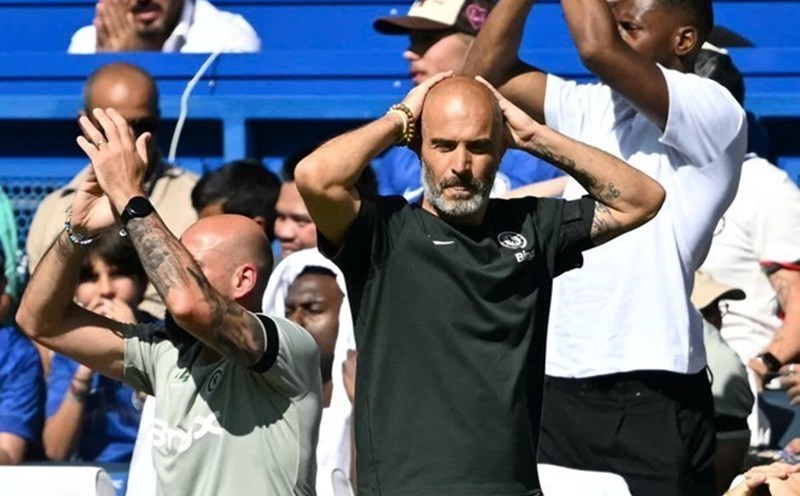
From a historic victory to a hard-to-swallow failure
If the win over Liverpool was once seen as a testament to Chelsea's maturity under Maresca, then the 1-2 defeat to Sunderland exposed the familiar left side. That is inconsistency, lack of concentration and vulnerability to opponents who play low, are patient and wait for mistakes.
Liverpool's attacking style has accidentally exposed gaps for Chelsea to exploit, but Sunderland has not. The newly promoted team has set up a "double-storey bus" in front of the goal, counterattacking in a flash and persistently waiting for Chelsea to make mistakes. As a result, they left London with 3 full points, while the home team was flooded with suspicion.
This reflects the problem that has lasted throughout the season, which Chelsea often had difficulty facing teams with low defensive blocks and quick counter-attacks. Against opponents like Crystal Palace, Brentford and Brighton, they only won 2 points.

Two faces, a team
The best performances under Maresca have come when Chelsea were put in the role of underdogs. In the FIFA Club World Cup final against PSG in July and in the recent win over Liverpool, The Blues played with desire, resilience and high fighting spirit. When they have to prove themselves, Chelsea play with pride, something they lack in seemingly easy matches.
However, that spirit was not maintained. In 13 matches in all competitions this season, Chelsea have rarely shown their best class in the entire 90 minutes. Even the 5-1 win over Ajax in the Champions League in midweek was discounted, as they had to play with one less player since the 17th minute.
The last 4 consecutive wins against Ajax, Liverpool, Benfica and Nottingham Forest seemed to have signaled stability but in reality, not necessarily so. Against Benfica, they narrowly won 1-0. Against Nottingham, the score of 3-0 reflected the reality of the match when The Blues played poorly for more than half of the match, while the opponent missed many clear opportunities.
If we had to choose a comprehensive performance, perhaps the victory against Liverpool was worth it. That has led experts to question why Chelsea only play well when they are in doubt?

Insomnia, injuries and lack of stability
Part of the reason comes from human factors. Chelsea currently have the youngest squad in the Premier League. For an inexperienced team, inconsistency is inevitable. In addition, there are consecutive injuries with Cole Palmer and Levi Colwill out for a long time, while Moises Caicedo, Enzo Fernandez and Joao Pedro are all playing in imperfect physical condition.
After the loss to Sunderland, Enzo Maresca revealed that there were 4-5 players who could not train fully every day. That makes it difficult for him to maintain the necessary tempo and intensity for the heavily ball control style of play in high-altitude pressing.
Maresca is also going through the first season of his career having to rotate between the Premier League and the Champions League. A tight schedule is a tough test for a young squad, especially when Chelsea are still in the process of finding their identity.

The biggest problem is fighting spirit
The worrying thing is not the tactics, it is the attitude. After the loss to Sunderland, Maresca admitted: "We lacked consistency. To become a top team, you have to maintain your form, you can't get high and then get low like that. When you can play at a high level and then plummet, it shows that you are not stable enough to compete."
Chelsea did not lose due to physical strength. The previous match against Ajax had rotated to 10 positions, with all pillars rested. They lost because they lost intensity and lacked desire, which helped them win against Liverpool just a few weeks ago.
When leading 1-0 against Sunderland, Chelsea started to play subjectively, losing in one-on-one disputes and often losing the ball in a confusing manner, which is unacceptable when facing a team that is rated lower.
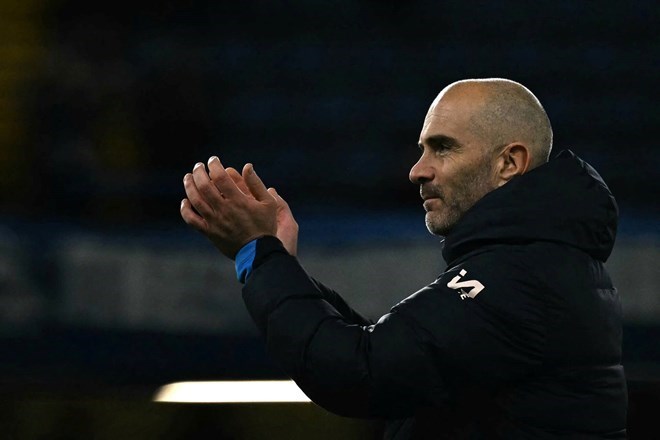
Chelsea must learn to fight "as if they are suspected"
Chelsea's problem is not their ability. They have potential, many young talents, a modern football philosophy and even enough squad depth to compete in the European Cup. What they lack is stability in competitive mentality, the ability to maintain fighting spirit in big matches and even confrontations with teams at the bottom of the table.
Maresca cannot ask his young players to play like machines, but he needs to give them a new habit of playing with the goal of proving themselves in every round.