
When the Japan Football Association announced the "100-Year Vision" in 1992, the goal of winning the World Cup seemed like just a distant dream. However, after more than three decades of strong development, Japanese football is getting closer than ever to its ambition to become the world's leading power.
World Cup 2026 will be the eighth consecutive time "Green Samurai" have participated in the biggest football festival on the planet. Since 2023, Japan has always maintained its position in the top 20 on the FIFA rankings and possesses a force with admirable depth with most players playing in Europe.
Japan's current squad gathers many quality players such as Zion Suzuki (Parma), Hiroki Ito (Bayern Munich), Wataru Endo (Liverpool), Takefusa Kubo (Real Sociedad), Daichi Kamada (Crystal Palace) or Ayase Ueda (Feyenoord). This is a team with rich experience playing at the top level and capable of competing with the strongest teams.
Reality shows that FIFA rankings are not a barrier for teams who want to create surprises at the World Cup. Croatia once reached the semi-finals and then the finals even though they were not highly rated, Morocco also wrote a historic story at Qatar 2022. Japan can completely become the next phenomenon.
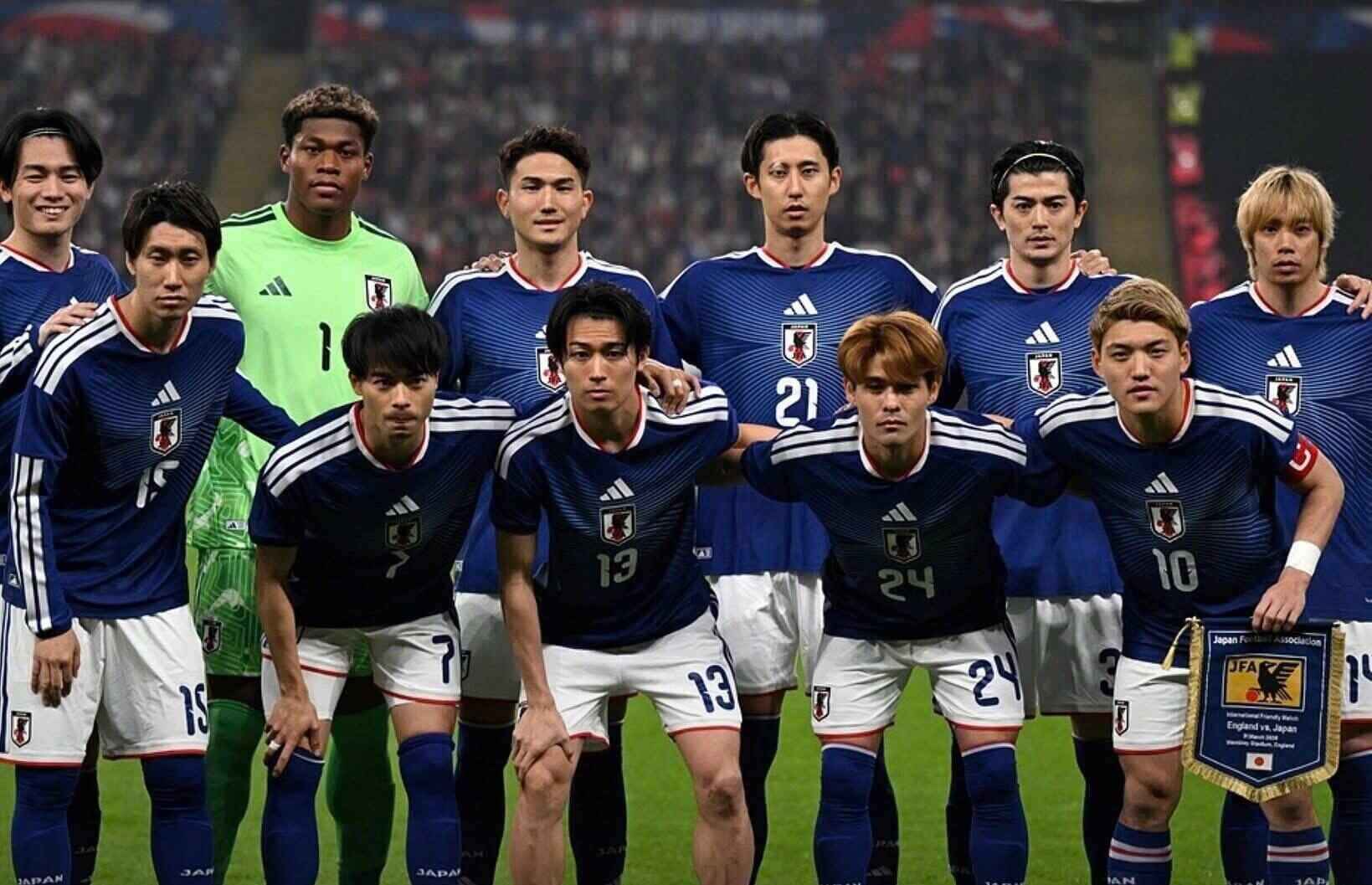
What fans expect is the impressive results in recent years. At the 2022 World Cup, Japan successively defeated Germany and Spain in the group stage before losing to Croatia on penalties in the round of 16. More recently, they also won historic friendly victories against Brazil and England.
However, Japan's biggest obstacle may lie in themselves. Coach Hajime Moriyasu is often criticized for his overly cautious approach in important matches. The counter-attacking defensive style has been effective against big teams, but sometimes it makes the team lose initiative against equal or weaker opponents.
At the 2026 World Cup, Japan is in Group F with the Netherlands, Sweden and Tunisia. This is not an easy group but also opens up opportunities for the "Green Samurai" to pass the round of 16 for the first time in history.
The goal of winning the World Cup may still be ahead, but if Japan reaches the quarter-finals for the first time this summer, it will be a major step forward on the journey to realize the ambitions they set more than 30 years ago.
Another positive point of Japan is that the squad depth is increasingly improved. Even when missing key players such as Kaoru Mitoma or Takumi Minamino due to injury, Moriyasu still has many quality options playing in top European leagues.
This shows that Japanese football is no longer dependent on a few stars as before, but has built a sustainable development system. Internal competition and stability over the years have helped the "Green Samurai" enter the 2026 World Cup with great confidence.


