
Even when he was a player, Zinedine Zidane brought a feeling of unpredictability. When he switched to coaching, that unpredictability became even clearer. He won 3 consecutive Champions League titles with Real Madrid but never clearly revealed his football philosophy.
The French team is also a difficult team to define. They possess abundant human resources to the point that the reserve squad is still strong enough to compete at the World Cup. Under Didier Deschamps, France reached 3 major finals, but their playing style rarely brings a complete convincing feeling.
Now, Zidane appears at a time when Les Bleus are entering a new chapter. The match against Turkey in the Nations League will be his debut as head coach of the French national team. This is also when a big question about Zidane is raised: what kind of strategist is he really?
Zidane is in the group of 5 coaches who have won the Champions League at least 3 times, along with Bob Paisley, Pep Guardiola and Luis Enrique, only behind Carlo Ancelotti. He is the only one to win this tournament for 3 consecutive seasons.
However, Zidane's position in the group of top coaches is still often discussed. In 4 full seasons at Real Madrid, he won 2 La Liga titles and 3 Champions League titles. If only looking at titles, that is a very impressive achievement. But when considering tactical imprints, the story becomes more complicated.
Zidane's Real Madrid once set a series of milestones: only lost 8 in the first 100 matches, scored in 73 consecutive matches, won 16 consecutive matches in La Liga and had a 13-match win streak away from home.
These numbers show the strength of Real Madrid under Zidane. However, they have not answered how he built that strength.
Real Madrid often wins thanks to the combination of experience, squad quality and the brilliance of stars. Zidane is not the one who built the trio Casemiro, Luka Modric and Toni Kroos. He also did not discover the inherent qualities of Cristiano Ronaldo or Gareth Bale.
Perhaps Zidane's strength lies in his ability to manage top players, maintain balance in the dressing room and help stars develop their abilities. This is a skill that is difficult to measure by numbers.
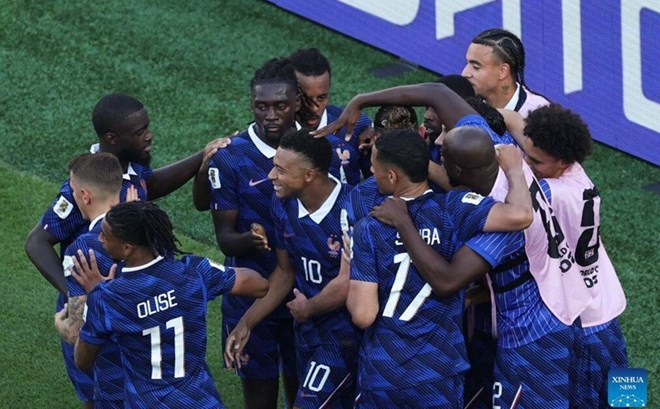
Three consecutive Champions League titles partly show that. Real Madrid once overcame strong opponents such as Bayern Munich, Atletico Madrid and Juventus, but the journey to be crowned champion does not always come with a dominant game throughout.
Real Madrid coaches often face a similar problem. When possessing too many outstanding players, the tactical system sometimes has to give way to the handling ability of stars. Carlo Ancelotti also received similar assessments when giving players a lot of self-determination.
Zidane may also belong to that group. He is not the type of coach who always leaves an easily recognizable tactical mark, but the ability to manage a collective with many personalities can become an advantage when leading the national team.
This is even more noteworthy for France, a team that has experienced periods of instability in discipline. In 14 years under Deschamps, Les Bleus maintained organizational stability despite facing no small pressure.
Zidane will take over a talented squad but is in the process of changing. From the beginning, he showed a desire to control the environment around the team by limiting media coverage of the players' arrival time at the Clairefontaine training center.
After years of success but still difficult to explain about working methods, Zidane will have a special opportunity to answer open questions.


