
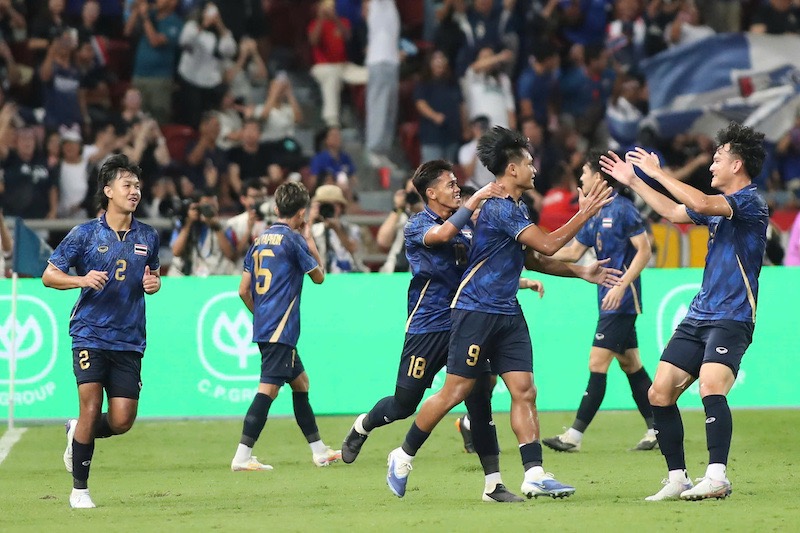
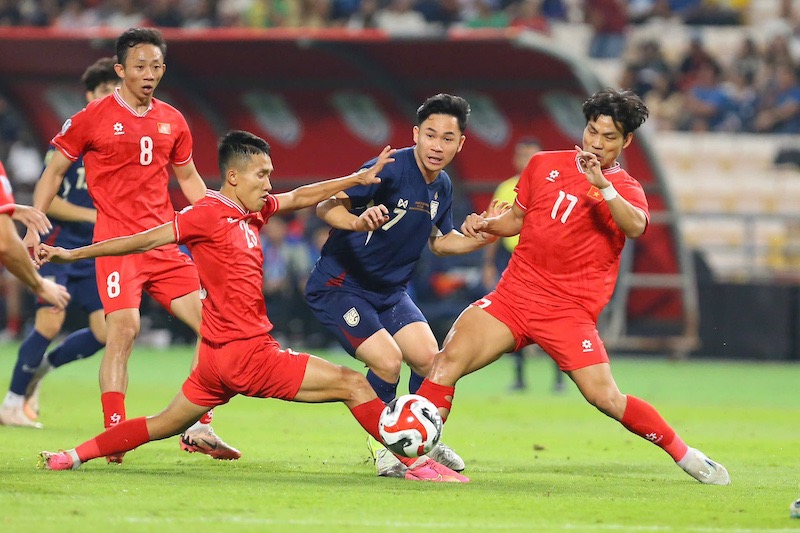
The series of unexpected results for Thai football continues after the country's U22 team lost to Vietnam's U22 team in the final of SEA Games 33, meaning that the "War Elephant" has not been able to regain the gold medal in men's football at the Games since 2017.
Not long before that, the Thai national team also lost to Vietnam in the ASEAN Cup 2024 final, further sparking debate about the decline of football in the land of the Golden Temple.
In that context, Mr. Tanawat Nitikanchana - Chairman of Ratchaburi club frankly pointed out systemic issues that are hindering the development of Thai football, especially in youth training.
Not only as a club manager but also as a person who has followed Thai football for many years, I think the root of the problem lies in the foundation. We have not invested properly and have not really taken seriously youth training. When the foundation is not solid, it is very difficult for teams to maintain strength for a long time or continuously create a quality successor generation," Mr. Tanawat said.
According to Chairman Ratchaburi, a strong team cannot exist without a source of young players who are well-trained through each cycle. However, the reality in the Thai League today shows that the number of domestic players who are highly qualified and can be used right in top matches is quite limited.
The Thai League is more exciting, the pace of the match is faster and the audience likes that. But the downside is that when teams rely heavily on foreign players, domestic players have fewer opportunities to play and mature. If that continues, the vicious cycle will repeat itself," Mr. Tanawat said.
Regarding the difficulties of U22 Thailand in the process of preparing for the SEA Games, especially the fact that many clubs do not release players, Chairman Ratchaburi said that it is necessary to look at the issue realistically. According to him, the SEA Games as well as some Asian youth tournaments are not in the FIFA schedule, so it is understandable that clubs prioritize their rights.
From a long-term perspective, Mr. Tanawat suggested that Thai football should refer to Japan's development model. The success of Japanese football does not come from short-term campaigns, but from a system of youth training built scientifically, maintained continuously for many years.
He cited the experience of facing Gamba Osaka club, where the Japanese team used most domestic players and still achieved high efficiency in the continental arena.
In addition, Mr. Tanawat also supported the Thai Football Federation to soon appoint a Technical President with in-depth expertise and clear vision, playing a central role in building a synchronous development roadmap for youth teams and national teams.


