
How to distinguish lotus and sunflower
The lotus stem has thorns but is not stinging when touched, while the sunflower stem has sharp thorns, making hands very throbbing when touched.
The petals of the lotus are smooth when gently stroked, and the flower has a faint fragrance even when not yet blooming; while the petals are thin, rough and have a fishy smell.
Cleaning lotus roots with rice water
Cut lotus roots into bite-sized pieces, then soak them deep in a basin of rice water mixed with a spoonful of salt.
Rice water has the ability to absorb dirt extremely strongly. Just soak for 15 minutes, the mud inside the holes will release itself, returning the white lotus roots.
Keep lotus roots from darkening during preliminary processing
Prepare a bowl of cold water mixed with 1 tablespoon of white vinegar. Slice the lotus root to the point, immediately drop it into the bowl of vinegar water to that point. The acid in the vinegar will prevent the oxidation process.
When stewing, you should also not use iron pots or cast iron pans, because lotus root is unfavorable for iron, it will immediately turn black. Use stainless steel pots or glass pots.
Steaming lotus seeds quickly, not rough
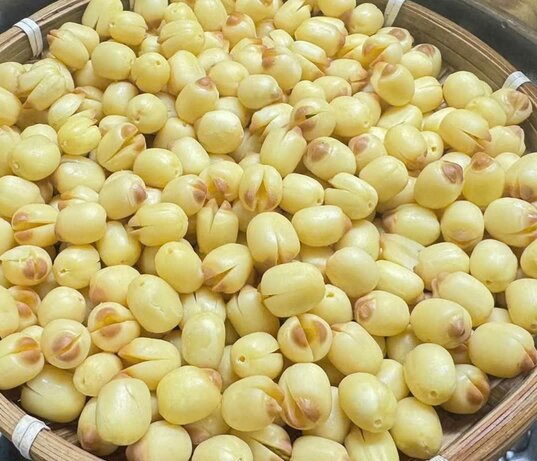
It is mandatory to boil water thoroughly before adding lotus seeds (both fresh and dried) to the pot. In particular, only add sugar or salt when the lotus seeds have fully bloomed and are soft.
How to freeze and preserve fresh lotus seeds
Fresh lotus seeds (with green peel removed, lotus heart removed), do not wash through water. Divide them into small plastic boxes or zip bags, press all the air out and immediately put them in the freezer.
When cooking, housewives boil water until it boils vigorously, then directly take the frozen lotus seeds and drop them straight into the pot, the lotus seeds still retain their sweetness as at the beginning.


