
In the last days of the year, temporarily putting aside the busy work of the store, culinary artisan Pham Thi Hoa is busy in the kitchen, preparing a Tet Eve offering tray. Her hands quickly stir-fry bamboo shoots, fry shrimp patties on the stove, the fragrance spreads throughout the house.
Not far away is the ancestral worship area, Mr. Vu Van Doan - Mrs. Hoa's husband is carefully cleaning the ancestral altar, changing the water bowl, adjusting the incense sticks, preparing for the year-end worship ceremony. The atmosphere is both urgent and solemn, a familiar rhythm every year-end of the people of Bat Trang.
Ms. Hoa said that the year-end feast is also similar to other traditional feasts of Bat Trang. Depending on the conditions of each family, the feast can be arranged in 8 bowls and 8 plates, 6 bowls and 8 plates or simplified to 4 bowls and 4 plates, including familiar dishes such as: boiled local chicken, stir-fried kohlrabi with squid, shrimp patties, pigeon spring rolls, chim hầm with Chinese herbs, canh bóng... However, no matter how changed, the two bowls of soup still play the central role: canh bóng and especially canh măng mực - a dish considered the "soul" of the feast.
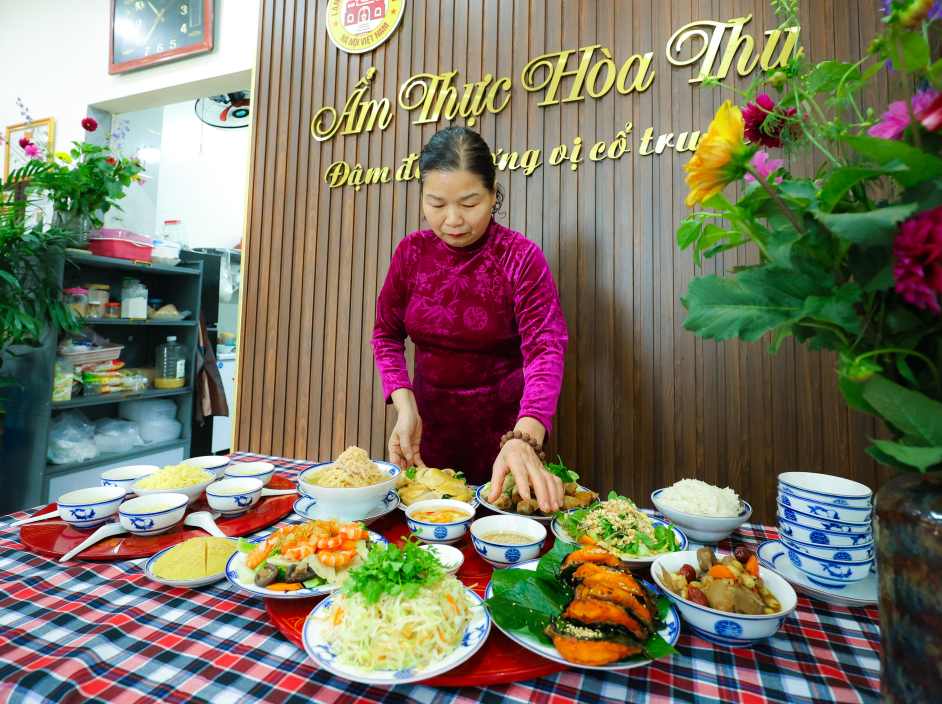
In the memories of many families, the kitchen is almost a "territory" for women. The secret to cooking feasts is not recorded in books, but is passed down through each death anniversary season, each Tet. "In the old days, men made pottery all year round, feasts were all taken care of by women. Mothers and grandmothers both made and taught their children and grandchildren, passing on each small secret," artisan Pham Thi Hoa recounted.
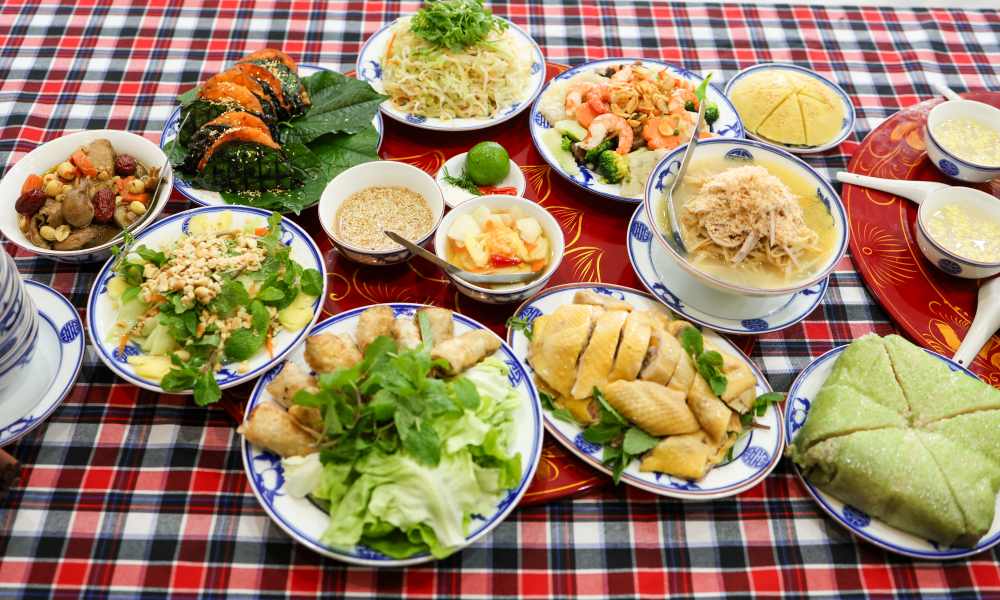
Busy from early morning until nearly noon, when the dishes are full of flavor and color, family members gently lift each tray of offerings to the family temple. Mr. Vu Van Doan adjusts his robe neatly, slowly arranging each bowl of soup and plate of stir-fried rice on the ancestral altar.
Incense sticks are lit, thin wisps of smoke linger, creating a space that is both warm and sacred. Outside the yard, the sound of people passing by is bustling, but inside the worship space, all movement seems to slow down.
According to Mr. Doan, Tet is first of all a thanksgiving ceremony. After a year of doing business and living under the protection of gods and ancestors, children and grandchildren prepare a respectful tray of rice to offer to the altar. Each family prepares according to their conditions, it can be simple or full, but there is no shortage of incense, flowers, fruits and a savory tray of rice. "The important thing is not a high tray full of offerings, but our heart," he said.
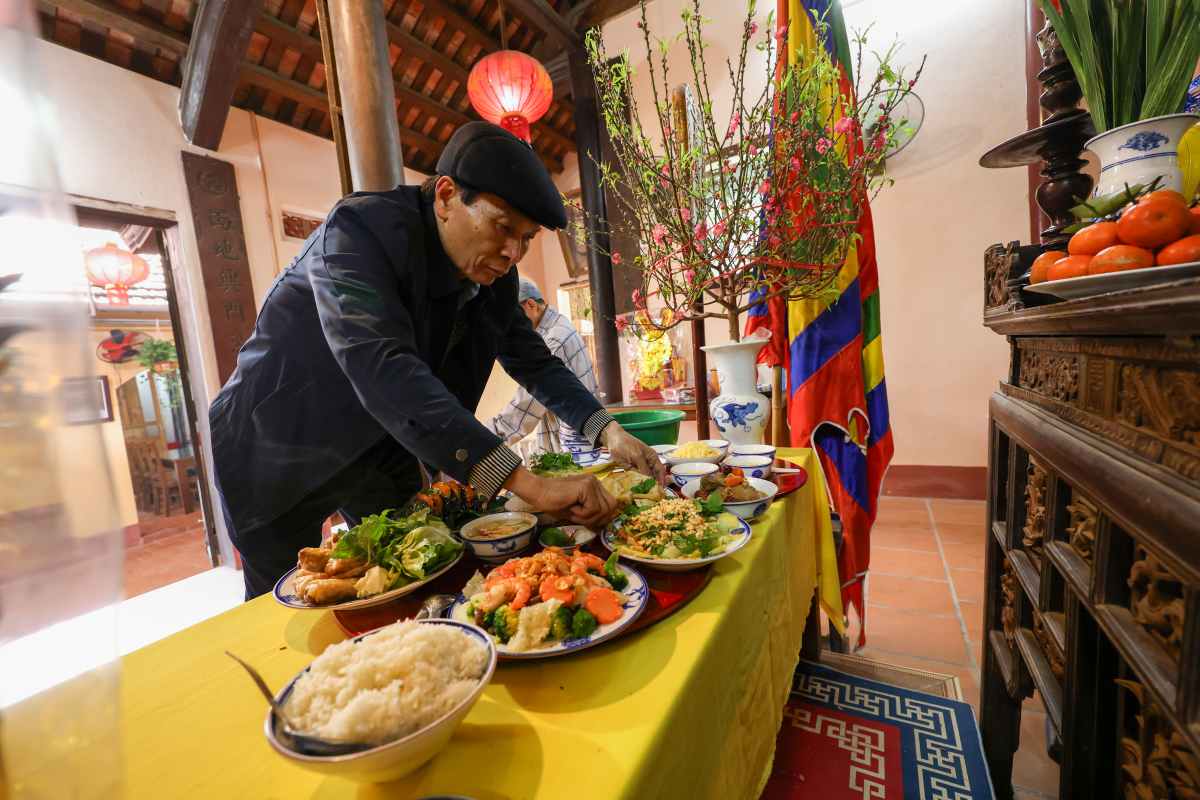
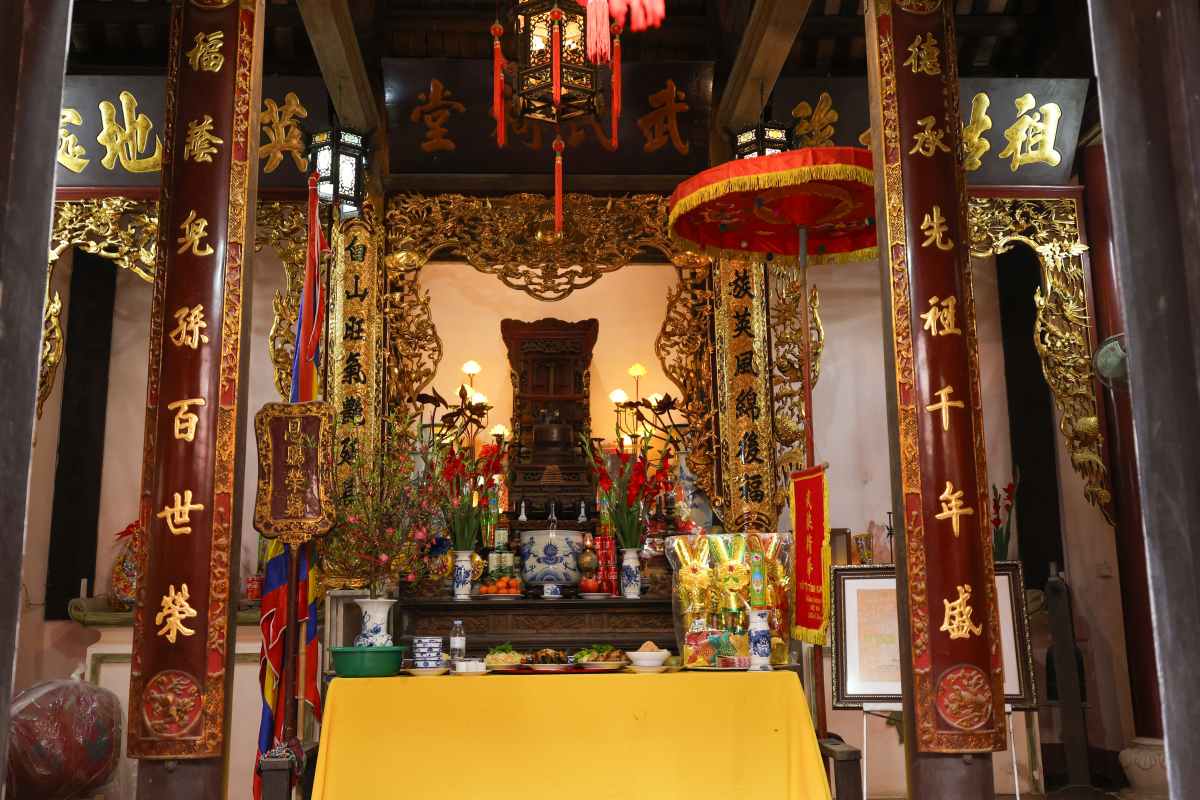
At his lineage, at the end of the year, there are usually about 150 descendants returning to reunite. Incense smoke in the ancestral temple is not only for praying for fortune but also to keep warm for the worship space, connecting generations. For the craft villagers, Tet Eve is also a time to temporarily put aside daily work, for the whole family to gather together.
He shared that the Year-end ceremony is also an occasion to send off the old year, hoping for a new year with favorable weather and favorable business. "Every family only wishes for health, peace, harmonious children and grandchildren, and good business," he expressed. Those wishes are simple but contain the common aspirations of many Vietnamese families every spring.
For Mr. Doan, Tet Eve is not just a year-end meal, but a moment of silence - to show gratitude, to reunite and to start a new year with respect and hope.


