
Representative of the provincial-level trade union organization, Mr. Phan Thanh Liem - Vice Chairman of the Vietnam Fatherland Front Committee (VFF) of the province, Chairman of the Khanh Hoa Provincial Labor Federation - said that officials, union members and workers always place full faith in the leadership of the Party.
Through this, it is expected that the 14th Party Congress will continue to affirm the important position and role of the working class in the new development period.
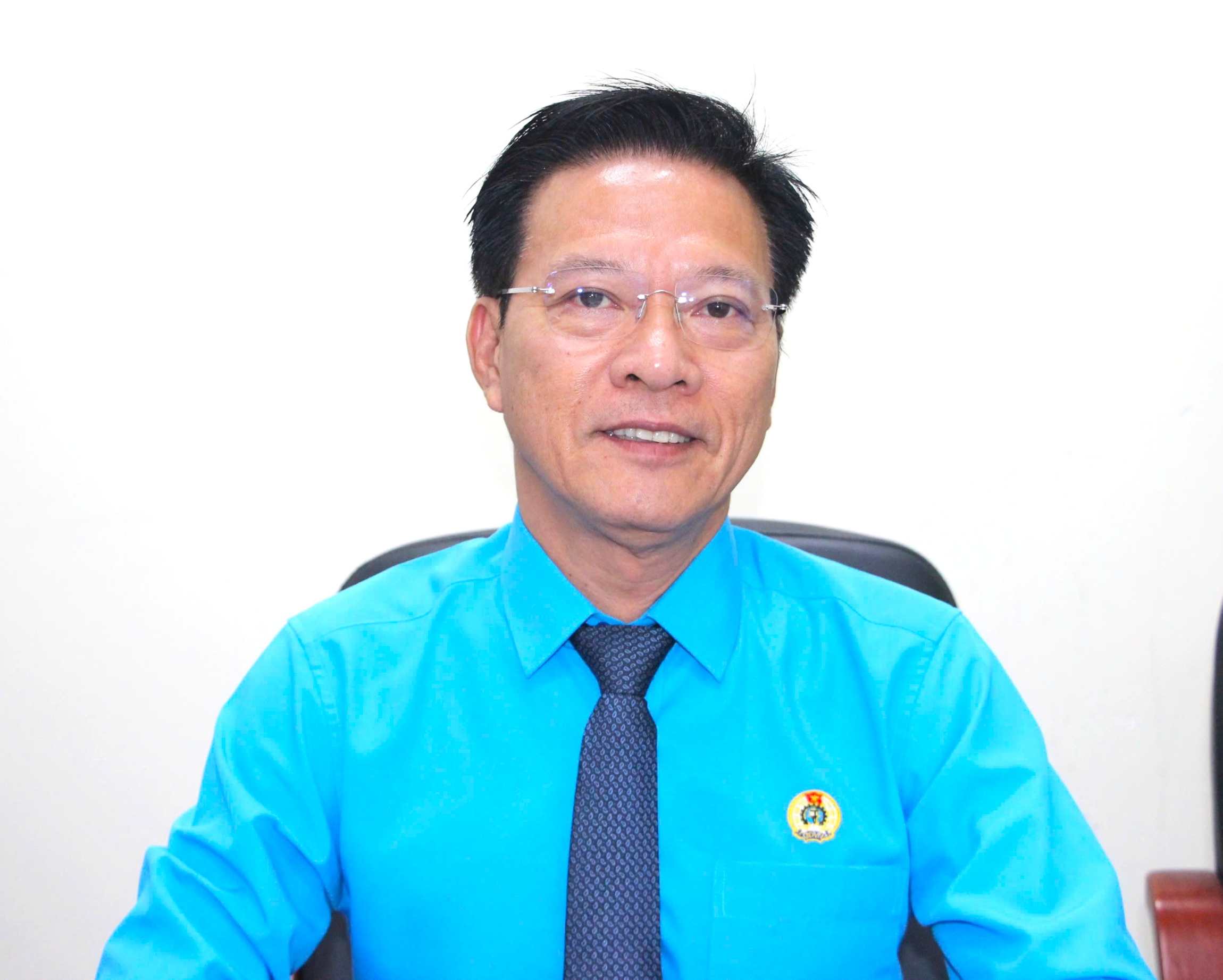
According to Mr. Phan Thanh Liem, union members and workers expect the 14th Congress to orient the synchronous completion of policies on salaries, social housing, social insurance, and occupational safety and health.
At the same time, creating conditions for trade union organizations to better promote the role of representing, caring for, and protecting the legitimate and lawful rights and interests of workers in the context of deep integration and strong digital transformation.
Faced with the rapid fluctuations of the labor market, increasingly high requirements for professional skills and industrial style, trade unions and workers want the Party to have strong policies in training, fostering, and supporting career change. Thereby, creating a favorable legal corridor for trade unions to be more proactive in collective negotiation, dialogue at workplaces and participate in building policies directly related to workers.
When the legitimate rights of workers are respected and protected, and workers are assured to stick with the business for a long time, the competitiveness of the economy and social stability will be firmly consolidated" - Mr. Phan Thanh Liem emphasized.
As a worker directly working in a large-scale shipbuilding enterprise, participating in the global production chain, Mr. Nguyen Thai Vu - Vice Chairman of the Trade Union of HD Hyundai Vietnam Shipbuilding Co., Ltd. - said that shipbuilding workers expect the 14th Party Congress to have leading policies for the core industries.
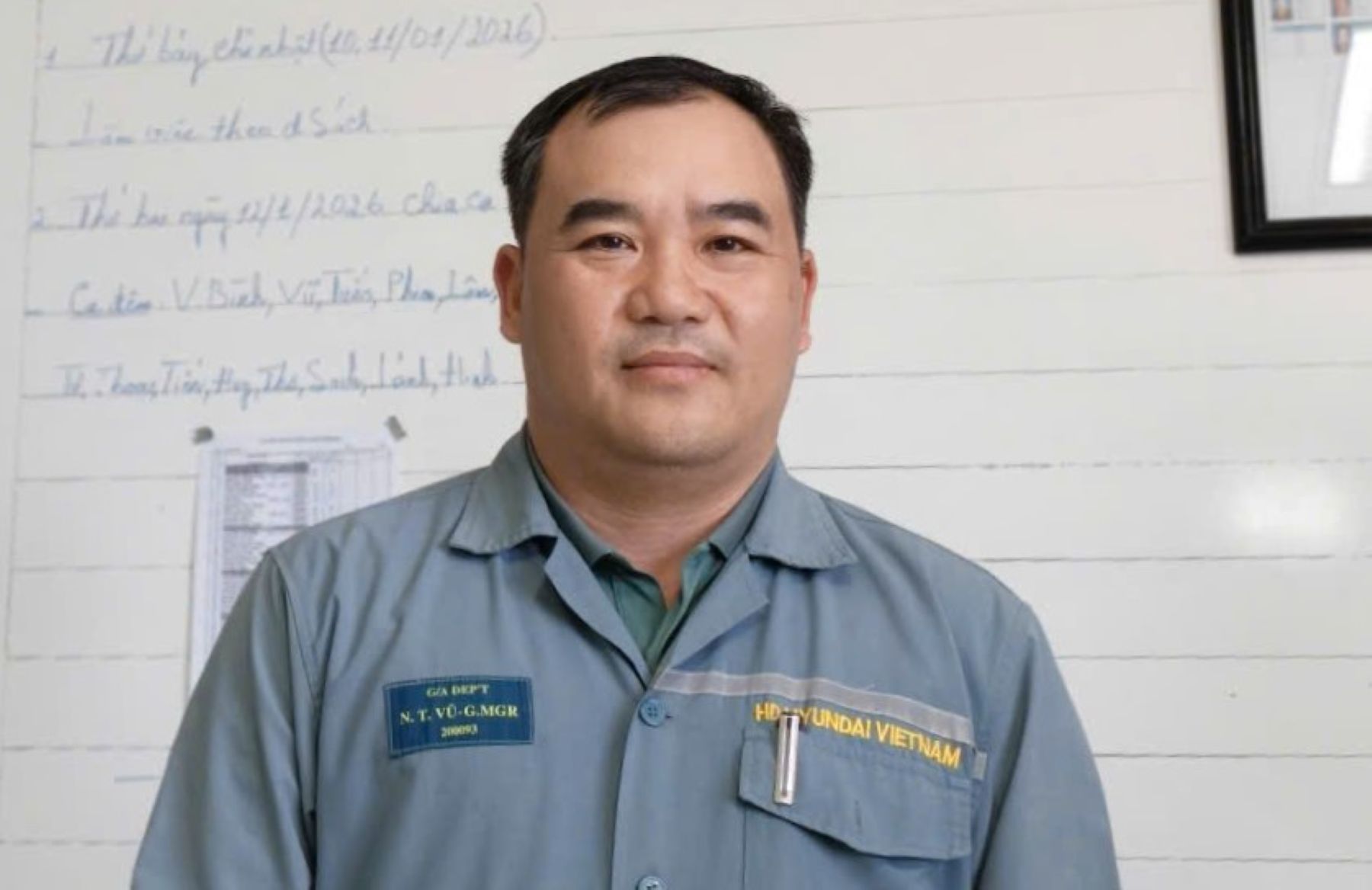
According to Mr. Vu, current practice shows that the shipbuilding industry is under great pressure from international technical standards, emission reduction requirements, traceability and corporate social responsibility.
New barriers such as the carbon border adjustment mechanism (CBAM), ESG standards are directly impacting production activities, employment and workers' income.
Workers hope that the 14th Party Congress will pay attention to orienting the development of a policy framework to support export industrial enterprises to adapt to the new requirements of integration and green transformation. In which, there needs to be a mechanism to retrain and improve skills for workers when changing technology and production processes, ensuring that jobs and incomes of workers are not exchanged for green growth," Mr. Vu expressed.
Along with that, shipbuilding workers want the Party and State to focus on developing supporting industries.
At the same time, pay more attention to the quality of heavy industrial human resources, especially the team of skilled engineers and workers. Policies on salaries, housing, and long-term social security need to be improved, helping workers feel secure in sticking with businesses for a long time.
From the perspective of grassroots trade unions, Mr. Doan Ngoc Cu - Chairman of the grassroots trade union of Tin Thinh Co., Ltd. - highly appreciated the new points in the draft Political Report submitted to the 14th Party Congress.
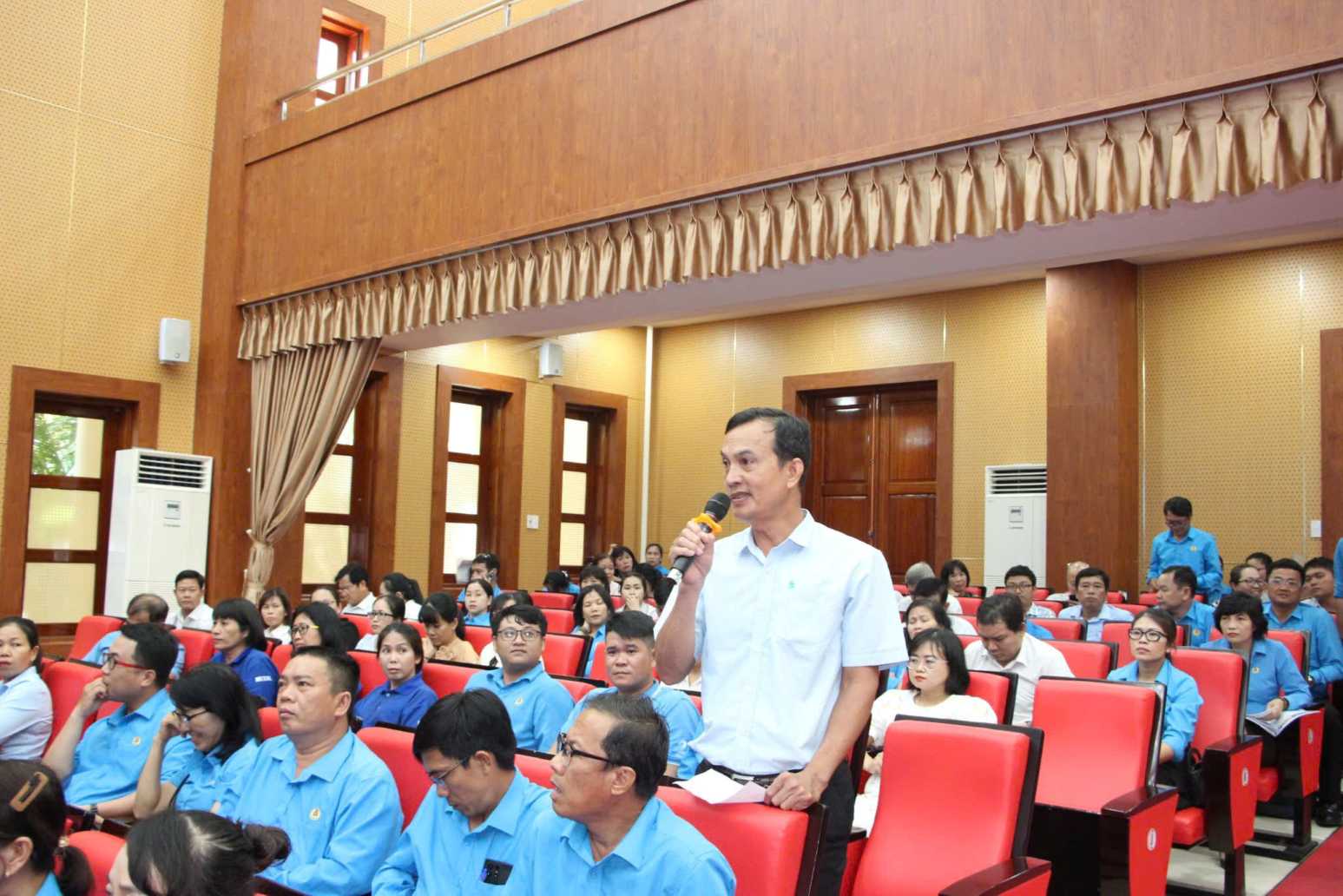
According to Mr. Cu, the draft report not only summarizes one term but also inherits the achievements of many previous terms, and at the same time offers a long-term development vision to 2045. The set goals and tasks are highly ambitious, requiring innovative thinking and breakthrough actions.
In particular, the draft clearly affirms the core role of the working class in the cause of industrialization, modernization and international integration; emphasizing the requirement for comprehensive development of the working class in terms of quantity, quality, professional qualifications, political bravery and labor discipline.
However, Mr. Cu believes that it is necessary to further emphasize the connection between the State - businesses - training institutions in improving professional skills, especially digital skills, to meet the requirements of digital transformation today and in the future.
In addition, policies to improve working conditions, improve the material and spiritual life of workers, develop housing, education, health, culture, especially in industrial parks and export processing zones, need to be more specific.
At the same time, it is necessary to have solutions to develop Party members who are workers directly involved in production, especially in the non-state enterprise sector and foreign-invested enterprises.
Building a coordination mechanism between ministries, sectors, localities and trade union organizations in implementing policies to develop the working class.


